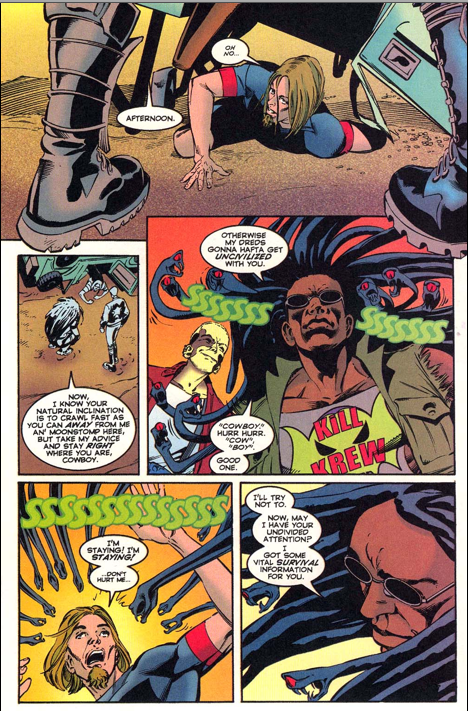
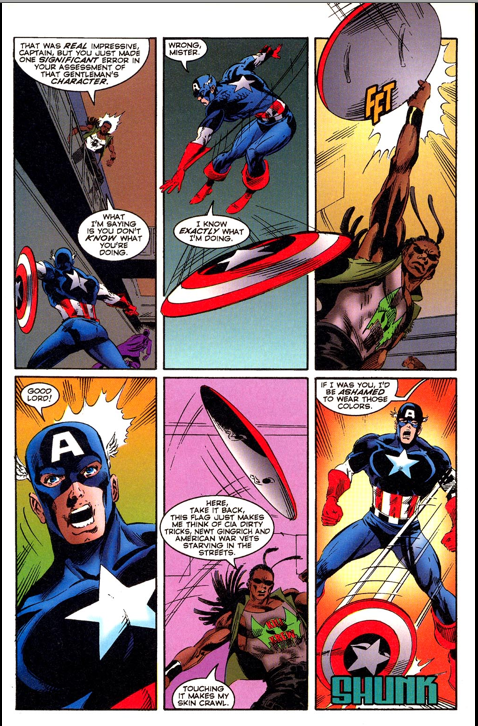
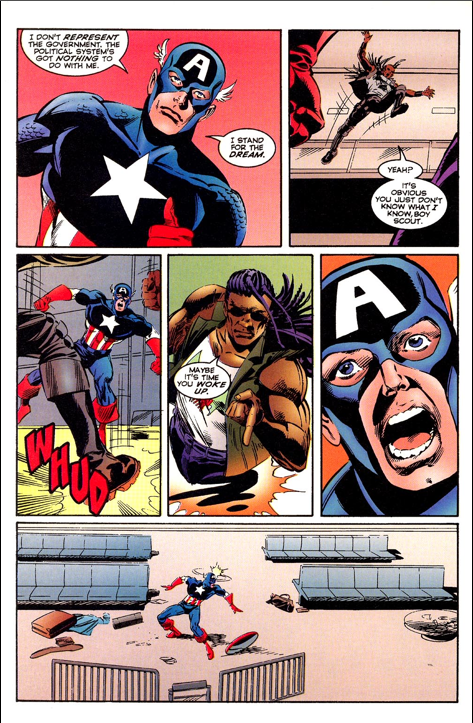
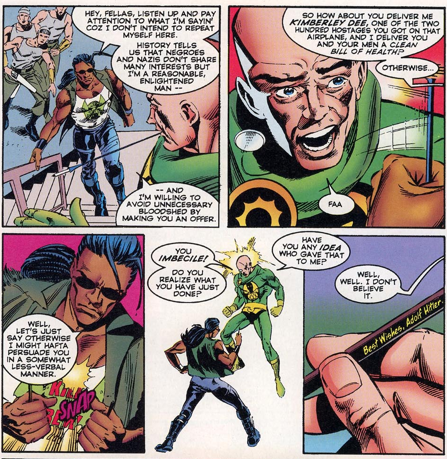
Venom: The Madness – Eddie Brock Joins the Outer Church

“To get the facts, you need strong fingers on metal keys, paper white with honesty – and then you have to cut hard and deep to make the truth bleed ink.”

Eddie Brock, alien symbiote host who really loves his typewriter, from 1997’s Venom Minus 1.

Venom, perennial Gimmick Era favorite, had a tie-in to that month’s Flashback event because he was the star of a series of mini-series going back to Lethal Protector (my personal favorite). He was the hero of his own story and the main character in whatever temporary title the Spider-Office decided deserved an embossed cover that month.

In celebration of Madness Month, let us turn our attention to 1993’s Venom: The Madness, wherein we see that Tall, Dark, and Toothy did not merely adopt the dark, but was born in it, molded by it, and (I am fairly certain) has yet to see the light.

VENOM06
I would prefer reading Eddie Brock’s Twitter account to almost anything already announced for Convergence.

Eddie is an unreliable narrator. What else would you expect from a man who began his professional career as a journalist? He knows how to edit and what to present as fact. He is his own favorite storyteller. The quote above is from a scene that explains why he still used a typewriter. It tells you what it is he wants from the world. That purity, that honesty. For everything to be what it actually is and nothing else. This is a man who cannot help thinking violently, even about ink on a page. A man who does not want to become better because he believes it is the world that is at fault. What is there for an alien skinsuit not to love? Eddie was never going to be friends with Peter Parker. The Black Suit was merely the excuse. Together he and it are Venom, as in spider-venom (took me longer than I care to admit to piece that together).

Ann Nocenti scripted these three issues, though she was far from the only creator attempting to give Venom a voice in the early nineties. Between the complicated behind-the-scenes origin of the Black Suit itself and the overly complex way that Venom was so good at being a villain that he became a hero, this is a character who never had a stable life. Is it any wonder he would end up mad?

Even though Venom is a primarily toyetic property, I have a personal connection with him. My first comic was Amazing Spider-Man #346 by David Michelinie & Erik Larsen. My earliest memory of Spider-Man, who I have come to collect more than read (the only character I can say that about), is in the reflection of those otherwise blank, alien eyes. I thought of Venom as a hero for a new age. Spider-Man belonged to a previous era. A whiny throwback, similar to those guys at DC with the capes. Not Venom. Not Eddie! Then I read The Madness and watched him murder an elderly woman, who the author goes to lengths to show just how innocent she is.

VENOM07
The teeth constantly grow, phasing in and out from higher-dimensional space, the person they belong to merely forming around them.

Venom’s component parts felt slighted by Spider-Man, the mask, and Parker, the man. Everything that went wrong was conveniently the fault of that man, and so it must have made sense to hightail it across the country where no superheroes could bother you. What he finds is “The World Below” San Francisco, relic of the great earthquake from nearly a century before and haven for the disenfranchised. I assume that this originally meant the homeless and those wanting to live off the grid, but the fact that community activists and other sensible people feel welcomed among the crumbling ruins of a turn of the last century metropolis has me imagining it more as Portland of 2015 than the Morlock tunnels.

Our hero is coming to terms with himself and has even managed to have a love interest, as he becomes embroiled in a stock plot of corporate espionage and environmentally unfriendly shenanigans. This results in him contracting what is essentially super mercury poising and hearing a new voice. Referred to as “The Creep,” it is responsible for that wonky, multiple head thing you probably imagine when thinking Venom: The Madness. Never choosing between a singular or plural identity, the Creep takes Eddie’s mind out for a spin and finds that not only is it already a bit crowded but that he/they may not be the drunkest one at this particular party.

Some eras are best represented by cave painting, fresco, or relief. We have Flair ’94.
Some eras are best represented by cave painting, fresco, or relief. We have Flair ’94 Collectible Trading Cards.

Venom has the added bonus of being thrust into the literal Realm of Madness, presented as both the type of dark dimension that Marvel is lousy with, as well as merely a construct within his own mind. Is he actually fighting Dusk (unfortunately not the one from Slingers), a manic, supernatural entity or just his own “inner demons” as rendered by Kelley Jones’ claustrophobic, barely discernible art? Neither the character nor the reader is ever sure, but the former does not seem to care. Other superpeople make excuses for the things done under the influence of a foreign entity; Venom embraces it and never acts in a way other than how he chooses. Is this the will of the Creep, the Black Suit, or just Eddie Brock finding another way to justify getting what he wants? Does he even know what that is anymore?

It is an interesting reversal of the classic Black Suit story, present in comics and other media. Parker, iconic nebbish from Queens, gets tired of the world pushing him around (which it does mostly because he lies to everyone he cares about and is unable to meet any of his many commitments) and attracts the attention of some predatory alien entity. His anger gets the best of him, and he says and does a few regrettable things (that hair in Spider-Man 3) before throwing the entity back into the abyss. The wounded extraterrestrial animal finds solace in soon-to-be-mulleted ace reporter, Eddie Brock, who comes to love it and offer it a home within himself. He is empowered by that freedom and never turns back, unlike Spider-Man, who never referred to himself as “we.”

VENOM05
Inside the mind of Venom is a far more dangerous place than the cold, lonely world of several miles below early 90’s California.

Particularly surreal in the otherwise barren, underground cavern of the World Below are the trees. In the background of most panels are trees, leafless but seemingly alive, as evidenced by their size. Are they specially bred to live and thrive in a world without natural light and all but the deepest of underground wells? Is there a master botanist somewhere on the fringes of this society making sure everyone has air to breath? Someone is keeping this place running, though we are never shown who. The entire place has an odd mystery to it that promised to be far more interesting than whoever Venom was going to fight that issue. This could have been a new locale for the greater Marvel Universe. Maybe one of Confederates of the Curious retired here back in the day after helping with the earthquake.

Venom is at home in this Tim Burton-type of wonderland (lowercase “w”) with its beautiful old buildings, gnarly, unobstructed trees, and whimsical folk who, though homeless and destitute, are unfazed about asking a supervillain to help them out. These people have no hero, no champion. Why not Venom? They have already rejected the world they were born into; why not accept a similarly disenfranchised man to defend them, to be one of them? Taking the original, skewed narrative at face value, Eddie should welcome a release from Parker’s totalitarian impact in his life. Someone, somewhere, at some level of existence bought his sob story and gave him a genuine do-over. What does he do with it? This was 1993, what do you think he did with it?

He fought the Juggernaut.

There is no image of Cain Marko in this comic that anyone would be proud of so here is Jones' contribution to "The Multiversity."
There is no image of Cain Marko in this comic that anyone would be proud of so here is Jones’ contribution to “The Multiversity.”

You might remember the genre defining Roger Stern & John Romita, Jr. story where Spider-Man could not, under any circumstances, stop Juggy from doing whatever it was he wanted. The one that appears on all the Top Ten lists and, in two issues, tells the reader, new or old, all they need to know about Aunt May’s favorite nephew. Whatever it is that makes him unstoppable cannot hold up against having your name on the cover, and so Venom wipes the floor with him. This little X-Over may have been intended to cross-pollinate a few of the bigger books, and give Big Vee something to punch, but Nocenti still finds Juggernaut’s voice. This is him and here, among the mad, he apparently can be stopped.

Venom does not seem to mind the Creep, regardless of the fact that another character refers to it explicitly as a cancer, and in the end he just lets it go. If anyone we meet in this story is truly mad, there is no convincing Eddie it is him. Triumphant, the hero returns to his city, confident in the bedrock of his own mind despite all of the continually mounting evidence to the contrary.

Appearing as a shadow, interrupted only by the constantly shifting, endless row of teeth, Venom must be a comforting presence to the dwellers of this cavern home. The type of protector the disenfranchised expect because those that protect the World Above probably have little time for them. In this way, Venom has chosen to surround himself with those who have as unreliable a perspective as he does, those who assume and prescribe to their own views more than what actually occurs. Venom is at home with what someone not living underground would call madness. To Venom that is all there ever is.

"We accept [him]... one of us!"
“We accept [him]… one of us!”
Does the Black Suit feel the same way? Not to disparage the origins of the entity as already established, but I believe that it does not matter what happened to the Suit before it found its way into the Beyonder’s machine. For canon versus non-canon, I normally begin with this: what has survived through retelling? The Suit feeds on what a wearer feels. The stronger the impulses, the stronger the suit becomes. It learns, adapts, and is empathetic to its wearer. Venom does not trigger a Spider-Sense, is far more powerful that the Wallcrawler, and yet his only source of superpower is the Suit. What kind of state was it in when it met Eddie Brock in the first place?

The 80’s were a weird time. I do not remember much, but everything seems as if it was awful. Spider-Man wore the Black Suit (be it an alien symbiote or regular cloth costume) during some incredibly turbulent times in the character’s existence. I have always seen it as a mourning suit, the black shroud draped over a man who cannot help but lose people. It may have appeared too late to be a result of what happened with Gwen Stacy, but it still feels as if wearing it should tell the reader something other than that the artist cannot be bothered with Ditko’s Lines.

Spider-Man wore the Black Suit for Peter David’s first professional work, The Death of Jean DeWolff. This featured the Sin-Eater, a character whose reign of terror and subsequent capture were retconned into the origin of Eddie Brock. Less explicit to Venom is exactly what Peter Parker lost during that story. He was not yet married to Mary Jane. He watched as a good friend (who may have become something more), one of the few in law enforcement, is brutally murdered while the party responsible brings the whole episode to an even darker place. (The reveal is inconsequential if you have not read it, but if this would have been a spoiler then please go read it.)

If you have ever read "The Invisibles" you may recognize that as Barbelith.
If you have ever read “The Invisibles,” you may recognize Barbelith in the background.

Another notable episode is Jim Owsley’s Spider-Man vs. Wolverine. This a story filled with Cold War intrigue, piles of bodies, and the type of moral ambiguity that I do not know if Parker the character or Spider-Man the franchise was yet able to handle. Though the majority of that issue is spent in a knockoff version of the Red & Blues, it is the Black Suit that he wears at the beginning, and, if the climax is anything to go off of, what he returns to in the end.

These stories are the first instances of Parker’s identity being revealed to Daredevil and Wolverine respectively, setting the stage for the casual meet-ups of the 90s through today. Later on, when Spider-Man rids himself of the Suit, he could be attempting to free himself of all of this grief, anger, and misplaced trust. What if all of that pooled at the bottom of the proverbial basin, similar to blood, or, say, ink?

Eddie may be a sinkhole of desperation but Spidey could learn a thing or two about moving on.
Eddie may be a sinkhole of desperation, but Spidey could learn a thing or two about moving on.

The black ink that defines Venom. Those heavy shadows, those uncompromising depictions that have him ill-defined and almost part of the background. Venom is not only the arch-foe that Spider-Man needed in an era where Norman Osborn was dead and Doctor Octopus was not considered “bad ass” enough, but he is a literal reminder of what Spider-Man was put through. If the 80’s put the character into places where he had to confront the real world, then Venom is what happens when you want to tell those stories but need the conflict to be symbolic.

The Madness is not a story of personal growth. The time of the Black Suit had pain and readjustment that the Spider-Man franchise had to process. Venom is the result. Eddie’s madness is what happens when a fictional character tries to make sense of the real world. The moral ambiguities and unforgivable nonsense that people, not governed by seasoned creators, inflict on one another. Add to that the constant, market-driven demand to be the Next Big Thing, no matter what, and you have a concoction unlike any other. Forcing all of that into its own little box warps into the mess of drool, fangs, and heavy inks that I revered as a child.

Madness as Futility: Ghost Rider #33

Hello, Legions of the Unspoken!  I hope the month of March is treating you very well!  March is a favorite month of mine!  Spring Training is in full gear, and we get to see the Madness of the NCAA Basketball Tournament, both men and women’s!  There isn’t a time of year like it for me, and while I am sure that all reading this agree with me that they hope the Kansas Jayhawks win it all (ROCK CHALK…for real, post who you’re pulling for in the comments!), we decided to delve into Madness of the 90’s comic book variety here at The Unspoken Decade!

I think it is illegal for us to call it “March M*****s”, due to NCAA trademarks, and if you think those cats don’t care about the best 90’s Comics Book website on the planet due to its relative small amount of influence in comparison to the monolith that they are, well these are the folks that suspended a player for NOT BEING HOMELESS, so I would not put anything past them.  They make the Age of Apocalypse look like McDonaldland.

mcdonaldland
The only tyrant that could ever truly strike fear into Apocalypse’s heart is Mayor McCheese.

The NCAA would intimidate even Dr. Doom, Juggernaut, or Magneto, but the villain of Ghost Rider #33 would not care one whit about their infinite wave of minutiae in regards to rules and regulations.  Madcap is mad, you see, and so he would appreciate our “Madness Month,” although I am not sure what he would think of being featured in it!  He would certainly appreciate the McDonaldland reference, however, as no matter how mad, depraved, or evil one may be, the idea that a mayor with a cheeseburger for a head will always bring a smile to anyone’s face, even if your face looks like this:

For not having many features, that face sure is frightening.

On the surface, the pairing of Madcap and Ghost Rider seems odd.  Ghost Rider is firmly entrenched in the occult corner of the Marvel Universe, cavorting about with heroes like Dr. Strange, Morbius, Blade, Werewolf by Night, and others.  I always wondered why they did not marry this world more strongly with the darker street level titles like Daredevil and Punisher.  They tried with the “Marvelution” when they made the Edge imprint (which I plan to take a look at in depth in the future!), but the big 90’d boom had less breath than a lungless walrus by that time.  Too little, too late, and it isn’t like we never got to see Punisher and Ghost Rider or Daredevil and Dr. Strange team up in the 90’s, but I feel like characters with multiple titles in the 90’s could have benefited by having a brand that meshed with a brand for which the character was not known.  How awesome would a Punisher Midnight Sons title or a Spider-Man title set in the cosmic corners of the Marvel Universe be?  The answer is so awesome that if I don’t stop talking about it right now then I will NEVER cease talking about it.

As I started talking about before in the prior paragraph meandered more than the Mississippi herself, on the surface, Ghost Rider and Madcap are an odd pairing.  Madcap is highly frivolous to the point of being a walking work of Dada, while Ghost Rider is the SPIRIT OF VENGEANCE and is quite grim, which I do not mean in the pejorative sense that many would use that word in, but I mean that Ghost Rider does not make a ton of jokes and is generally almost as personable as a walking stick.

What it lacks in personality, it makes up for by creeping the hell out of you.

Then all of a sudden, two things are obvious, the first of which is that these two characters aren’t too different once one takes a gander past the surface.  Both are nearly indestructible, both have trouble feeling, and both are engaged in a mission with a singular focus usually only seen in things that cannot think, like thunderclouds.  Madcap spreads madness, and this version of  Ghost Rider avenges the spilling of innocent blood.  There’s not a lot of subtlety to either guy, and it really works for both of them.  The other thing is how awesome the clash over their differences shall be.  Madcap believes in the idea that everything is meaningless, while GR believes that humanity must be worth something, lest he would cease avenging the innocent and start using his powers to run a furnace or something.

I am glad he didn’t go into furnacing because this is a fantastic issue, and Ghost Rider overall was a splendid title!  Ghost Rider #33 is one of the first issues of GR after the conclusion of the “Rise of the Midnight Sons” saga.  After several months of intertwined stories with the other Midnight Sons titles as well as guest stars in his own title (such as Dr. Strange saving Dan Ketch’s life in the very issue prior to this one!), this issue stands alone, and it also sets up some major changes in Danny Ketch (Ghost Rider)’s life!  This issue can also be read alone without reading prior GR issues; there’s a subplot involving ladies from H.E.A.R.T. getting attacked that would make a lot more sense had one read a few more issues, but it isn’t so opaque as to ruin the comic.

I miss the 90’s because they may have been the last era when we would get this sort of comic book, where a superhero story from the Big 2 would begin and end in the same issue.  There were still fill-ins here and yon, and these type of issues were a great gateway for someone who did not follow a title to get into a book.  For instance, I was familiar with Ghost Rider before this issue, but I didn’t follow it closely. I saw this on the rack at Kroger when I was in 7th grade, and I sat down and read it. Sitting and reading a comic book was preferable to walking behind Mom and somehow always being in the way in the flour aisle, and this cover drew me in.

Ghost Rider - Vengeance Unbound #33 - Page 1
Oh, I forgot to mention earlier that they both have stares that cause mental illness.  My bad.

I wound up following Ghost Rider for about a year after this issue, which I do not think I would have had this comic contained some convoluted story that continued subplot after subplot that I could not catch up with while being a part of 74092980234 different stories as well.  Conversely, though, I would not have given this much of a look had I not been hooked in by the “Rise of the Midnight Sons,” so I guess it works both ways.  Normally, I hate it when things have it both ways, but this is delightful.

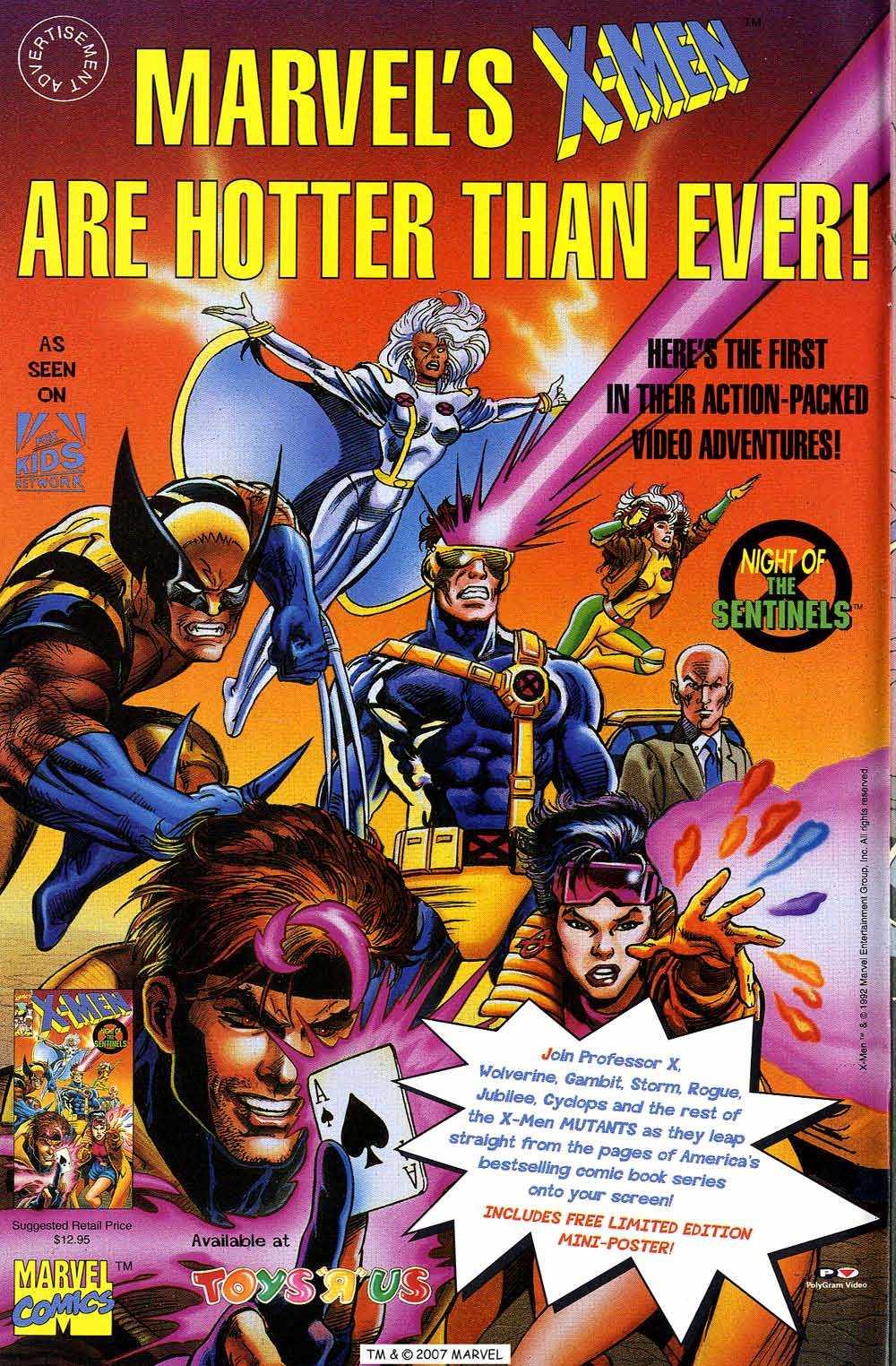
Speaking of delightful, how about the inside cover of this bad boy featuring an ad for everyone’s favorite animated band of mutants, the Uncanny X-Men?

Ghost Rider - Vengeance Unbound #33 - Page 2
Jesus, 12.95 for two episodes on VHS? Before torrents, they made out like kings. Now they only make out like bandits.

I also have to wonder about the upper-left-hand corner of this ad, where they let us know that this is an “advertisement,” as though people either thought there was a magic comic book that would open up from the INSIDE COVER of another comic book, or that this comic book page was a VHS tape, and that they had somehow lucked out and did not have to pay 12.95 for two measly X-Men episodes.

To be fair though, I would have paid.  X-Men was such a huge part of my life in 7th grade.  Everyone watched it, and by everyone, I mean all the people at the losers’ lunch table with me watched it and discussed it.  LOUDLY.  Actually, as I have gotten older, I have found out that even the kids at the cool table were watching, but I had no idea at the time.  If I had, I probably would have done much better with girls….no, no I wouldn’t have.

The issue starts off with a bang, as not only do we get GR shoving some mook through a window, but we also get existentialism from the get-go!

Ghost Rider - Vengeance Unbound #33 - Page 3
I feel like if we changed these two out for teenagers, and it was just a regular push instead of a choke slam through a window, this would be the start of an ABC Afterschool Special also entitled “What Does It Matter” as “WHY?” is bellowed.

Ghost Rider’s absence during the Rise of the Midnight Sons has led certain criminal elements to begin to retake their former territories.  They thought they were safe due to GR being gone, but now he’s back with a vengeance!  (Sorry, I had to!)  I do wonder how these guys dodged the attention of the other Marvel street-level folks at this time, such as Punisher or Moon Knight, whether GR was there or not, but I guess even the lowly street thugs of the Marvel Universe are more resourceful than the ones of our world.

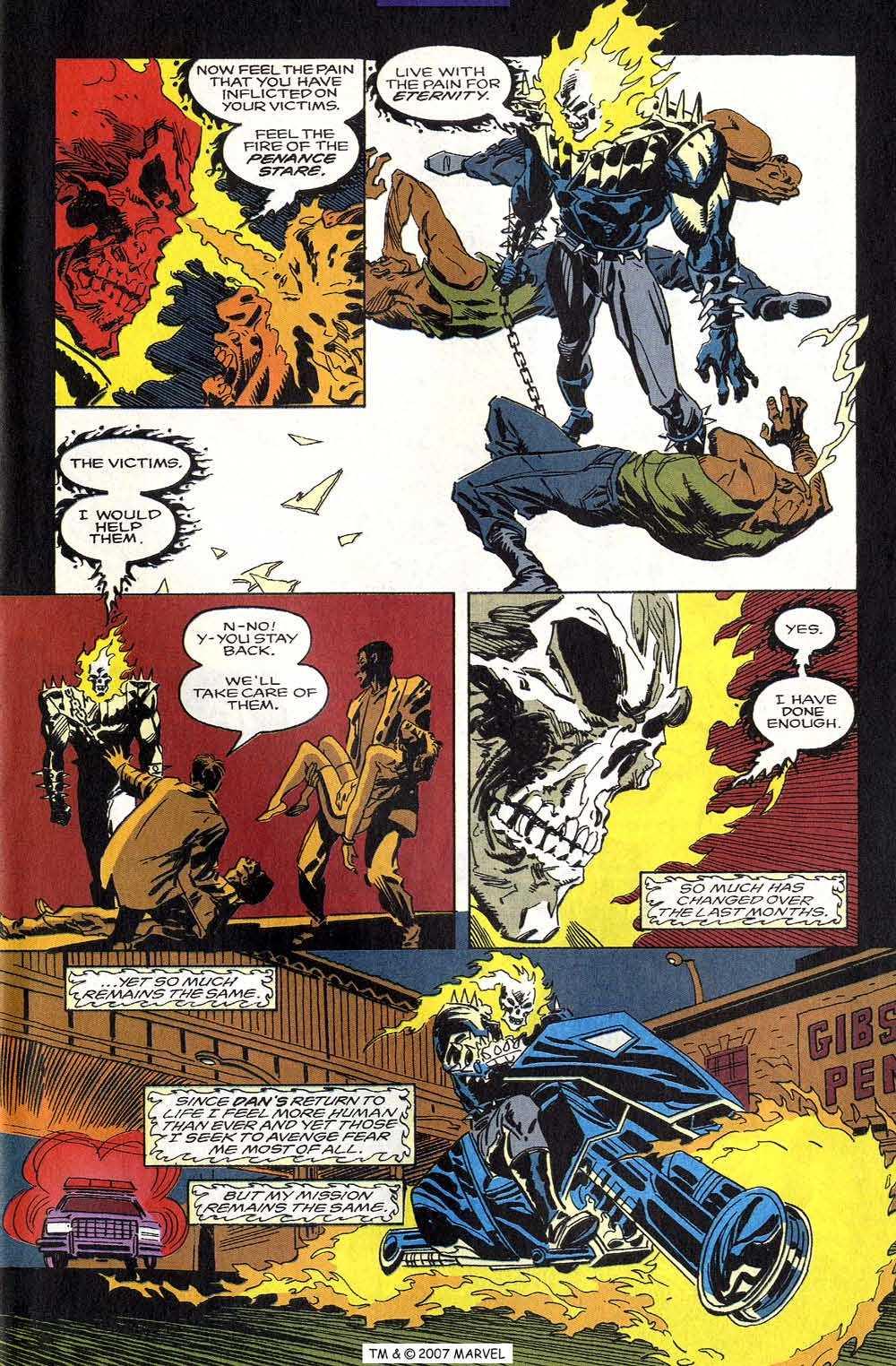
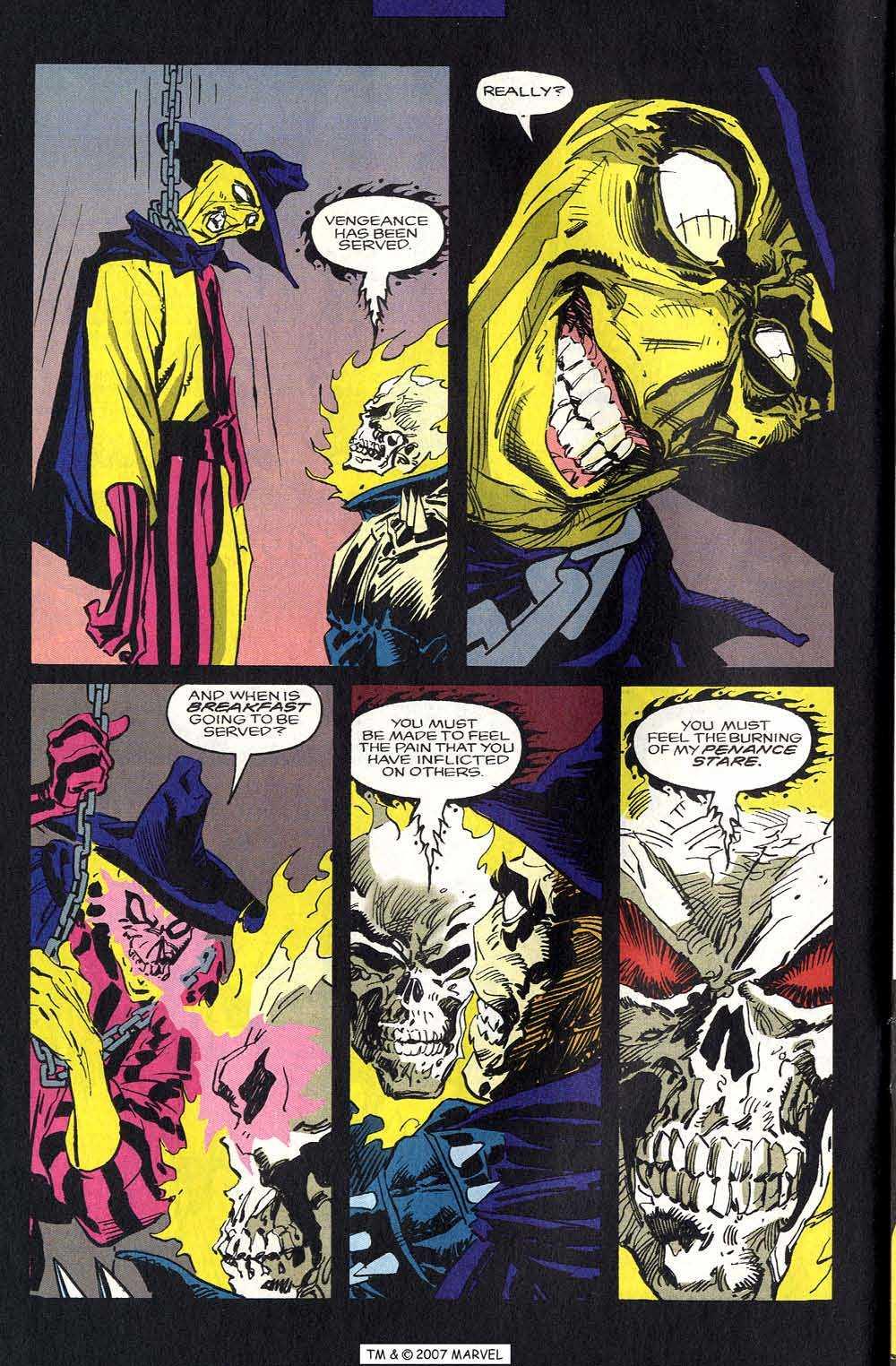
One way or another though, they are no match for Ghost Rider, who dispatches them quite easily, and then uses his insanity-inducing gaze, the Penance Stare, to make these criminals feel the fear and pain of their victims.  That’s such a stellar idea.  The fact that you get the Penance Stare from a flaming skull face makes you feel even more sorry as well, and it gives the Penance Stare a visual that the reader not only will notice, but would FEEL.  Every time I saw GR do it, I resolved to be a better person.

However, that same visual that gives GR the edge in the form of inspiring bowel-emptying paralysis in street level criminals also makes it hard for him to assist the victims of the crimes, no matter how much he wants to.

Ghost Rider - Vengeance Unbound #33 - Page 5
Even if the Penance Stare was nothing but shooting hellfire from GR’s eyes into someone else’s, it would still be awesome.

The beginning of the issue is very accurate; Ghost Rider and Dan Ketch are having an existential crisis.  Howard Mackie is really good on this title, and he scripts Dan Ketch very well.  Dan muses that, “There has to be more to our lives than waiting for the innocent to die.”  I never really thought about it, except possibly in the case of Spider-Man and The Last Avengers Story, about how much that must weigh on heroes.  There isn’t much for a hero to do but react, and if one is a hero, then the only reaction one would have would be to villainy.  Villainy in superhero comics involves massive property damage and massive attacks on civilians, which would result in massive casualties.  That’s got to weigh heavily on many heroes.  They are powerless to do much of anything but react, and by the time they do that, the damage is done.

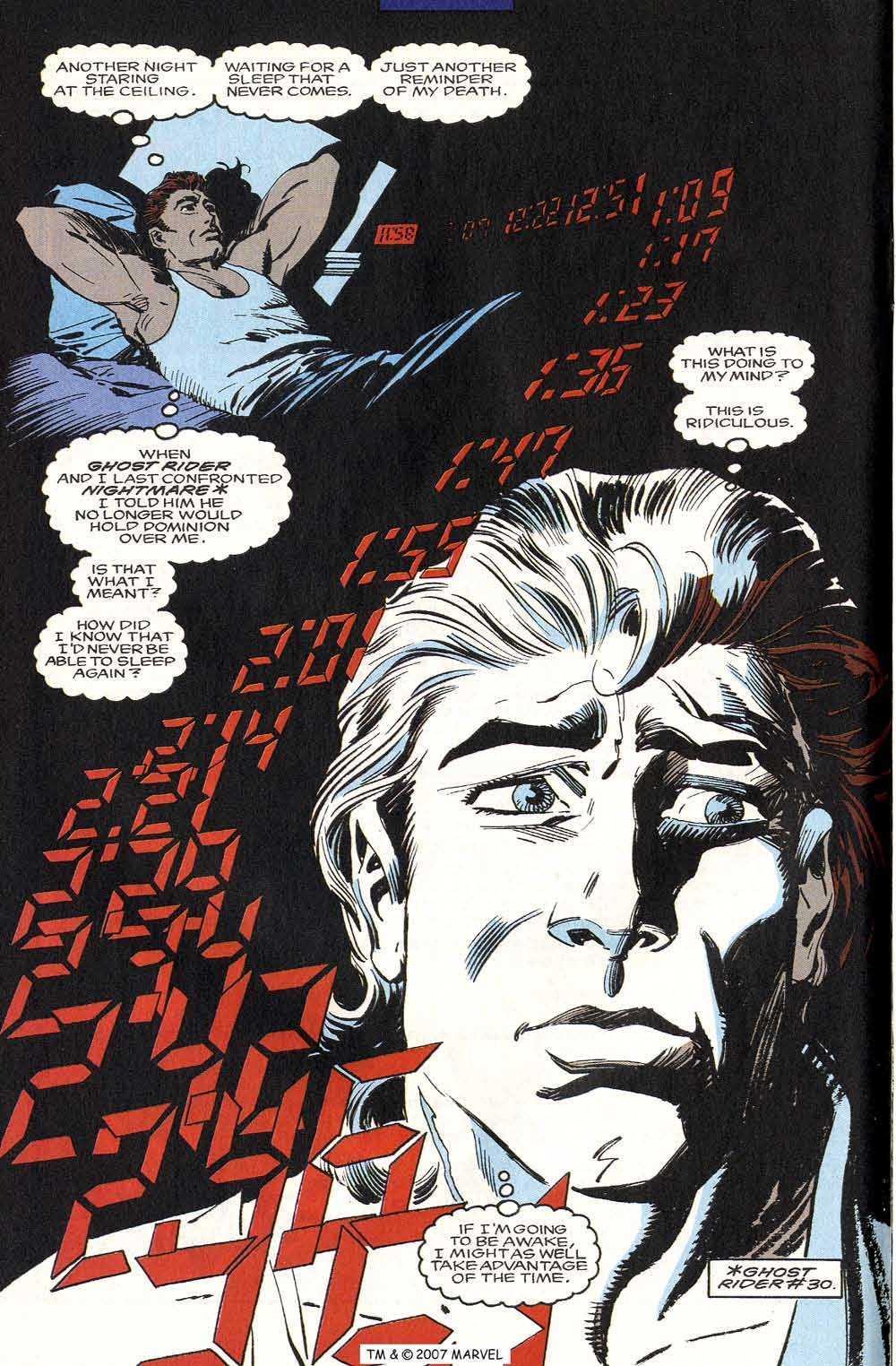
Dan Ketch is also dealing with having died, so he has more on his mind than even the crisis mentioned above.  Between all that and a recent encounter with Nightmare, Dan is having issues sleeping, and I have to say that this is the best comic book page in history representing the feeling of not being able to sleep.  Bret Blevins, Al Williamson, and the colors of Gregory Wright really make me scared to lay down tonight, not due to anything monstrous in this horror/superhero mash-up, but rather because I will be haunted by floating digital numbers.

Ghost Rider - Vengeance Unbound #33 - Page 8
The floating numbers also remind me of a 1980’s commercial, and I mean that in the best way.

Nothing is simultaneously as mocking and haunting as digital numbers when I can’t sleep, whether they be on an alarm clock from the 90’s or my smartphone today.  I want to point out that Gregory Wright got the color of the digital clock display perfect.  The numbers aren’t just red on those clocks; they’re INSANITY-INDUCING red, and Wright nails that color here, especially against the totally black background.

Seeing as how Ketch can’t sleep, he decides to do some physical training, which means hitting a bag again and again.  This is the middle of the night, and so his mom emerges to give him some life-changing news.  Before she can do that, though, Madcap becomes the envy of just about every body modification aficionado as he laments being misunderstood by the consumers of his art.

Ghost Rider - Vengeance Unbound #33 - Page 12
This is what your parents were worried would happen when they taught you not to play with sharp items.

Madcap is definitely one of the Not-Ready-For-Prime-Players with that knife stuff.  I can’t help but feel bad for him, though, because I can feel, and apparently, he cannot.  That’s more than sad.  I’d rather be able to wrap myself in all the sad times I have had rather than be unable to feel anything, no matter what teenage me said as he listened to the same Nine Inch Nails songs over and over again.

There are situations, however, where anyone would prefer not to have feelings so that they could deal with heavy stuff better.  For instance, Madcap would not really understand the gravity of the situation that Dan Ketch faces with his mom’s big reveal.

Ghost Rider - Vengeance Unbound #33 - Page 13
There was probably a better time to tell Dan Ketch this besides right after he just died.

Dan needs to go on a motorcycle ride to clear his head now, which in our world would work out perfectly.  In the Marvel Universe, though, it just leads to angst for our hero and a fight with a villain to boot.  No hero ever gets to just clear their head; they are required to run into trouble and then deal with it.  I am certain that is a physical law in superhero universes.

Trouble isn’t quite the word I would use for Madcap, who is certainly the epitome of madness.  Perhaps even more so than The Joker, though, not because Madcap is crazier, but because he is indestructible.  The Joker is mad, certainly.  No one would dare call that cat sane, unless he demanded you did or else. Even then, everyone reading this article knows that all calling The Joker sane (even at his request) will get you is the “or else” he is threatening, whether that is getting drowned by a clownfish or having to eat the world’s funniest poison.  At the end of the day, though, The Joker is still cognizant that he is alive and can be hurt or killed.  Madcap is alive, but he can’t be hurt or killed.  In fact, he can’t feel much of anything.  That’s the catalyst for his madness.  If you couldn’t even stub your toe and feel that awful pain, you’d go nuts, just like Madcap.

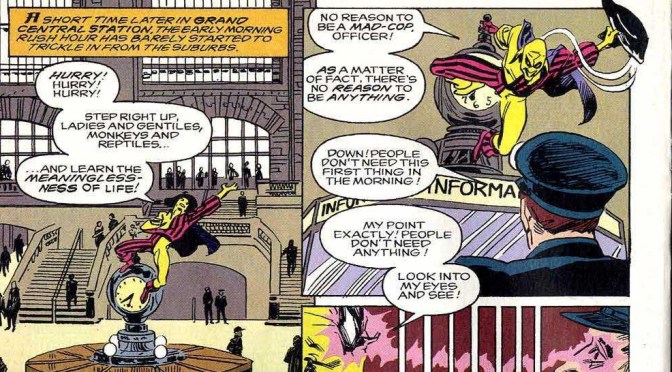
Madcap, though, is really interested in making other people nuts.  Especially folks in Grand Central Station at rush hour.

Ghost Rider - Vengeance Unbound #33 - Page 18
Madcap says there’s no reason for anything, but obviously his calling in life was to come up with different spins on the word “cop.”

Madcap’s spree spills innocent blood, and that triggers Dan Ketch to become Ghost Rider. Of course, we have to listen to Madcap’s philosophy on life before he gets there, and I wonder how much of this is madness – I mean, other than him inducing the cop to shoot innocent people; that’s firmly in the “Madness” category.

His idea that everything is pointless, however, carries some weight with many people I know.  One can question what is meaning itself for a long time, and if one can’t answer, does that make things pointless?  The folks I know who adhere to this philosophy tend to not be mad (although they are fairly morose and forlorn: think Goth Talk from SNL), but they aren’t very cheery.  They just seem to think that there can be no lasting sort of legacy, and therefore, most everything is pointless.  Yes, I know some weird people; thankfully, I find enough purpose in bringing the Legions of the Unspoken all these fantastic comic books, so I am not like them!

Ghost Rider’s staunch belief in the sanctity of the innocent really flies in the face of Madcap’s philosophy, so they decide to settle it the best way possible; they trade philosophy while punching each other.  Also, Ghost Rider looks cool as hell on that motorcycle.

Ghost Rider - Vengeance Unbound #33 - Page 20.5
Some of them will just find other ways to destroy themselves, Ghost Rider.

Madcap has the ability to not get hurt, but he isn’t really known for much else.  He doesn’t know, say, Madness Karate, so Ghost Rider and Madcap lock up, it doesn’t last long, and it is decidedly one-sided.  Madcap has no chance against the Spirit of Vengeance!

The highlight of the fight has to be when Ghost Rider and Madcap swap stares!  Madcap’s madness inducing gaze could possibly give him the edge in this battle.

Ghost Rider - Vengeance Unbound #33 - Page 26
Make you own “Hanging Around” joke here. Mine involves Counting Crows’s third album.

I really cannot describe what a huge deal it was to see Ghost Rider execute the Penance Stare in the 90’s.  I never, ever got tired of it, although I guess others did.  The idea of a FLAMING SKULL staring fire into someone’s eyes that makes said someone feel the pain of all the evil they have done fascinated me, and it continues to fascinate me to this very day.  The 90’s may have gotten some things wrong, but for a good 2-3 year period, they got Ghost Rider in a way that has never been equaled, before or since, and Howard Mackie’s writing has a lot to do with that, in addition to the great art by Mark Texeira and Javier Saltares on the book’s first few years as well.  Bret Blevins is terrific here; the art really gave GR that Horror Hero look you have to know they were going for.

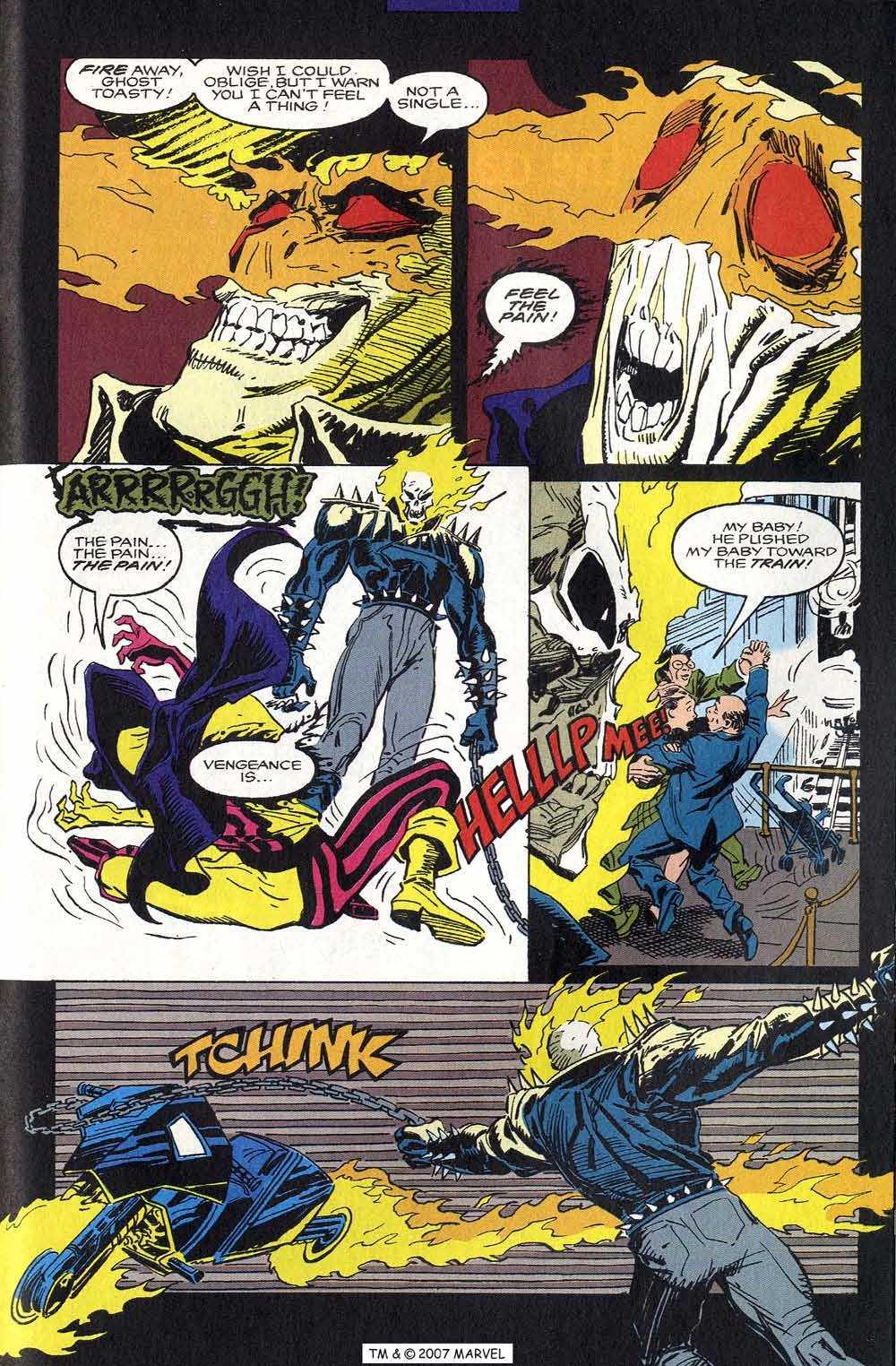
But I got distracted, which is quite a rarity when super-powered beings are duking it out with madness inducing beams that they emit from their eyes!  As you can see above, Madcap’s beam has no effect on Ghost Rider at all, but the Penance Stare on the other hand…

Ghost Rider - Vengeance Unbound #33 - Page 27
They should start having motorcycle lasso competitions at rodeos.

Ghost Rider follows up his Montana impression by saving the baby while telling us that the baby’s life is full of meaning.

That's a pretty tall order, Ghost Rider.  Never let it be said that GR doesn't set the highest of goals.
No blood has been spilled? Didn’t the cop that Madcap turned insane shoot like six people?

I love tying Ghost Rider’s role as the Spirit of Vengeance to protection of the innocent, and I think that is what separated him from other vigilantes like Punisher.  I mean, sure, Frank Castle saves some innocent folks, but his mission isn’t tied to that role the way Mackie is presenting Ghost Rider’s as being.  Of course, his anathema towards killing also separated him, but I like my horror heroes with a smattering of hope.  I am not sure that horror of any kind, even the awesome amalgam of horror and superheroes, works without hope.

An unexpected side effect of Ghost Rider’s Penance Stare on Madcap is that it made him feel something.  Feeling anything to Madcap is better than feeling nothing, and therefore, getting that feeling is more important than anything else.  Madcap acts in the manner one would expect, as he wants more of it.  The idea that anyone would want more of the Penance Stare put Madcap in to an upper echelon of villainy in my eyes.  I could not imagine someone wanting to feel the pain of their actions over and over again, but I also cannot possibly imagine the insanity that goes along with being unable to feel.  I mean, the effects of extreme isolation and sensory deprivation as torture are well known.  Madcap has been under these conditions for years, and what’s even worse than the fact that he wants the Penance Stare again is the fact that he is willing to go to extreme lengths to get it…

Ghost Rider - Vengeance Unbound #33 - Page 31

I would call that creepy, but that would just not be a word with enough weight to describe how I feel about this image and about Madcap in general; truly very few characters personify madness the way Madcap does, and few stories would bring you the Madness you crave in the third month of the year (TAKE THAT, NCAA)!

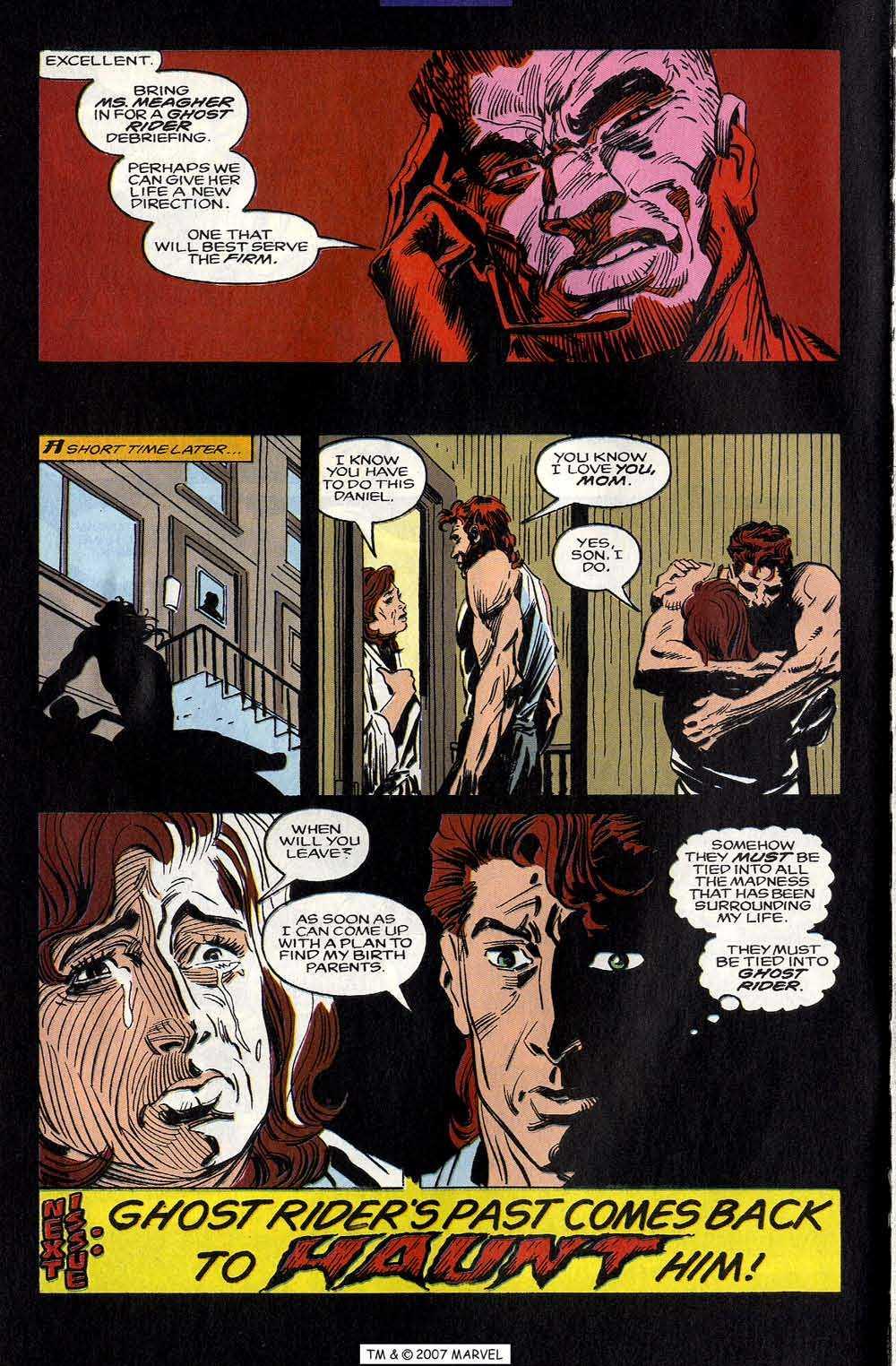
Dan Ketch has different things on his mind, though, and on the last page of the book the genius in getting folks to pick up another comic book can be seen. The comic had a beginning, middle, and end all of its own, but it also dangled enough subplots to get you to buy that next issue.  That’s a lost art in today’s comics, where just about everything is written for the trade.  Mackie nailed it here, though:

Ghost Rider - Vengeance Unbound #33 - Page 32
That is the sort of next issue blurb that hooks me every time!

Before I finish this up, I also want to point out a really cool tidbit from the letters page.  This issue of Ghost Rider came out at about the time that Doomsday killed Superman, and there aren’t many that come more innocent than The Man of Tomorrow!  So, in the bottom right corner of the letters page, we get to see Ghost Rider’s thoughts on the situation!

Ghost Rider - Vengeance Unbound #33 - Page 33

We talked about how cool and brutal Doomsday was in a prior article here at The Unspoken Decade, and I think just about every superhero fan of the 1990’s would have loved to have seen Superman’s killer tangle with everyone’s favorite burning skull-faced hero?  That would have been beyond epic!  I wish that DC and Marvel had managed to do that when they were crossover happy in the 90’s!

I loved this panel; I think it is the equivalent of an Easter Egg on a DVD.  I did not have to work as hard to find it, but I also certainly was not expecting it.  Ghost Rider’s mourning of Superman also made the overall issue even more enjoyable, and I am too embarrassed to tell you of the crossovers this inspired that I played out in my action figures or in the backs of my notebooks at school when I should have been learning Algebra, which I made a “D” in that semester.  My mom was mad, but I managed to keep my comics!

Thanks for reading, and I hope you enjoy the NCAA Tournament as much as I do!  I’m ready to enjoy some madness, some Cinderella teams (as long as they don’t beat Kansas!), and attempting to eat more snack food than is humanly possible as I hope for a deep run for my Jayhawks!  Stay tuned this week for Mr. Hero from Emily Scott, and Venom:  The Madness from Darry Weight!  Have a great big dance, everyone!

One Hand, Two Heads, All Heart: Neil Gaiman’s Mr. Hero the Newmatic Man by Emily Scott

How best to judge an unfinished work? Is it fair to contemplate what might have been and fill in what you can imagine the artist would have done next, or is that too presumptuous? Is it better only to discuss the parts that actually have been finished, even to the ultimate detriment of that work?

These are the questions I wrestled with while planning out this article on Neil Gaiman’s Mr. Hero the Newmatic Man, and I never really came to a satisfying decision. Sure, I went on some mental tangents about how da Vinci maybe meant to paint some eyebrows on the Mona Lisa and never got around to it, but as far as figuring out the best way to analyze art that never got the chance to fulfill its potential, I was torn.

Mona Lisa
Clearly what da Vinci intended all along.

It can be tricky to apply the concept of completeness to a comic book, which, by its very nature is usually meant to be ongoing, but Mr. Hero, published in 1995 by the short-lived Tekno Comix, has to be one of the most frustrating experiences I’ve had reading anything because of just how incomplete it is versus how much potential it had.  This book posed so many questions, set so many mysteries in motion, and it stopped having resolved exactly zero of them. Of course, reading it 20 years after it was first published and facing an ever dwindling number of issues, I knew it would end before I found out everything, but what made me want to punch a wall instead of just shake my fist, was how close to some of those answers it came.

Seriously, if the whole company hadn’t stopped putting out comics, I would be convinced Mr. Hero stopped when it did just to aggravate me as much as possible. Like me personally. That’s how it felt. The last issue even says The End, even though it ends in the most cliffhanger-y way possible.

What I saw.
What I saw.
What it felt like.
What it felt like.

Of course, the reason it bothers me so much that I’ll never find out what happens is that I was genuinely invested in the comic and intrigued by its premise and characters.  If it were terrible, I wouldn’t have spent several paragraphs ranting about how there isn’t more of it. In that light, I suppose I could tell you more about the things that actually happen in this comic rather than the things that never will. Let’s cleanse the palate with a page of a moustachioed robot beating people up and then dive right on in, shall we?

Hero 1Meet Mr. Hero, the robot best friend you and I and every other person in the world have always wanted. (If you say you’ve never wanted a robot best friend, you are either lying or a self-hating robot.) Mr. Hero was one of a line of comics conceptualized by some very big names in science fiction, including Gene Roddenberry, Isaac Asimov, and Leonard Nimoy, for Tekno Comix, which, this being a 90s comic website, I feel compelled to point out is the most 90s sounding name a company could possibly have.  Neil Gaiman created Mr. Hero,  and the book definitely has some Gaiman-y trappings to it, but it was Eisner Award winning writer James Vance who entertainingly brought the metal man to life and built something unique around him.

From the very first page, it’s obvious that Mr. Hero the Newmatic Man will defy easy categorization, as we are introduced to a hellscape called Kalighoul run by a giant evil lizard named the Teknophage, who seems to be building an army of Victorian-era robots powered by melted souls. Or something. The specifics on how the automatons are created are a little fuzzy, one of many aspects of this world I was disappointed not to see fully explored. So right away, we get a little science fiction, a little steam punk, and some metaphysics, which will soon be joined by healthy doses of action, adventure, and comedy, all rolled in  a shiny metal package.

Mr. Hero 2
I could actually tell that this comic would be quite funny from this page too, but now that I look at it, and myself, critically, that just might mean there is something seriously wrong with me.

Mr. Hero is shipped off by the Teknophage to Earth to be of future use to  in taking it over, but in the meantime he becomes a part of a magician’s act, learns boxing, accidentally punches a punter, gets boxed up, and does not reemerge until he is discovered decades later, sans head and one hand, by our human protagonist, a young mime/aspiring magician/museum worker named Jennifer Hale. Credit where it’s due to artist Ted Slampyak (pencils), both for having an amazing last name and for being insanely prescient in drawing the location of the missing head, a piece of artwork that doubles as a bike any modern hipster would trade a significant portion of his vinyl collection for.

Forget Mr. Hero, or even Mr. Fix-it; meet Mr. Fixie.

When Jennifer puts the head back on Mr. Hero and essentially brings him back to life, a whole host of the Teknophage’s baddies come to reclaim him, but, as evidenced in the page above, Mr. Hero is more than adept at giving some rapscallions what for. Much of the earlier issues is devoted to such skirmishes and the schemes of these minions, but the specifics aren’t particularly important, not because they are bad, but without resolution, much of the meat and potatoes of the plot seems random, and a “throw it all at the wall and see what sticks” vibe is pervasive. I attempted to lay out just the basic plot points for my own use, but it sounded so convoluted that I abandoned any notion of describing the comic that way. If I found myself muttering, “Why exactly is this happening?” to myself while actually reading it, I can only imagine how erratic it would sound to someone who didn’t.

What is important are the antagonistic characters themselves, a very motley crew working in various capacities for the Teknophage, everything from genetically modified men who can camouflage themselves with any background to actual monsters to sniveling bureaucrats.  One of my favorites is a man named Mr. Kingman who is sent to Earth to oversee the capture of Mr. Hero. He does exactly what I would do if I were sent away from a hellscape to a relatively cushy planet, which is not give a shit about anything I was supposed to be doing and enjoy some earthly comforts for a while. Did I mention he thinks dressing like Elvis will help him fit in?

It never occurred to me that those metal ball things could be played like a game, but now I really want to sneak into some middle manager's office to try that out.
It never occurred to me that those metal ball things could be played like a game, but now I really want to sneak into some middle manager’s office to try that out.

Considering Mr. Kingman’s fascination with Elvis and video games and the fact that one of the main antagonist plots revolves around subjugating Earth’s population through their TVs, I assume that there was much more pop culture satirization planned for future Mr. Hero issues. As it stands, in addition to all the other genres intermingling in these comics, Vance finds some room for comics’ favorite genre, the superhero. Two of the Teknophage’s genetically modified goons are introduced to Kingman’s comic, and they do pretty much what anyone with superpowers and a newfound knowledge of superheroes would do: demand costumes and cool names:

Mr. Hero Creampuffs
From now on, I will find any excuse to say, “Grab the cryin’ towels, creampuffs – it’s blubberin’ time,” and there’s nothing you or anyone else can do to stop me.
If every comic book cover looked like this, I would have started reading them a lot sooner.

If the letters pages of these issues can be taken as an accurate representation of how readers felt about these characters, fans were decidedly split over whether Deadbolt and Bloodboil were great additions to an already great comic or bad enough alone to ruin them outright. For my part, they were a great injection of humor at a point in the story that could have easily been bogged down by exposition leading to no satisfying resolution. (Something to do with a group of rich guys who are against technology and a plan to take over the world using a Sasquatch-y looking character, who seems neither to be human or one of the Teknophage’s experiments, as a mouthpiece. I’m not sure how this storyline would have fit into an overarching plot, but it does give me an excuse to mention of my favorite classic Dr. Who stories, which it reminded me of, Invasion of the Dinosaurs. Watch it and thank me later.) I enjoy how they ably demonstrate that superpowers alone doth not a superhero make, and I appreciate how they add yet another layer to an already complex universe, but their most valuable asset is the amount of just plain fun they bring.

Some of the best genre-mashing Vance pulls off in Mr. Hero combines the grotesque with a dash of humor, particularly when it comes to satirizing corporate culture. A revolving door of terrified cronies come to cower before their big boss man, and the slightest infraction or failure is met with swift and horrific retribution. The Teknophage maintains an air of etiquette and refinement, all while committing unspeakable acts, and I’m sure the conspiracy theorists who believe the upper echelons of society are lizard people would read this and think that there isn’t even any satire involved.

Mr. Hero Tekno 1

Pictured: Events happening in real time.

The Teknophage is a tricky character for me because a big dinosaur who has conquered countless worlds, subjugated untold numbers of people, and harnessed pure soul power is an antagonist who sounds downright terrifying on paper. The problem is that I see the big toothy smile and the proper suit, and it just looks a bit, well, silly. Almost, dare I say…cute? He’s handing out man cubes, and I’m having a hard time not going, “Tee hee!” Is it my fault dinosaurs wearing clothes are adorable? (side note: so are snakes wearing hats).

I do not intend that comment to be a criticism of the character itself so much as a criticism of my own ability to sometimes take things seriously. The Teknophage is a fascinating specimen, juggling many schemes and machinations at once, always one step ahead of his adversaries. Any time they think they have gained an advantage over him, he reveals they have been playing into his hand all along, and you get the impression you have yet to see the limits of his power. He is formidable. It is one of my biggest disappointments in the premature end of this title that we don’t find out more about his plans and motivations, though some of the answers I seek might be found in the solo title I’m thoroughly unsurprised the Teknophage received.

Mr. Hero Ad
TEKNO COMIX…more than just exploding heads….but also, exploding heads.

There are so many things I could say about this ad, but it so thoroughly speaks for itself that it would feel almost disrespectful to add anything. Just bask; just take it all in.

Some of the Teknophage’s plans are more well thought out than others, and one that doesn’t lead the places I thought it might is a plot to corrupt Jennifer Hale. The basic idea is that they will give her a lot of money, let it corrupt her, and then take it all away. I like that the Teknophage is convinced the best way to take over the Earth is through corruption, but using her as a trial run doesn’t make much sense since he already seems well aware of the corrupting influence of wealth. He also doesn’t let her keep the money long enough for it to have much of a corrosive influence on her, but they still consider the plan a success, even though the worst thing she does is use a grade school insult on a boss who’s being a bit of a prick.

Mr. Hero Lottery
This is just a more polite version of what ANYONE who came into a large sum of money would say to their boss.

While we don’t delve deeply into the Teknophage’s corruption and subjugation of Earth, later scenes on Kalighoul give us a frightening glimpse into what centuries of his dominion look like. More disheartening  than his sadistic tyranny itself is the affects it has on his subjects, many of whom would rather worship old revolutionary legends than be their own heroes. The ease with which people will accept, and then come to depend on, being ruled is not one of the more flattering sides of humanity, but it is well worth exploring.

Many stories examine what exactly it is that makes us human,  and some of those stories contain robots, but Mr. Hero may be the first I’ve encountered that does so without using the robot as the vehicle for that philosophizing. For as many aspects of this comic as I have touched upon, the one part of Mr. Hero you may have noticed conspicuously absent is, well, Mr. Hero. The biggest reason for his absence in my retelling of his own story is that his role in it is mostly reactionary. He fights because he is attacked; he seeks answers because those around him pose questions. Even when he discovers that he was once a flesh and blood man, with a wife and children and a rebellion to lead, there is not time for even a moment of introspection. He just kind of goes, “Blimey!” and everyone goes on with their day in a hell world.

Just because he is not given the opportunity to develop a great deal of emotional complexity, though, does not mean he is a shallow character. For starters, this is one automaton with not one, but TWO heads, one for ol’ timey boxing and one for thinky times:

Normally I would complain there's no reason he can't just have one head that's good at fighting AND thinking, other than his creators thought it was cool, but when the results are this cool, who am I to argue?
Normally I would complain there’s no reason he can’t just have one head that’s good at fighting AND thinking, other than his creators thought it was cool, but when the results are this cool, who am I to argue?

Granted, the heads aren’t normally on his body at the same time, but we still get some nice Jekyll/Hyde by way of the Odd Couple bickering between the two even when we only get them one at a time. The pipeless head is the one you want to show up to your party, quick to defend his friends, endearing in his simplicity, an all around good bloke. The head with the pipe, who goes by the Ratiocinator, is the one who will come to your party only to recite poetry, then insult you when you ask if he could just not. I think it goes without saying that this is a character who is easy to like and to want to know more about (I mean, did you look at that picture?), but the only time he takes initiative is setting out to find his missing hand, which we never find out the story behind!

I know I have sounded like a broken record about all the things that don’t happen in this comic, but I’m no less torn at the end of this article than I was at the beginning when it comes to how to discuss it. How do you assess, critique, recommend, etc. something that promised so much but never made good? On the one hand, I think it would be yet more tragic if this comic were to be forgotten, but on the other, can I really suggest anyone should read something that will ultimately lead to frustration? (I mean, to be fair, I do still recommend Firefly…screw it, read the comic.)

Perhaps if you do read Mr. Hero, it will wet your whistle for later this year when we take a closer look at Tekno Comix!

Mr. Hero CrossoverSomething a little closer to look forward to, though, is the rest of Madness in the Month that happens to be March here at the Unspoken Decade! Next up is Darry Weight’s look at Venom: the Madness!

The Gimmick Era Has Never Been Covered So Well.