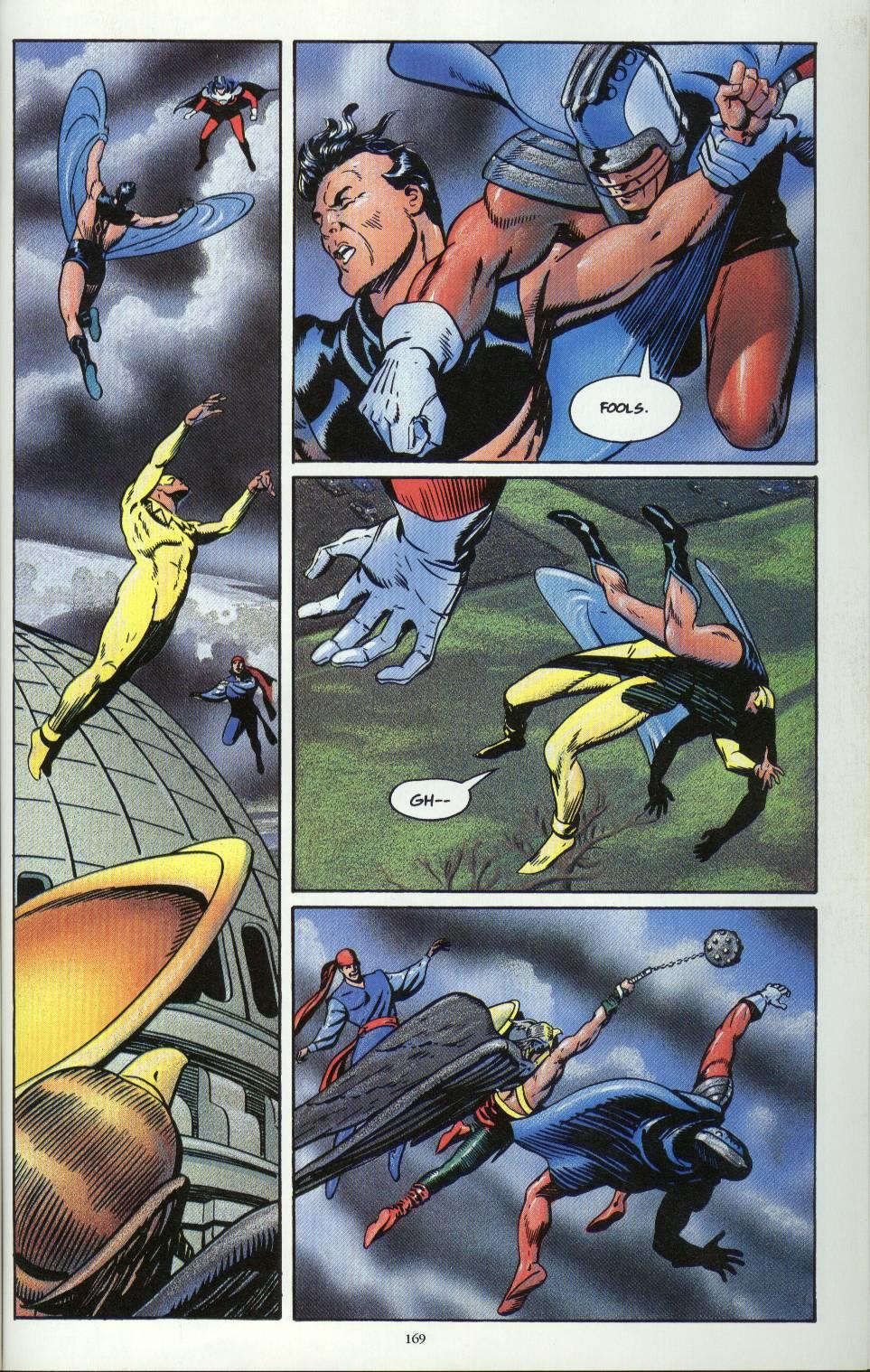
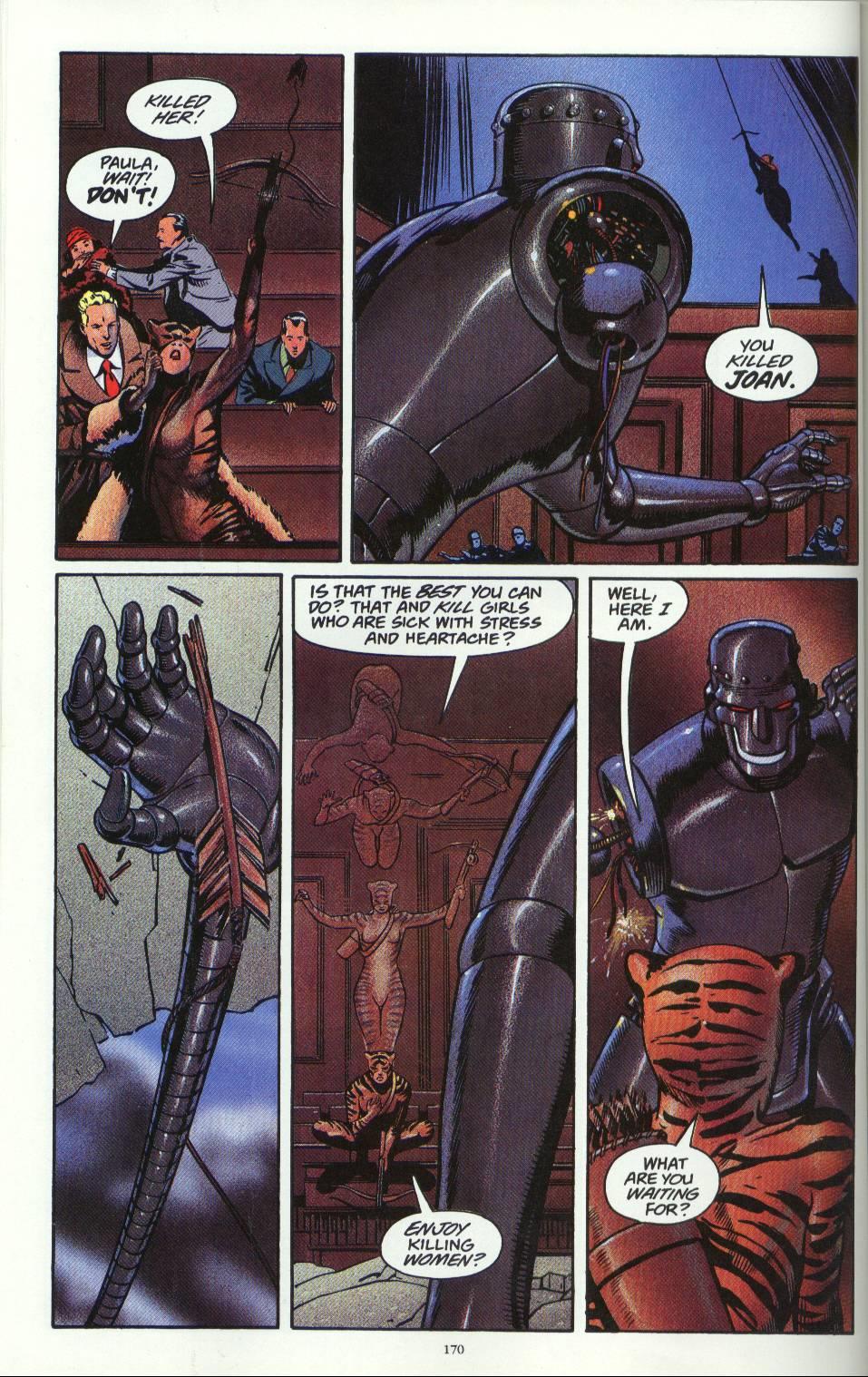
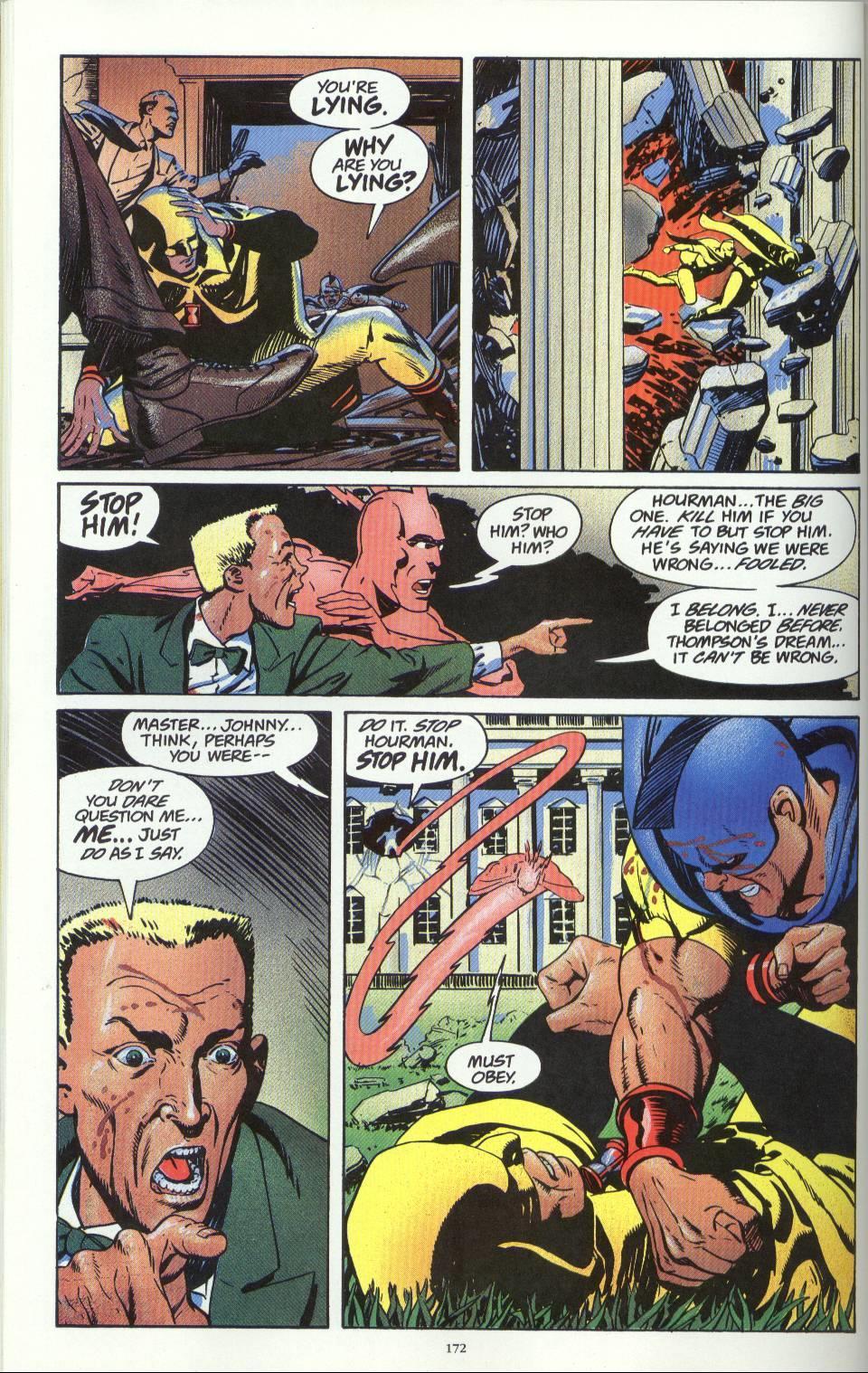
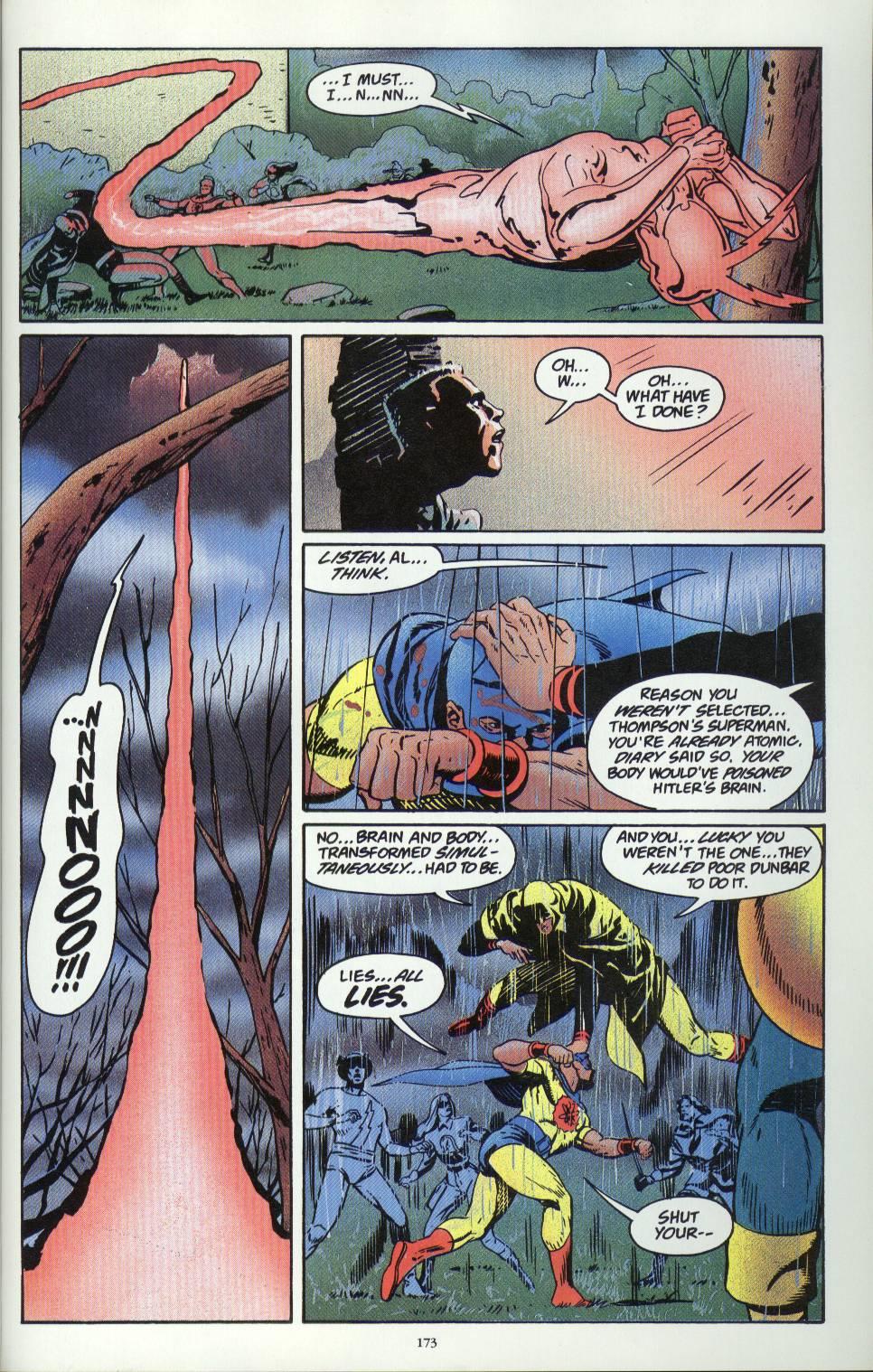
Category Archives: 90s DC

Hex for the Holidays by Emily Scott

Hello, Unspoken, and happy holidays! Many of you are probably reading this as you look forward to a relaxing few days of food and fun with your families….haha, yeah right. It’s far more likely you are scoping this out as you curse whatever airline has delayed your travels or are hiding from some drunk, overbearing relative, so I hope this article provides a welcome respite from whatever familial hell you find yourself in. Grab some pumpkin pie, liberally douse in Cool Whip, try not to fall into a food coma, and enjoy Hex for the Holidays!

Even though I am still relatively new to actually reading comic books, I have acquired a lot of peripheral knowledge about a myriad of characters over the years from friends, but before reading the subject of this article, I knew only two things about Jonah Hex:

1. He is a Western character.

2. They made a movie about him starring Megan Fox, and everyone hated it.

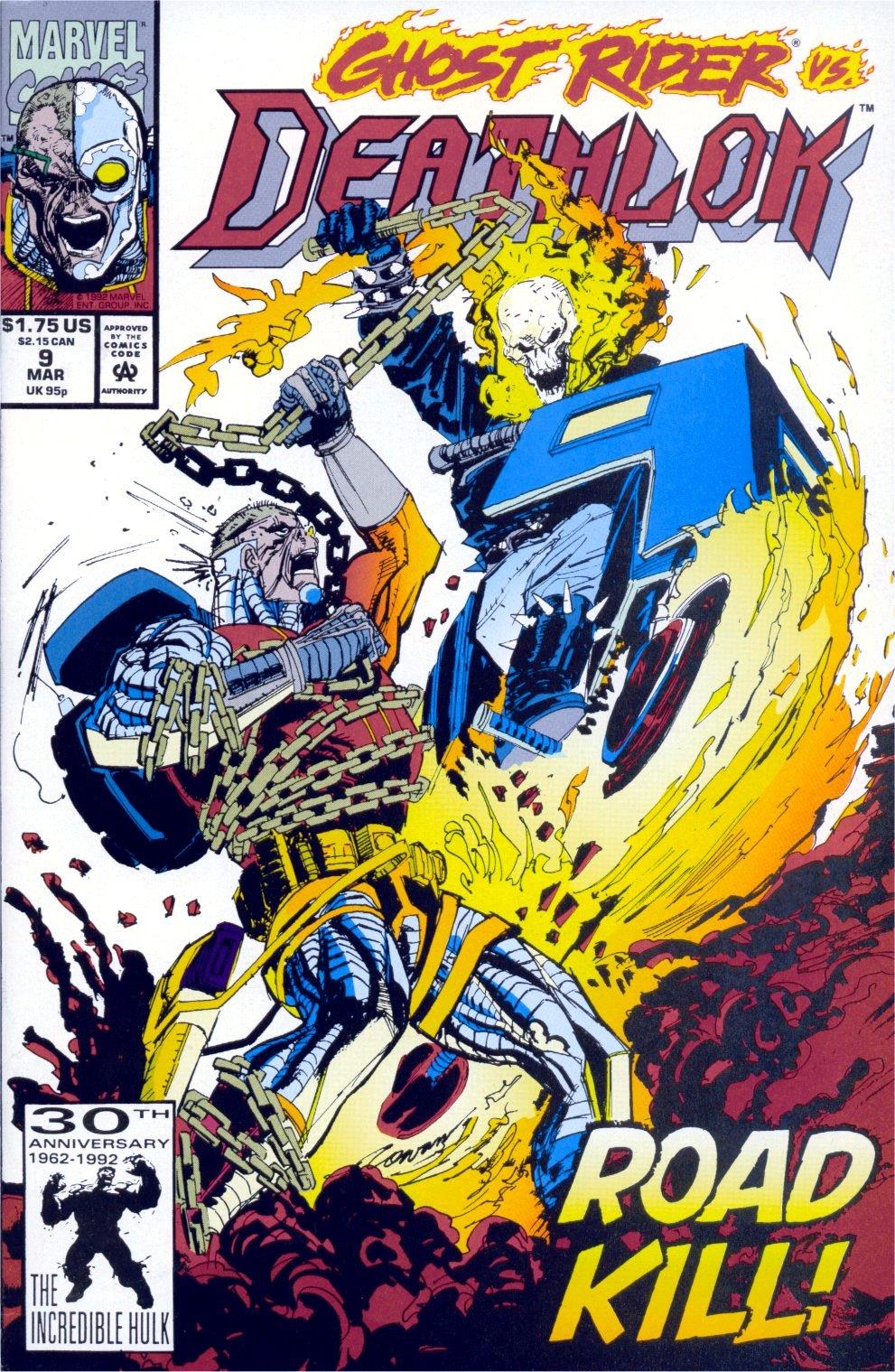
That’s it. Trying to get a better sense of what I was about to read based on the cover didn’t help much either. I ended up assuming he must be some sort of demon or undead creature in the vein of Ghost Rider.

I also could have gone with Ol' Timey Terminator based on the glowing red eye and skull imagery.
I also could have gone with Ol’ Timey Terminator based on the glowing red eye and skull imagery.

Imagine my disappointment, then, when I started the comic, 1993’s Jonah Hex: Two-Gun Mojo, and realized that Jonah Hex was just a guy without any sort of powers, demonic or otherwise. The Western is far from my favorite genre, so when I was introduced to Hex while he is in the middle of being strung up by outlaws and no lasers came out of his glowing eye, I settled in for what I imagined would be pretty rote five issues of saloon shootouts, horses being hitched, and people saying things are “mighty fine.” (Of course, anyone who knows anything about Jonah Hex would find this to be a silly and unnecessary thing to be disappointed by, but we’ll get to that.)

Hex, of course, gets rescued because it would be a very short story if he didn’t. His savior is a fellow bounty hunter by the name of Slow Go Smith, who was tracking the gang attempting to make my read a quick one. Slow Go could have very easily devolved into an insanely cliched Old West character, but as soon as he cuts the heads off the gang to collect his bounty rather than transport the bodies, I was won over. (What can I say, I’m a girl of simple tastes.)

That might be the most beautifully rendered decapitation of a corpse I've ever seen.
That might be the most beautifully rendered decapitation of a corpse ever.

Even when I was unfairly convinced this would just be a tale of a grizzled ol’ timey lone gun, I took solace in the fact that it was a gorgeously drawn tale of a grizzled ol’ timey lone gun. Every panel, no matter how gruesome the content, is beautiful to look at and seems rendered with the utmost care. The colors are simultaneously rich and slightly faded, like they’ve been left out in the hot desert sun. All credit where it’s due to the artists (pencils by Timothy Truman, ink by Sam Glanzman, and colors by Sam Parsons) for depicting events that you’d have a hard time looking at in real life with images you can’t look away from.

Hex and Slow Go make their way to town to drop off the heads and learn that the bounty has already been mistakenly split amongst the townsfolk, who apparently decided one dead gang was as good as any. While they wait for the bureaucracy to sort itself out (some things are universal), they head to the nearest saloon, where they teach these trigger happy townies a thing or two about race relations by defending the Indian saloon girl from their harassment. Fairly standard fare for a Western, sure, but Slow Go gets in one of my favorite all-time moves:

I like this so much it could happen once every gunfight and I wouldn't complain.
I like this so much it could happen once every gunfight and I wouldn’t complain.

Despite him saving his life multiple times in the, like, hour they’ve known each other, Hex kicks Slow Go out of their room later that night because he can’t deal with snoring, forcing his new friend to shack up in the barn with some horses and dead guys (the men mistakenly shot by the residents of this happy little hamlet.) This is the part in the story where my interest noticeably piques:

Yay, zombies! I know a lot of people are like, "Hur de dur, I'm tired of zombies," but whatever. Zombies make everything better.
Yay, zombies! I know a lot of people are like, “Hur de dur, I’m tired of zombies,” but whatever. Zombies make everything better.

The downside of this addition to the story means no more Slow Go, who can’t fend off a whole troop of what appear to be corpse stealing zombie sideshow folk. The upside is that I get to see him throw his gun at someone again.

Seriously, the comic could be nothing but this wisecrackin' ol' coot throw his gun at people, and I would be happy.
Seriously, the comic could be nothing but this wisecrackin’ ol’ coot throwing his gun at people, and I would be happy.

Hex shows up just in time to get a grazing by a bullet and the blame for Slow Go’s death, even though the sheriff has no plausible explanation for how Hex could have shot himself and hid the gaggle of missing bodies, let alone a real motive why he would have killed his snoring companion. The town prepares for Hex’s hanging like it’s Christmas, the Super Bowl, and the second coming of Christ all rolled into one.

While observing the preparations for the festivities, Hex is once again rescued, this time by the Indian girl from the saloon he defended the previous day. The girl uses one of the oldest tricks in the book, the seduce-and-shoot. (Real talk for a second here: all the time in fiction ladies use their feminine wiles to distract a guard long enough for them or someone else to get the drop on said guard. Would it really be so easy? I like it as a trope, but if some lady really just sauntered in and disrobed, how many dudes would not find that insanely suspicious?)

With the sheriff handled like a cheap piece of luggage, Hex and his new friend escape the jail and make a getaway that involves him shooting half the town in more incredibly artistic violence. The townsfolk who are left unscathed are more than a little upset that their entertainment has skedaddled and set off in pursuit. Most notable among them is the greatest old lady of all time:

Hex Picnic
Just as I wouldn’t mind a gun being thrown in every fight, I would be more than happy if this old lady appeared in everything I ever watched or read, demanding some fried chicken and an execution.

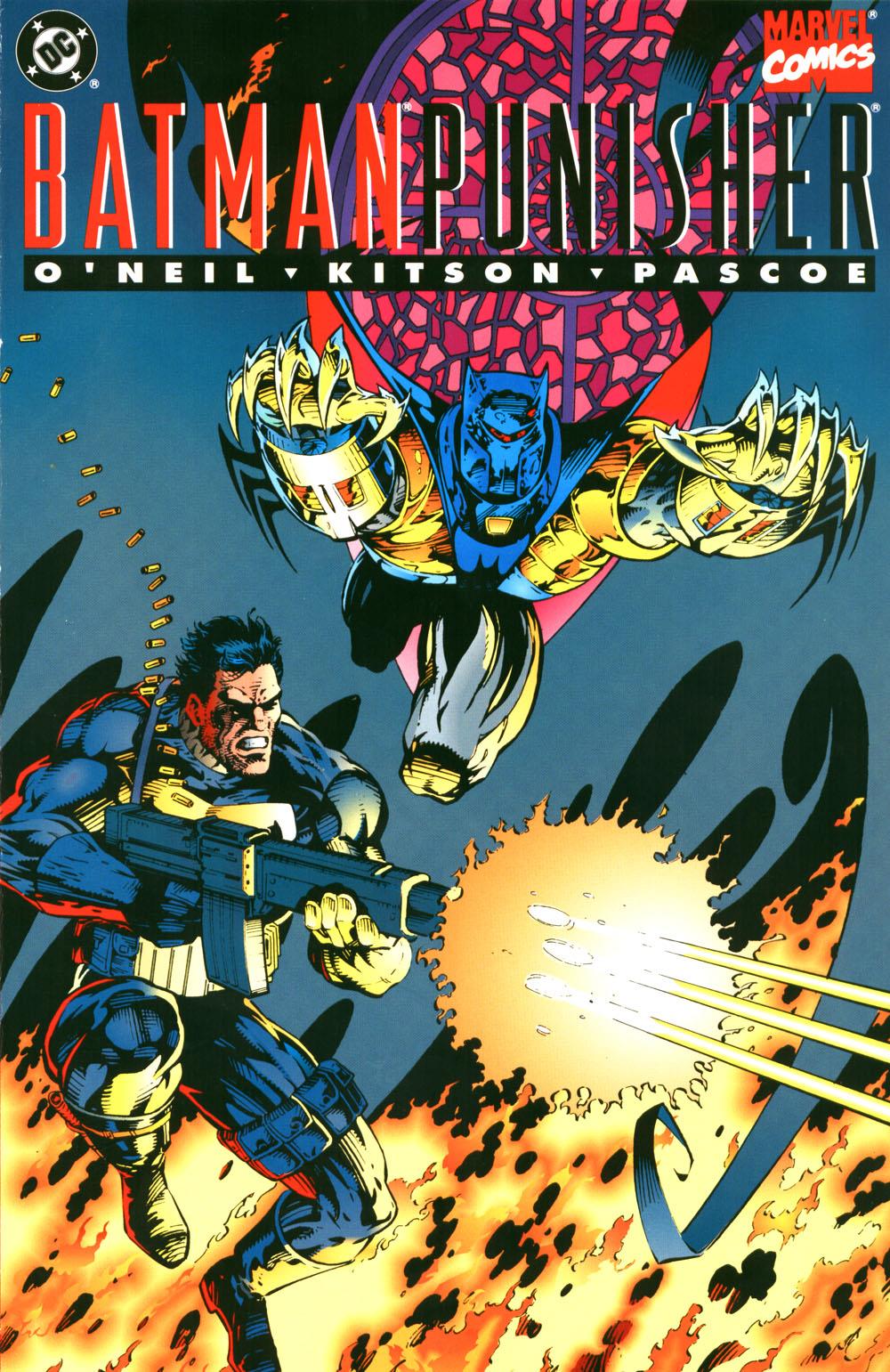
Hex shoots enough of the pursuing bloodthirsty bastards (including my new favorite character ever, unfortunately) to drive them back to their waiting chicken, but the escape is not without cost, as his new favorite lady succumbs to a case of being shot in the back. This seems to be a pattern with Hex, him making a new friend and them biting the dust within a 24-hour period. I assumed he would be a lone wolf like, say, the Punisher, who doesn’t want companionship, but Hex actually seems pretty adept at forming new connections with others, which makes it all the sadder when they keep dropping like flies.

It adds a layer of emotional complexity to the character that I was not expecting to find, but it also makes me imagine unintentionally funny scenarios where Hex introduces himself to a series of people and while he is extending his hand to shake, someone else comes along and cuts their head off with a sword or throws a stick of dynamite at them. Hex then mutters a, “Not again,” and rides off forlornly.

Hex next picks up the trail of the weirdo undead sideshow that murdered his buddy, finding them peddling a miracle elixir that will not just cure what ails you but also give you unnatural strength and agility. And when I say weirdo, I am not just whistlin’ Dixie:

If you had nothing but comics and cartoons to go by, you'd think fat people never did anything but eat whole chickens.
If you had nothing but comics and cartoons to go by, you’d think fat people never did anything but eat whole chickens.

Hex sneaks up on their camp and sees the undead guy who shot Slow Go pulled out of a barrel and fed a strange elixir, just not the same miracle tonic Doc Williams was peddling. Hex seeks out the good doctor in his tent and learns that his buddy’s assailant is none other than the legendary Wild Bill Hickok, who has once again come back to life and is now in position to get the drop on Hex.

Doc Williams does some of the most bizarre black magic I’ve ever seen, including using bits of the thieved corpses to make this elixir, and informs Hex that he plans to turn him into a walking undead puppet, just as he has done to Hickok. In images that will faintly haunt my soul for a little while, Doc Williams starts the pickling process on Hex, who has kept his wits about his enough to vomit the stuff back up.

As a Yankee dating a Southerner, I know his remark in the last panel, well, them's fighting words.
As a Yankee dating a Southerner, I know that his remark in the last panel, well, them’s fightin’ words.

While Hex ferments, Williams tells us the story of turning Hickok into a zombie. I often wonder how Hickok would feel about becoming one of America’s best remembered badasses, when, at the same time, the facet of his life we remember best is that he was shot in the back in the middle of a poker game.

Hex takes his chance to escape and ends up rolling out of his barrel and down a cliff. He is rescued once again by a nice farmer and his son, who nurse him back to health, lend him a horse, and send him on his way. We don’t see them meet a grisly death, but I kept expecting to see them get mowed down in the background as Hex leisurely rides away. How little they know about how close they came to an untimely fate.

That's not your dad's hand on your shoulder, son; it's the cold, impersonal hand of the Grim Reaper.
That’s not your dad’s hand on your shoulder, son; it’s the cold, impersonal hand of the Grim Reaper.

Hex meets back up with Doc Williams’ sideshow, with the added complication that they briefly have to fight on the same side, as they both, along with the soldiers escorting the circus troupe, are being attacked by some Indians.  Hex manages to get away and make another new pal in the process, but we all know where this is headed, right? Yep, his new buddy, a sergeant, gets tagged in the back and apparently got the memo that the farmer and his son did not break the Hex friendship curse. He finishes himself off so Hex will not feel obligated to drag his dying body with him in his escape.

Hex Jersey
I like the idea that making fun of New Jersey is universal, regardless of the era.

Finding the very obvious trail left by Doc Williams’ dead associates and the smoke from his cooking one of them up, Hex must now face down the myth himself, Wild Bill Hickok. Hex cops to being nervous to face down an undead legend, especially one who can no longer die, but he displays more sense than most characters facing zombies and aims for the head. Now, you see a lot of brains splattering out the back of a head in this comic, but this time might be my favorite.

Hex Braaaaaains
The gore so nice, you see it thrice.

Bereft of any more undead bodyguards, Doc Williams is left defenseless against Jonah Hex, who does not give him the courtesy of a quick death. Instead he leaves him for the Apaches, shooting out both his knees so he can’t escape and letting him know just how vicious his death will be when he is found. Slow Go’s death now avenged, Hex is free to ride off into the sunset and make some unsuspecting new friends.

I thoroughly enjoyed this comic, even if Westerns aren’t my particular glass of sippin’ whiskey, and not just because of all the undead action. I’ve raved quite a bit about the beautiful art, but I would be remiss if I didn’t tip my hat to Joe R. Lansdale’s clever script, which takes some tropes that are about as worn as an old boot and breathes new life into them like they took a swaller of Doc Williams’ juice. (Look, I resisted the urge to use Old West cliches this entire article, so the way I figure it, I’ve earned the right to use them all now.)

It’s just about time for this article to hit the ol’ dusty trail, so I hope you’ve enjoyed sittin’ with me for a spell! If you’re still hiding out from your family, there are certainly worse ways you could spend that time than checking out this comic. Be sure to come ’round these parts again next week, when this blog’s exemplary proprietor Dean Compton returns to the Golden Age!

The Golden Age #2-A New That Never Was

Hey, Legions of the Unspoken!  I must beg your forgiveness for the absence!  I have just changed jobs, and while I was finishing up at one, I was training at another.  While things ain’t settled just yet, I am attempting drumming up a bit of time to get back to satisfying all the urges I know all of you have built up for more 90’s comics in general, and more Golden Age in particular!

Before I get back to the good stuff, I’d like to encourage y’all to check out the Facebook page!  It’s really starting to take off, so get over there!  I’m able to post a few pics every day, so you won’t be waiting so long for your 90’s comics book fix!

When last we visited The Golden Age, things were starting to look bleak for our beloved Justice Society of America.  And I take no joy in this, kids, but it is going to get worse before it gets better.

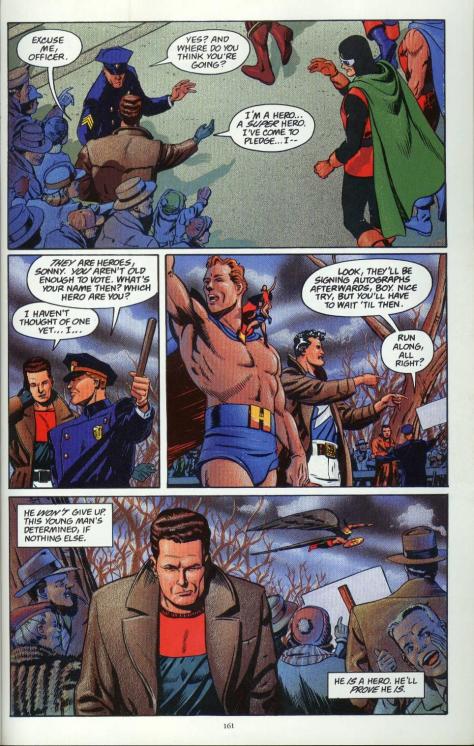
Before I delve too far into what happens in issue #2, I want to take a step back and discuss what happened with The Atom in issue #1.  For those of you who may not be aware, The Golden Age Atom started out sans superpowers.  He was just a short guy who was in really good shape who could fight very well.  He adopted The Atom persona and superhero life because he was tired of getting pushed around by bullies larger than him.  Later, via exposure to atomically-powered villains or possibly radiation, he gained super-strength.  Before then, though, he has some issues with feeling inferior, and why wouldn’t he?  Think about it; he was already short, had gotten into the superhero game as an act of inferiority, and then he somehow gets into the JSA, where not only were there regular-sized crimefighters who were even more skilled, e.g. Sandman or Wildcat, but he also standing next to veritable gods such as Green Lantern or The Spectre!  Anyone would feel small, but a man who already felt small would probably feel like an amoeba.

That complex leads The Atom into a dangerous waters during The Golden Age, starting in issue #1…

The Golden Age #1 - Page 31

Of all the issues that fester inside The Atom, causing a young man’s head to swell, I think it is his youth that ultimately leads him astray.  Doesn’t that same cloud haunt most of our youths?  Remember when we were all headstrong, extreme, and excited?  Remember when all of our dreams were going to come true?  Remember the 90’s, Legions of the Unspoken…Remember the 90’s…

The Atom, unbeknownst to him, is being used.  What he does know is that he again has meaning, he again has purpose, he again is…big.  At least for now, under Tex Thompson’s New America.

The Golden Age #2 - Page 4

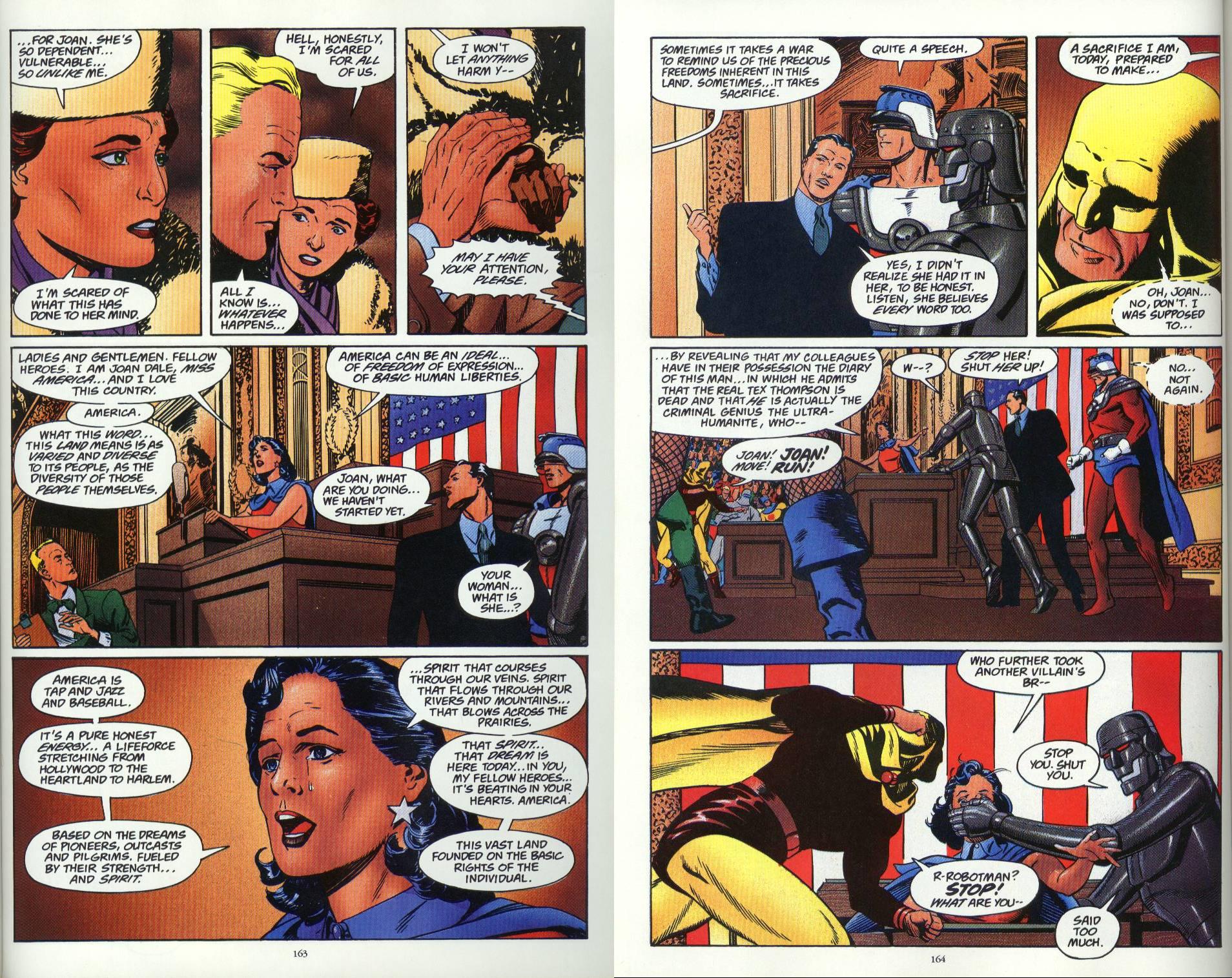
Before we move along, let’s not lose sight of the fact that Robotman is sporting the most grotesque smile this side of Pennywise the Clown that I have ever seen.  If one of us was in this crowd, you know  that we would have noticed that and headed as far away as we could before that facade shattered.  I don’t care if he has man in his name or not, no robot with such a smile can have good intentions.

Robotman and The Atom we know, but who’s that third guy?

The Golden Age #2 - Page 6

Daniel Dunbar doesn’t know it yet, but he is the key to one of the most heinous plots in superhero history.  I think we’ve all figured out by now that Tex Thompson is much more than he seems, though.

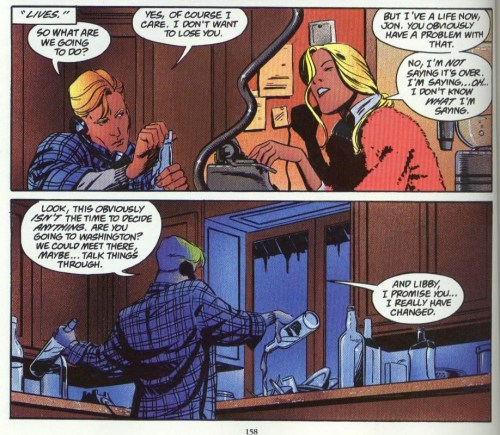
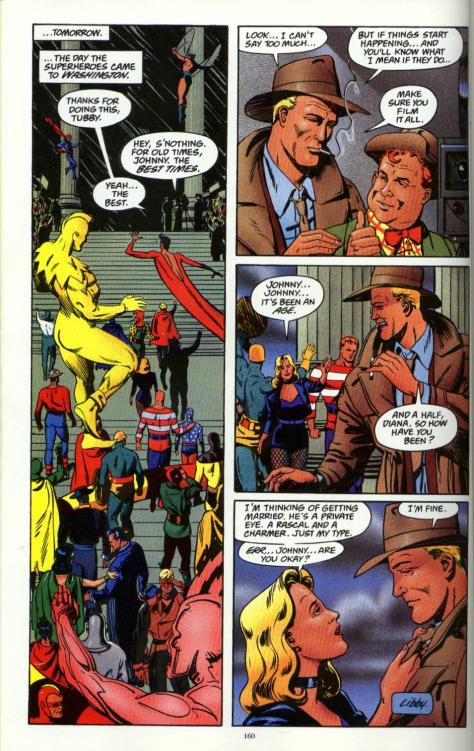
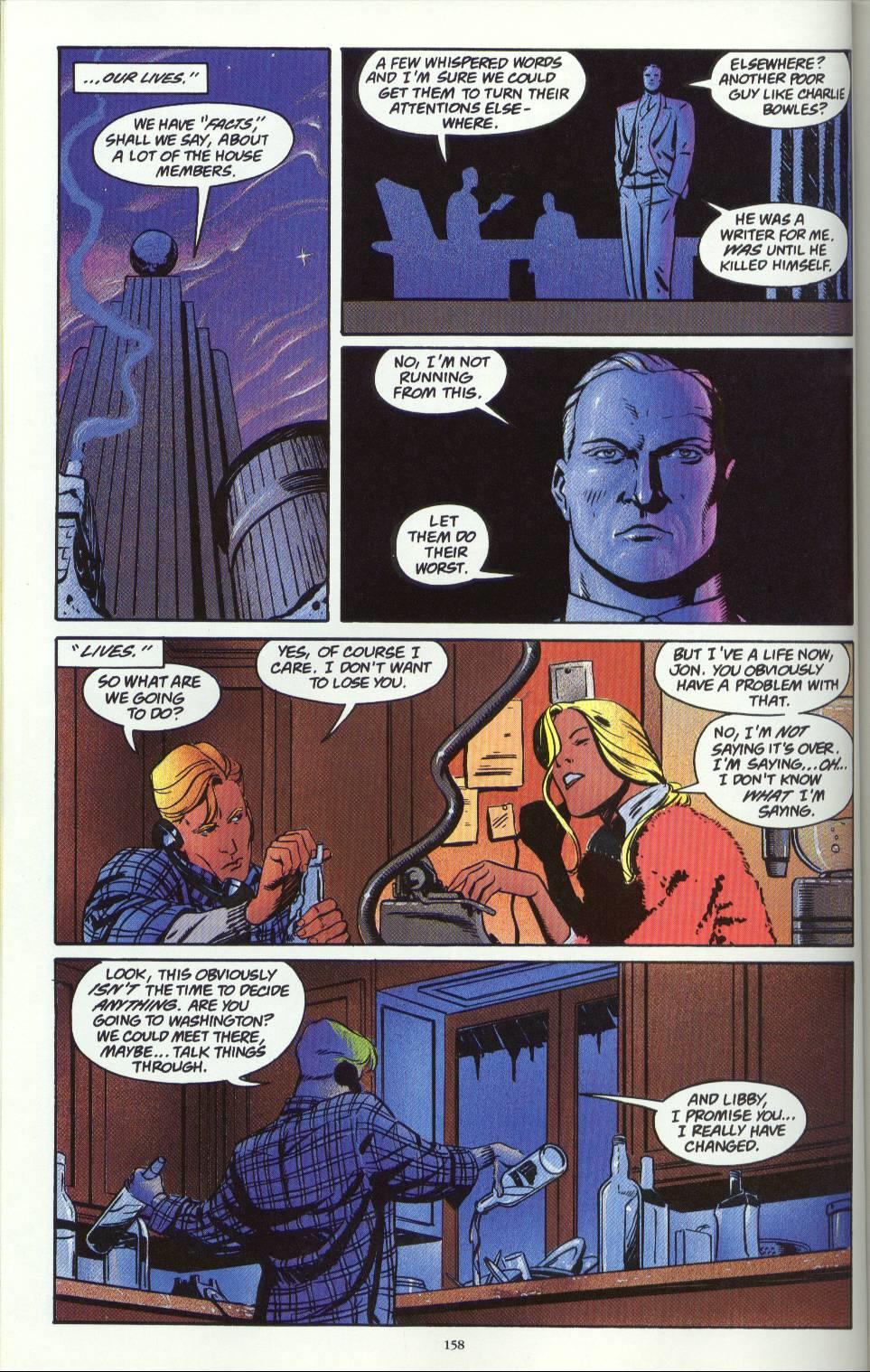
We’ve also figured out that our heroes, no matter how shiny their adventures make them seem, have blotches of gray all over them.   This can make them reprehensible to us, or it make them all the more heroic.  In the case of Jonathan Law, Tarantula, his gray is shattering the respect we had for him, especially as he denigrates and mistreats Liberty Belle, a favorite of many Golden Age fans.  What’s especially poignant, though, isn’t that Law is now dark and “gritty” for the sake of being gritty.  This is a natural evolution of the character.  It makes sense that Law would have a hard time writing after penning a book about the exploits of being a wartime mystery man.  That doesn’t excuse his actions or his spiral into the clutches of alcoholism, but it does make sense.

Starman’s descent into madness appears to have quelled some, also making sense.  As someone of above average intelligence who deals with some mental roadblocks of his own in regards to anxiety and the like, I have my good days and bad days, but after a period of thought, I usually come to terms with whatever fears and mood I am dealing with.  Starman is a genius beyond the genius level, and therefore, he is able to do the same.   Of course, I feel guilty about a lot of things, but exposing the world to an energy that gave folks super powers and gave those without superpowers who fought crime under masks the inclination to do so isn’t one of them.  Johnny Chambers listens on as Starman pours his heart out.

The Golden Age #2 - Page 8“I have the stars” is a line that stands out to me.  I clung to those words tightly during a confused adolescence that was at times bereft of companionship from my peers.  I clung to Ted Knight’s notion here that he could find comfort…not just solace, but COMFORT in the stars the way I had to find comfort in my comic book heroes, wrestlers, and baseball stars when I had no one.

Johnny Quick  Chambers is in that awkward spot where he wants to help a good friend, but he just doesn’t know how.  He also doesn’t want to offend him, but he just thinks this is a crackpot of an idea.  I never understand why superheroes are such skeptics.  Johnny has seen Green Lantern, The Spectre, and many other beings powered beyond belief in hundreds of different ways, but the idea that Starman pulled this radiation to Earth and it resulted in the spawning of crimefighters with and without powers is ridiculous to him.  The Spear of Destiny sounds more ridiculous!  Then again, maybe Johnny is just too much of a realist to believe such a thing.  One way or another, he is trying to do be a good pal, and he is doing a decent job of it.

Daniel Dunbar is trying to find meaning in his life.  In issue #1, his life fell apart, and while you didn’t see it here, I am sure that each member of the Legion of the Unspoken picked a copy!  He faces a big test soon, and he ponders his future the way any young man on what he perceives as the precipice of greatness would.  Of course, his future isn’t what he thinks it shall be…

The Golden Age #2 - Page 10

The Golden Age beckons us all, and it even beckons those who say that its embrace no longer holds sway over them.  The siren song sounds so sweet that it can even entice the most nobly stalwart of the heroes, especially when combined with the stress of a semi-fascist government inquiry and the resignation of his friends due to the besmirchment of their reputations by said inquiries.  It can even entice Alan Scott, Green Lantern.

The Golden Age #2 - Page 11

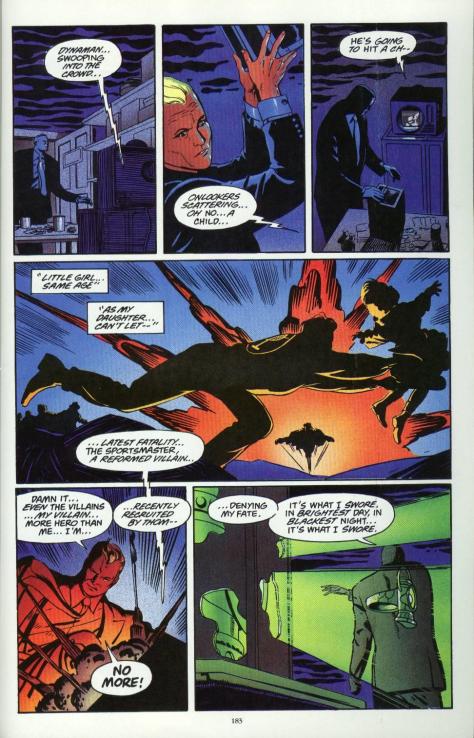
Of course, our heroes are not the only ones having to adapt to a new age.  The villains of The Golden Age are not held in some sort of stasis that enables them to elude the tendrils of societal changes and the grasp of aging.  Sportsmaster is back in the game for noble reasons of his own, even if his admirable catalyst puts him into action  of the criminal variety.

The Golden Age #2 - Page 12

The Golden Age #2 - Page 14

The Golden Age #2 - Page 15

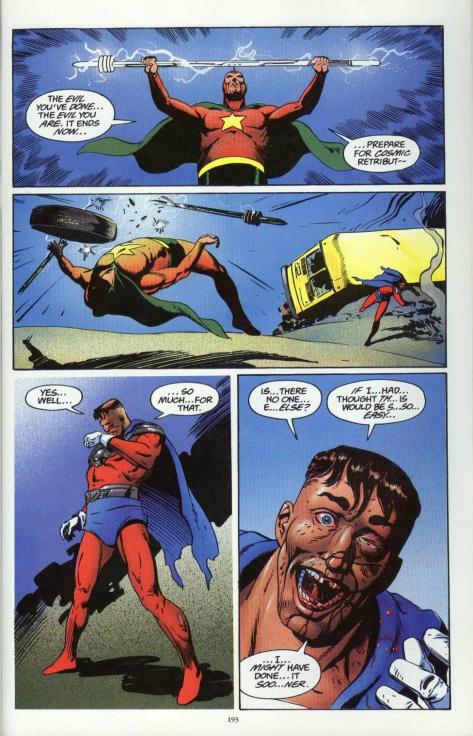
Green Lantern’s fight against Sportsmaster sans ring is one of those moments when one is reading an epic that doesn’t stand out during the first read, but it gets better and better upon repeated readings.  I just can’t help but feel for Sportsmaster here, engaging in criminal activity in an effort to find his daughter and unable to defeat Alan Scott, even when the Golden Age Green Lantern is bereft of his magic ring.

I understand that these guys, Sportsmaster included, are the bad guys, but every now and then, I simply cannot help but feel sorry for them due to their horrendous Won/Loss records.  Even when victory seems certain for the villains, the valiant heroes conjure a way to find a win.  This time however, thanks to Green Lantern not having his ring and Sportsmaster possessing a gun and a desire to win at any costs, Sportsmaster gets the better of Green Lantern here, although Green Lantern isn’t killed.  I hope Sportsmaster goes on to a happy life with his daughter!

Tex Thompson continues his crusade for an American hero as he and his team conduct their experiment on Daniel Dunbar.  I don’t think I am spoiling anything by saying nothing good can come from this.   I mean, I don’t recall the piece of culture where folks staring at mushroom clouds from bunkers worked out well for anyone.

The Golden Age #2 - Page 17 The Golden Age #2 - Page 18

That’s right folks, they nuked Daniel Dunbar.  Nuked him.  For most folks other than the Hulk, that would result in death, for Daniel Dunbar it doesn’t seem to…

The Golden Age #2 - Page 19

So now what I referred to earlier as ominous is now goddamn terrifying.  No one should trust Tex Thompson, no matter how much he waves the flag and spouts off rhetoric that sounds good, one should be able to discern that he is rotten to the very core.  It saddens me how often folks in our reality fall for this nonsense, but it saddens me even more when heroes I admire, such as The Atom and Johnny Thunder, fall victim to the same inanities.

The interaction between The Atom and Johnny Thunder (and Johnny Thunder and everyone) is proof of just how much James Robinson loves and understands these characters.  Johnny Thunder barges in, not thinking of protocol and security, and when he finally sits down with The Atom, The Atom has some harsh words for him.  Of course, perhaps that is because The Atom has come to play the Johnny Thunder role in Tex Thompson’s New Order, as he has been relegated, unappreciated, and perhaps only merely tolerated…

The Golden Age #2 - Page 20 The Golden Age #2 - Page 21

The Atom’s youth, arrogance, and eagerness are now manifesting in disgruntlement with the administrative bureaucracy he now finds himself utterly enmeshed in, and he finds there is nothing he can do about it.  He’s wrong about one thing, though; it is now Daniel Dunbar getting most of the accolades and glory…

The Golden Age #2 - Page 22

The Golden Age #2 - Page 23

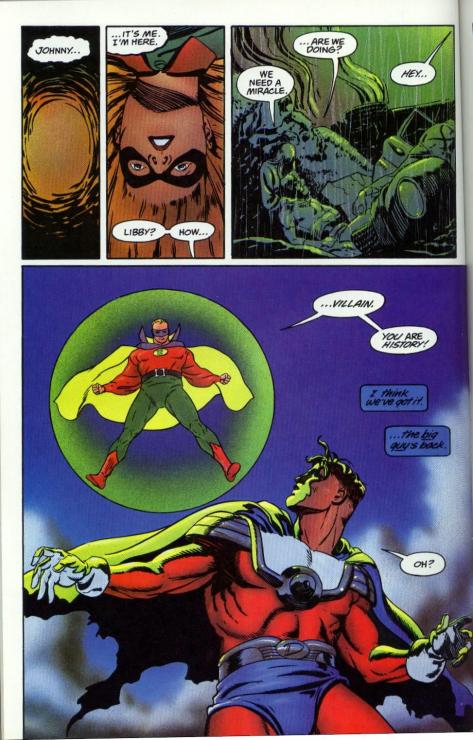
Dynaman is alive, real, and perhaps we’re all damned, regardless of the bright colors and amazing powers!  His powers seem limitless, although there does some to be a caveat to that…

The Golden Age #2 - Page 24

The crowds gobble up every word, as they always seem to when they should be questioning the subject most.  That’s life, I suppose, and at least Paul Smith makes something so upsetting to me look so beautiful.

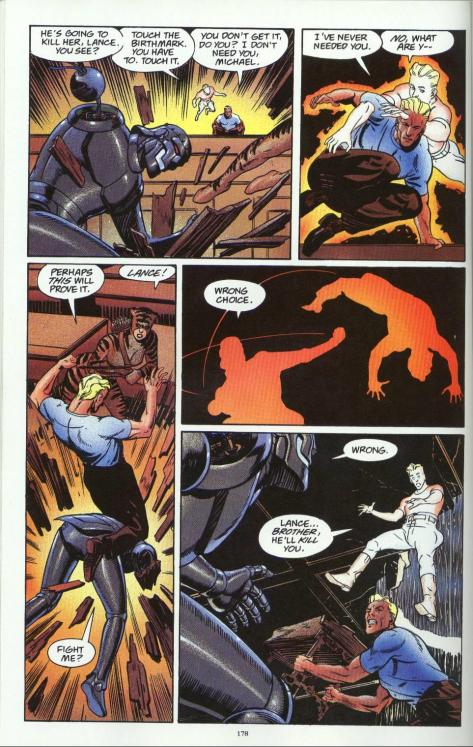
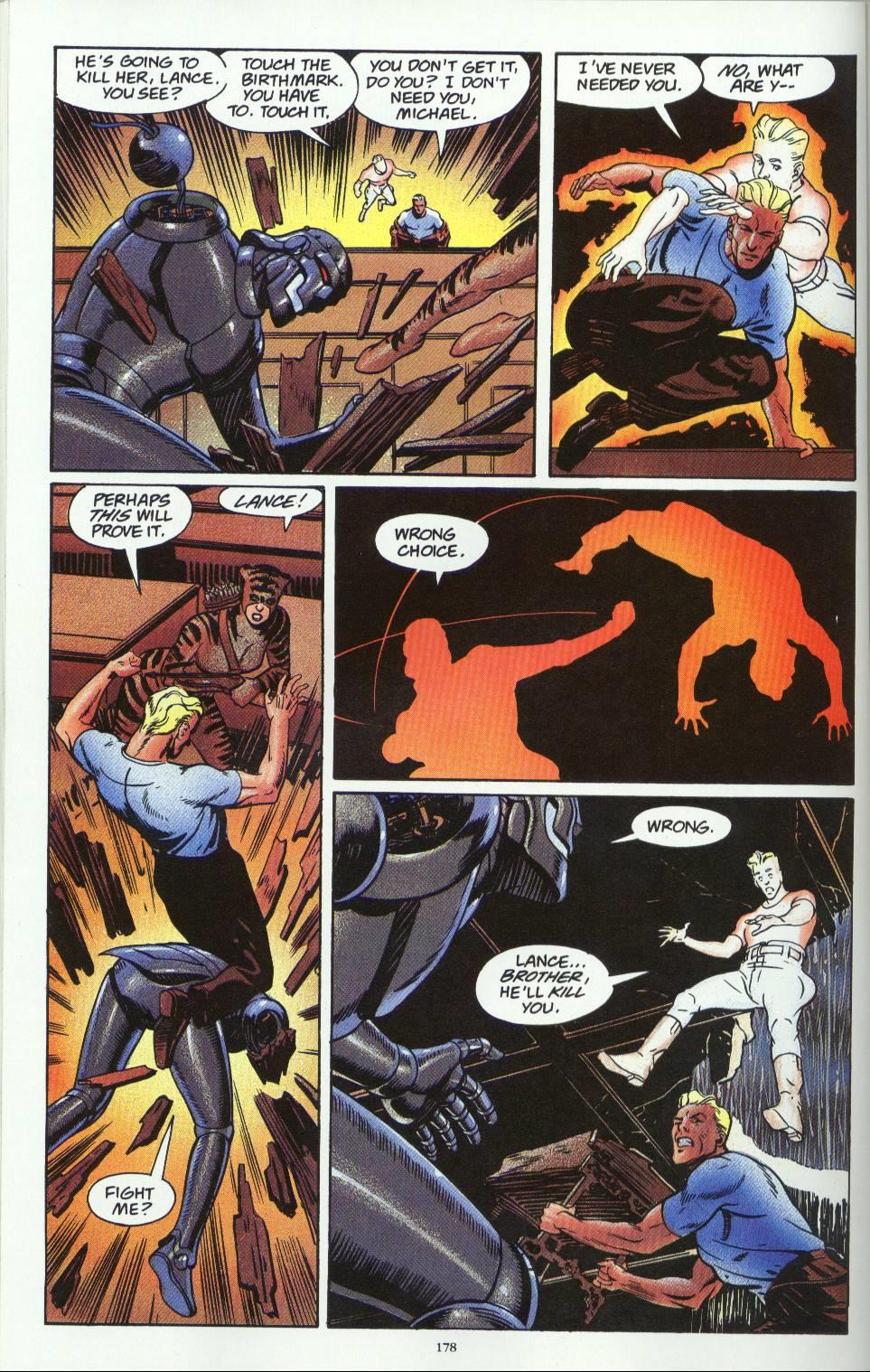
James Robinson also remembers all the heroes you don’t, such as little known Quality Comics hero, Captain Triumph.  No, not the Triumph who appeared during Zero Hour (although don’t worry folks, we are gonna get to Zero Hour and his adventures sooner rather than later!), but an old hero who hadn’t resurfaced in some time when James Robinson resurrected him here!  Of course, James finds a new and believable spin for him, and then Paul Smith does the best job drawing an annoying ghost I have ever ever seen.

The Golden Age #2 - Page 26

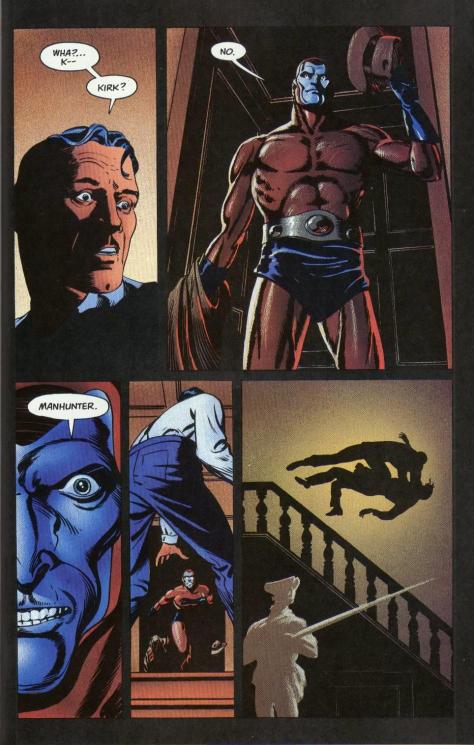
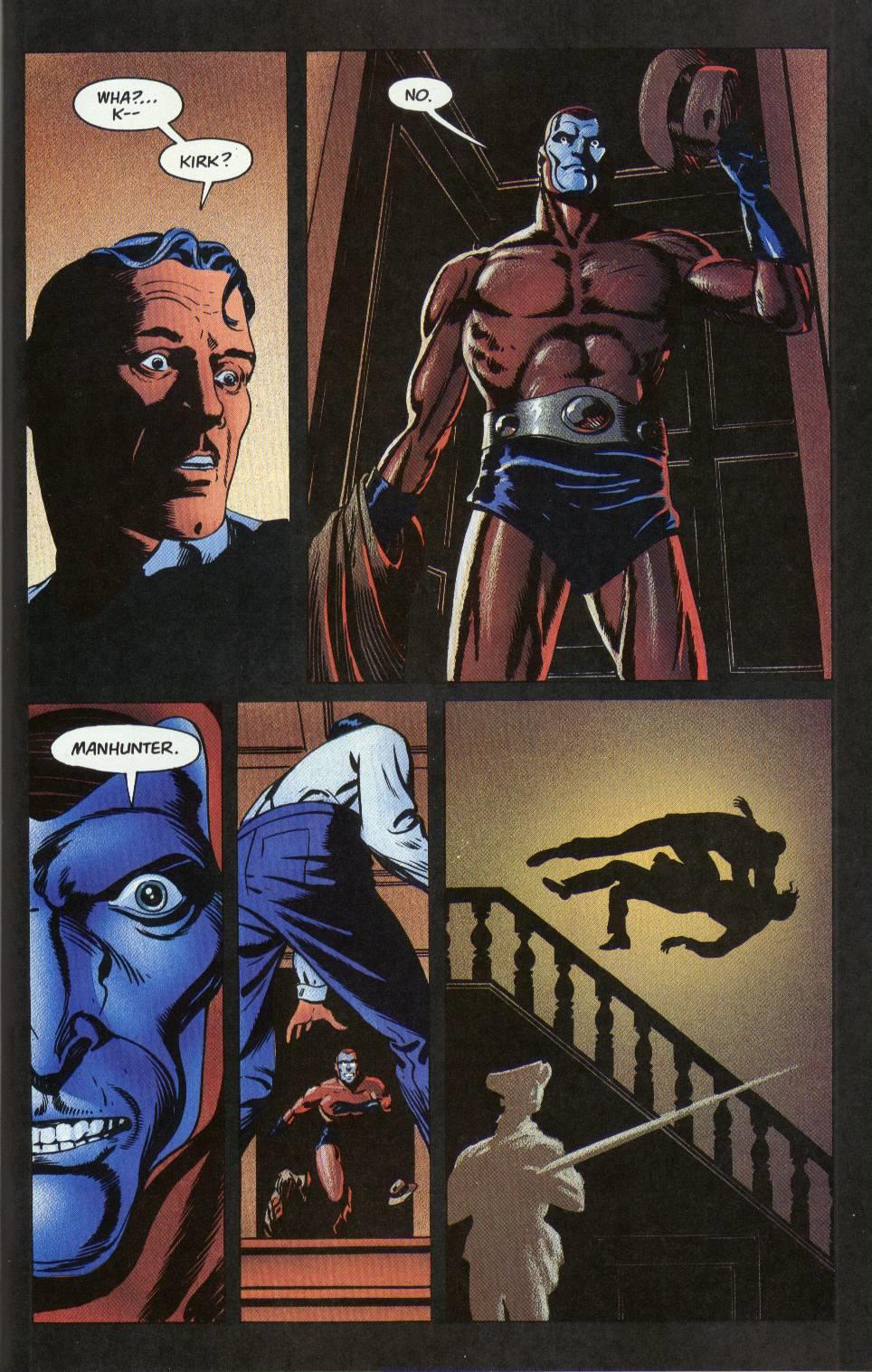
 While Gallant is pestered by a metaphysical annoyance, Paul Kirk is more than annoyed by the killers after him.  Life for Manhunter is constantly being on the run.  The folks willing to off an entire homeless shelter (including the padre who ran it) aren’t going to just up and quit just because they don’t get their quarry the first try.  Their motivation must also be more than cash as well, because it seems unlikely hired killers would be so messy and careless.

What the killers did not count on was Paul Kirk finding some assistance in an unlikely place.  Just as they swoop in for the kill, one of Tex Thompson’s castoffs returns to help.  He doesn’t know it yet, but Bob Daley is about to set events into motion that will keep the most nefarious plot from coming to fruition…and it all starts at what appears to be the most frigid gas station on the planet.

The Golden Age #2 - Page 34 The Golden Age #2 - Page 35 The Golden Age #2 - Page 36

I think other than the amnesia, we have all felt like Paul Kirk here and yon in our lives.  We have all felt chased and hounded.  We have all felt something gaining on us.  Something just around the corner, and we have all been too afraid to ask for help.  Thankfully for most of us, trained killers weren’t after us, but this is a nice moment to remind us that sometimes the only thing separating our heroes and us is the fact that they are on the printed page, while our pain and fear are not contained within thought bubbles and balloons….

And it would appear from the looks of things, we have much to fear…and so does the JSA…

The Golden Age #2 - Page 45

Hope you enjoyed this look at The Golden Age #2!  Next week, we have Hex for the Holidays as Emily Scott brings us a look at Jonah Hex:  Two Gun Mojo!  Then be back here for The Golden Age #3!

When Something Awful is Beautiful: The Golden Age #1

Hey there, Legions of The Unspoken!  I hope you enjoyed Emily’s entry last week as Punisher temporarily became a black man!  Check it out right now if you haven’t!  I find that story to be that perfect amalgam of 90’s silliness and 90’s coolness (which sometimes are one and the same) that excited me then and excites me now!  Of course, the fact that Punisher is the main character certainly won’t hurt it in my eyes since, as you all well know, Punisher is my favorite character.

What you may not know is how much I love the Justice Society of America.  Punisher is my favorite character, but the JSA is easily my favorite superhero team.  Bar none.  The difference between the JSA and second place IN MY HEART is the difference between a Martin Scorsese movie and the local community theatre performing Raging Bull.  I have to admit I’m incredibly interested in an awful local community theater production of Raging Bull, so if any of you have any videos of that, send them my way.

Of course, if you’re an elder member of the Legion of the Unspoken, (and we appreciate you greatly if you are), you know how much I love the JSA because you read my earlier article about how much I love the Strazewski/Parobeck 90’s Justice Society of America; The Golden Age, though, ain’t about that JSA.

The Golden Age #1 - Page 1

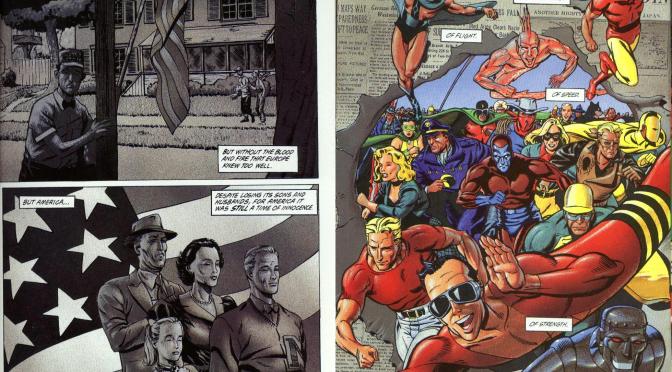
Already you can see stark differences between the world of the JSA with which we are familiar and the world here.  The dark tones of the cover, the burning image of a Life Magazine cover featuring the JSA, and even the embossed cover would lead you to believe that this ain’t your Daddy’s JSA.  It isn’t even the JSA we had loved a short time prior.

Of course, this is an Elseworlds tale, which is basically a tale involving DC’s characters in a different light that won’t affect continuity.  I think the Elseworlds tale most non-hardcore comic book fans are familiar with is Batman/Dracula:  Red Rain, where Batman becomes a Bat-Vampire, but anyone who only knows that comic is missing out.  DC put out some fine tales under this banner and even centered their annuals around the imprint in 1994.  We got to see everything from Superman landing on Earth and getting adopted by the Waynes instead of the Kents to Samurai Robin!  Ok, some of it was better than others, but most of it was fun and really good.  Very little of it ascended to masterpiece status, though.  The Golden Age is one of those exceptions.

Since this isn’t your JSA, and this JSA story takes place in a non-canonical situation, what exactly is it?  It’s the story of what happened to the JSA in a post-WWII world.  It’s the story of what happens when folks grow from the impudence of youth into the responsibility of adulthood.  It’s about the difference between your early to mid-20’s and your mid-30’s.  It’s about the difference between 1940’s America and 1950’s America.  It starts out, however, about the disappearance of the JSA, and the prominence of the lone “mystery man” that America still seems to care about.

The Golden Age #1 - Page 5

The Golden Age #1 - Page 7

The dichotomous juxtaposition of the Atomic Bomb, the JSA, and the other mystery men of the era is perfectly encapsulated by Paul Smith’s art and James Robinson’s words.  This series was my first elongated exposure to Smith’s work, and I was a fan from the first page.  I was more familiar with Robinson’s work at this point, but I was still blown away.  Many folks love his Starman series and rightfully consider it a masterpiece, but I think that the love and reverence for that series, no matter how richly deserved, sometimes crowds out the love and reverence that should exist for this series.  Perhaps that’s because Starman was an ongoing while this was a four-issue mini-series.  Whatever the reason, it’s a travesty.

I really enjoy the idea put forth about the “mystery men,” as superheroes were called then, vs. THE BOMB.  Few instances in history are as jarring or as brutal as the unleashing of atomic weapons on Japan at the end of WWII.  The JSA, All-Star Squadron, and their superhero compatriots at various publishers must have seemed silly in an instant to many in our world, as their brightly colored costumes clashed with the newly grey overtone of a world where tens of thousands of non-combatants could die in an instant, and the world itself could be destroyed in a torrential downpour of radioactive fire.  That’s our world, you know?  Now imagine how useless many of the superheroes would have felt in a world where they and the bomb existed.  After all, what’s the point of being a super strong person or being able to glide on wings if a Head of State could turn all of that ability into a mushroom cloud in an instant?

The Golden Age #1 - Page 18

That’s harsh, except for The Flash.  I’m a huge fan of The Golden Age Flash.  There’s something about his happy-go-lucky attitude that endears him to me.  Even a quickly darkening world can’t diminish his smile.  I think it is because he always comes across as though he thinks of himself as “Jay Garrick, Flash”, rather than “The Flash”.   It’s something Jay Garrick DOES, not something Jay Garrick IS.  The difference is subtle, yet powerful.

The others seem to be going nuts, growing old, growing mean, or all three in Johnny Quick’s case.  Hawkman is mostly on the going nuts side, but I find Mr. Terrific’s tale to be the most depressing thus far, as Terry Sloane literally emblazoned Fair Play across his chest as a mantra, only to turn his back on it in the name of capital gains.  Johnny Quick just seems to be growing old, and as we all might when growing older, gets increasingly tired of who he is without knowing what to do about it.

The Golden Age #1 - Page 17

And I bet you are asking,  “Who’s Tex Thompson?  What’s all this Americommando nonsense?”  But a less casual superhero fan might also be asking, “Why didn’t the JSA just go end WWII?” They’re both valid questions, and they’re both equally important to the tale.

The Golden Age #1 - Page 19

The Golden Age #1 - Page 16

So despite having been ineffectual stateside in the eyes of Johnny Quick and many other heroes, Tex Thompson, the Americommando, apparently saved the USA and the rest of the Allies during WWII by killing Parsifal, who negated super powers.   Parsifal is a cool name, and again, Paul Smith does a fantastic job making him look ominous, but not necessarily powerful.  Of course, as evidenced by the inability of the American superheroes to enter into the Second World War, sometimes being able to keep others from being powerful is the most effective power of all.

The heroes we have seen thus far, save Flash, have all been mired in insanity or vice.  Most of the heroes we will see in the rest of the issue will be the same.  One example to the contrary, however, is Alan Scott, Green Lantern.  As a paranoid post-WWII era is emerging, Tex Thompson does his best to stoke the fires that fuel the Second Red Scare.  Alan Scott is standing by his employees, and even in post-emerald days, he remains a noble gladiator dedicated to those depending on him.

The Golden Age #1 - Page 20

The Golden Age #1 - Page 21

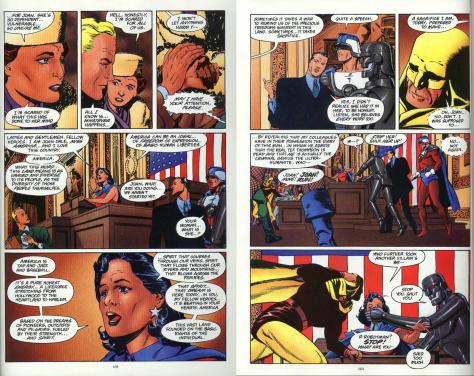
Even Green Lantern is cracking under the pressure of this era, and how could he not be, as he intends to stand by his men while Tex Thompson spews forth nonsense like this:

The Golden Age #1 - Page 30

James Robinson does a great job painting a time when America transformed from a nation fighting against fascism to a nation that had been frightened into accepting witch hunts and book burning.  It was a quick turnaround, no doubt exacerbated by the Cold War, the Korean War, changing social post-war mores and the like, and Robinson paints it as the scary time it had to have been.

Possessing radical viewpoints myself, I too often feel as though I am stymied and stifled for my beliefs (I’m a Libertarian Socialist/Anarchist), but what I face is nothing compared to the 50’s, with government committees looking into what people believed, what organizations they had belonged to, and how that could impact America.  Regardless of beliefs, people have the right to possess them without the government infringing upon them, and many people were deprived of these rights during the 50’s.  This is very well documented, as is the impact the climate had on our beloved comic books, with Congress looking into the impact comic books had on juvenile delinquency.  This social climate first led to comic book burnings and the manipulation of children to turn in comic books and boycott establishments that sold “questionable” material.  Eventually, the industry would self-censor by forming the Comics Code.  I suggest reading a book called The Ten-Cent Plague and also taking a look at the 1950’s volume of American Comic Book Chronicles.

Back to the 90’s!  Or back to the 50’s, I suppose!  I mentioned Paul Smith’s art being beautiful, but I have to say that it carries an especially peculiar air of beauty when things get grisly for our heroes.  Take Robotman, for instance, who is struggling mightily with his humanity.  I imagine it is hard to be a human trapped in a robot’s body.  Imagine how odd it must be to sense, but not truly feel.  Imagine being able to recall what it was like to be hungry without having to eat.  Imagine how everyone treats you like you like you are a robot, when you are actually a person just like them.  It would probably make you snap, and then you’d probably snap some people like Robotman does here.

The Golden Age #1 - Page 27 The Golden Age #1 - Page 28 The Golden Age #1 - Page 29

Paul Smith’s somehow beautifully depicts this moment of Robotman snapping.  Some folks draw so beautifully that the visceral nature of certain images gets lost in a sea of aesthetic appeal, but Paul Smith somehow manages to turn his refined beauty into an amazing depiction of brutal ugliness.  The blood on Robotman’s face following this farce of a fracas appropriately looks like tears after he breaks these mooks, along with possibly breaking what is left of his humanity.

Need more proof Paul Smith can bring the beautifully horrendous like no one else?  Take a look at the bizarre hallucinatory dream Paul Kirk, Manhunter is having as, in the irony of ironies, he has become the hunted.  Oh, and this dream occurs just before he wakes up to everyone in the shelter he is in GETTING BLOWN AWAY.

The Golden Age #1 - Page 40 The Golden Age #1 - Page 41 The Golden Age #1 - Page 43

It should not be, but it is a little funny when that priest gets it, as though he was going to wade into this firefight with a rosary and a shrill rebuke and reflect bullets.  I admire his bravery, but it seems like his best bet would have been to stay put; as a general rule, one cannot negotiate with a cadre of folks brandishing Tommy Guns.

Again ,though, I beg you take heed when I point out just how sparkling yet depraved these scenes are.  Madness, fear, and paranoia have never looked so amazing, and somehow, they are also more poignant now that they are beautiful.

Speaking of sad yet beautiful madness, we also see Ted Knight, Starman, in this issue.  Ted blames himself for everything.  He blames himself for the superhero explosion, but he also blames himself for influencing Einstein to create The Bomb.  Johnny Chambers goes to see out favorite Cosmic Rod inventor, and since he goes during the day, he does not like what he sees.  How could anyone enjoy talking to the world’s foremost mind in a state so neurotic?

The Golden Age #1 - Page 36

The Golden Age #1 - Page 37 The Golden Age #1 - Page 38

Of course, had Johnny Chambers come to see Starman at night, when he thrives, the picture would have been harrowing and frightening in a different way, as Smith and Robinson get across what it is to be a frenzied, driven, and highly intelligent man who can only break free of his neuroses at certain times.

The Golden Age #1 - Page 44

The Golden Age isn’t shining so brightly, and that’s what makes this a masterpiece.  Often, works that take a darker spin on beloved characters fail due to contrivance.  We see character flaws, but they are flaws that make sense with what we previously know about a character.  In The Golden Age, James Robinson had a grip so tight on these characters that you can almost hear them gasping to breathe as he chokes wonderfully depressing tales out of them, as he forces them to acknowledge their own dark sides, making these characters seem real.  Combine that with beautiful, yet starkly real depictions from Paul Smith, and I find myself unable to put this book down.

 I believe that a man who ran fast for years would be tired of it as he faces the 35th year of his life.  I believe that a genius who created a rod to harness the energy of the stars themselves has a weird bipolar nocturnal, and that the desperation over the negative impact of his genius weighs him down just as much as the elation over the positive impact must lift him up.   I believe in Alan Scott’s troubles and worries as he presides over his broadcasting business in the best and most noble way he can.

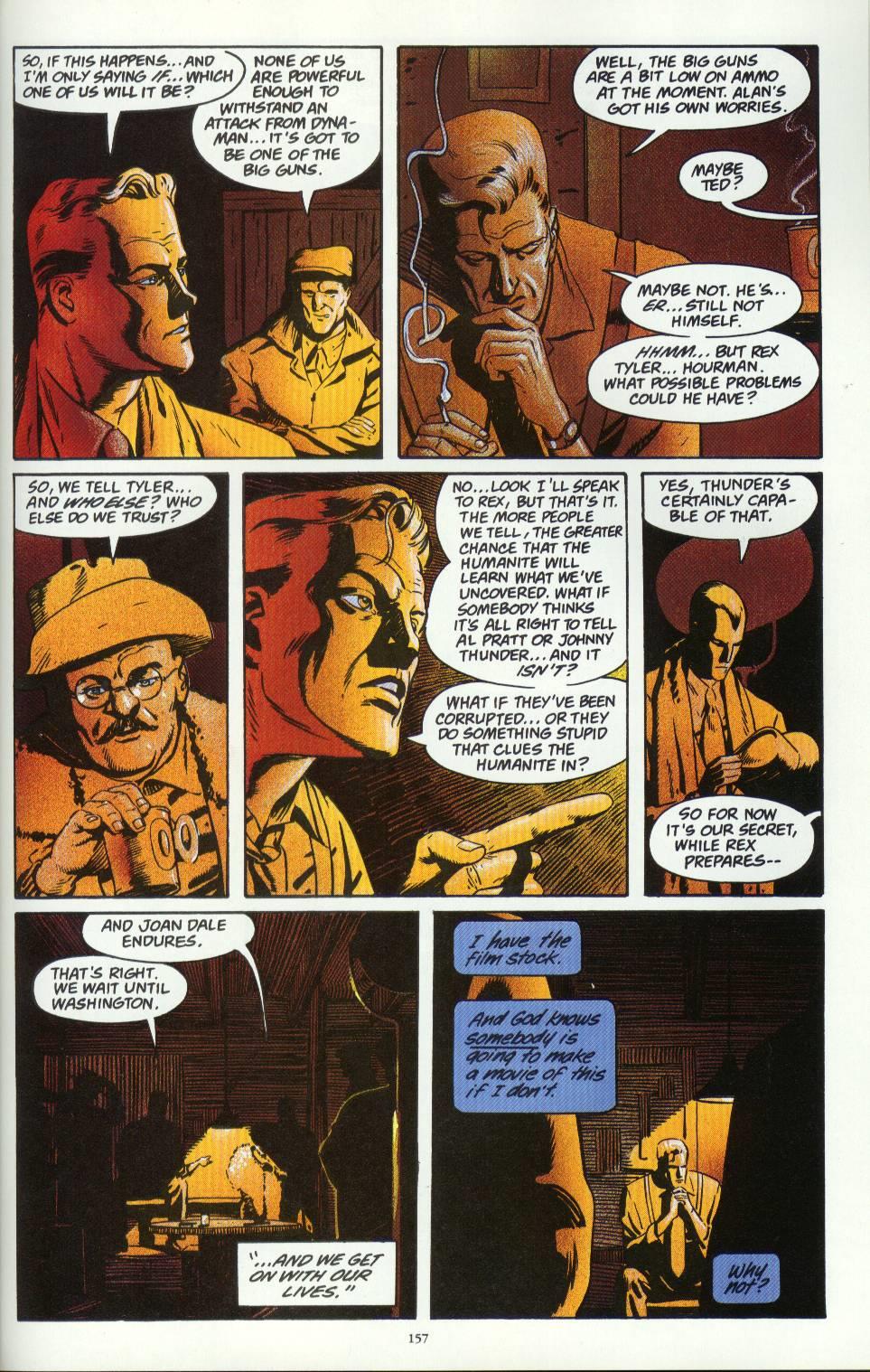
But we are barely scratching the surface here!There’s still so much more to tell you about issue #1!  What happened to Libby Lawrence, Johhny Quick’s ex-wife?  Where is Hourman and what is going on with his powers?  Why is The Atom working with Tex Thomson, and what are those experiments the government is doing on Al Pratt. The Golden Age Atom?

I tell you what, Legions of the Unspoken, what say we pick up with The Atom’s story next week, with Golden Age #2!  Be here!