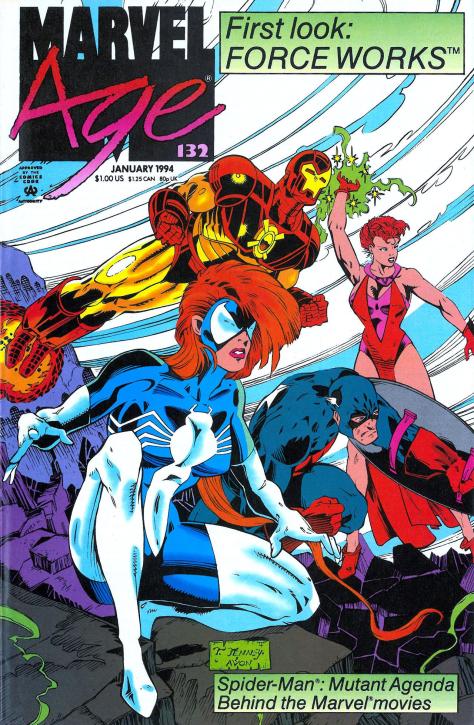
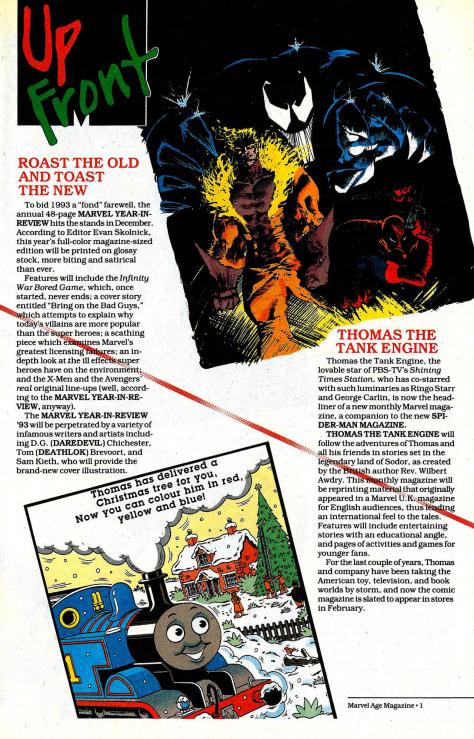
Hope you’re getting ready for the holidays in style! In the meantime, take a look at a few excerpts from Marvel Age #132 (Jan 1994)! I am sure all of you recall the Marvel hype magazine that was on seemingly every newsstand in the 90’s, but I could never find it at my local comics shop!
We’ve got news here on an NFL/X-Men team-up, new revelations for the X-Men, a Spider-Man magazine for the younger folks, and even THomas the Tank Engine!
I’m also tossing in the December checklist! Let us know what you would have been picking up in the comments!
Hello, Legions of the Unspoken! I hope that you are better than me and have enjoyed Avengers: Age of Ultron by now. We went to the Ultimate Marvel Marathon, only to find out that the big enchilada, Avengers: AoU, would be in 3D! I am not sure I have related this before to the Legions, but I have vertigo and therefore cannot handle a 3D movie! So we sucked it up and left early.
To date, I still have not seen the movie. I am sure I will, but to placate me until then, and to satisfy all of the guests taking a gander here due to the Super Blog Team Up, I am going to give you the top 1990’s moments for The Avengers. Now all of these moments won’t be highlights or the best stuff that happened to them, but they will certainly be the ones that stood out the most, had the most impact, and generate the most buzz, good or bad, to this day.
10-THE CROSSING
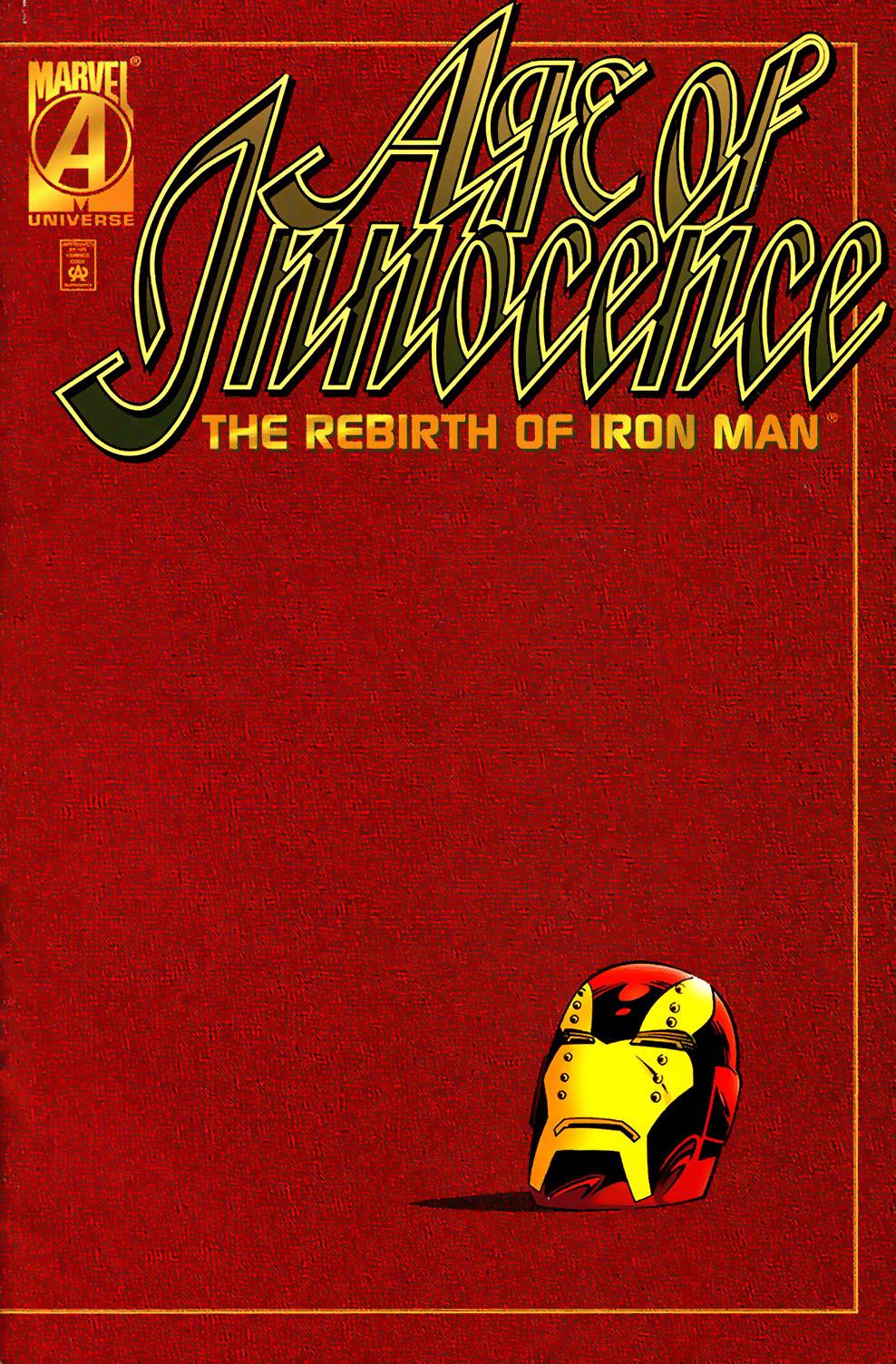
Aren’t you glad I warned you that there’d be stuff you hated on this list? Don’t you wish that either the warning had come sooner or that this had come later? This is legendarily bad. So bad that we are still talking about it not just as the worst moment of Avengers history in the 90’s, but it is probably the worst moment for the Avengers period. In this story, we learn that Tony Stark, Iron Man, has been working for Kang for years and is a traitor to the Avengers. The Avengers have issues defeating him, so they go back in time to retrieve a young Tony Stark to beat the current Tony Stark for them. That makes no sense, and after this story, it is almost NEVER MENTIONED again. After Heroes Reborn/Return (which we’ll see more of later in this article) Tony Stark is just back. Of course, that’s the worst thing that happened in this story. Other awful things happened, too, such as the Wasp looking like this:
9-Spider-Man joins The Avengers
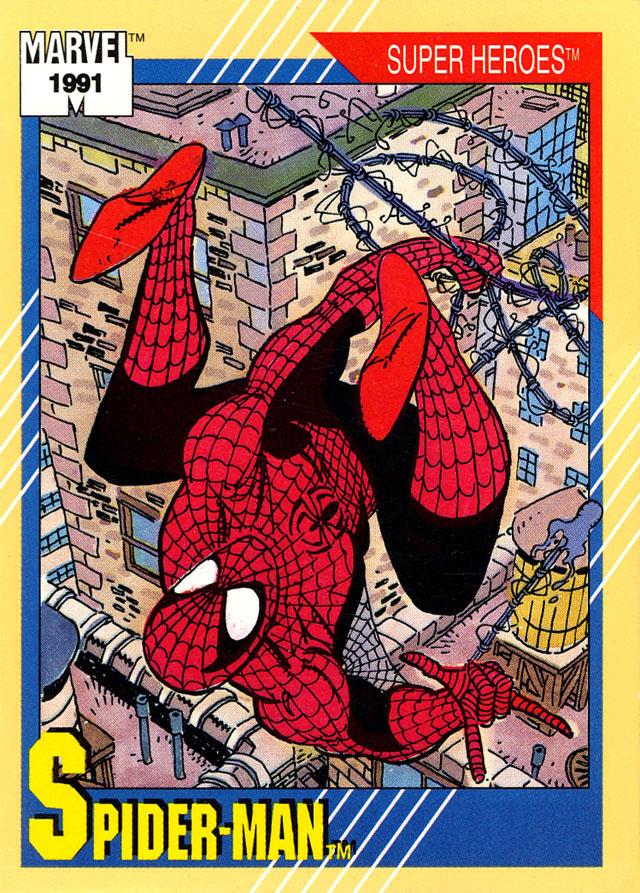
This one is controversial and creates a huge schism for superhero fans. I first learned of Spidey’s status as an Avenger by the 1991 trading card above. Should Spidey be an Avenger? There are several story arcs in the 80’s dedicated to such an idea, but it isn’t until 1991 that it finally happens! Of course, it wasn’t easy, as at one point in Avengers #316 he gets offered a spot on the team, only to have said offer be rescinded.
It would be just 13 issues later when Spidey would be brought in as a reserve Avenger, complete with one of those “WHO WILL BE IN THE AVENGERS” trademark covers the group likes to do so much. Spidey even gets to stick it to J. Jonah Jameson without webbing up the Daily Bugle Publisher’s mouth.
My two cents on Spidey being one of Earth’s Mightiest Heroes is that he should be in…but only as a Reserve Avenger. That makes sense to me, as Spidey is always fun to see team-up with folks once in awhile, and he’d be there if the situation was large enough, anyhow. Seeing him month in and month out is just no fun, though.
8-At one point, there were 8 simultaneous Avengers-related titles on the shelf at once.
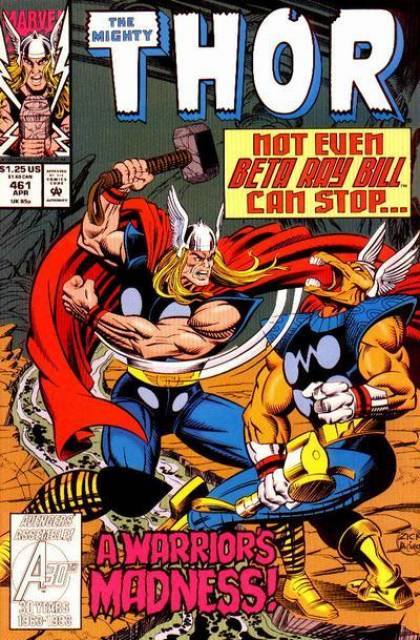
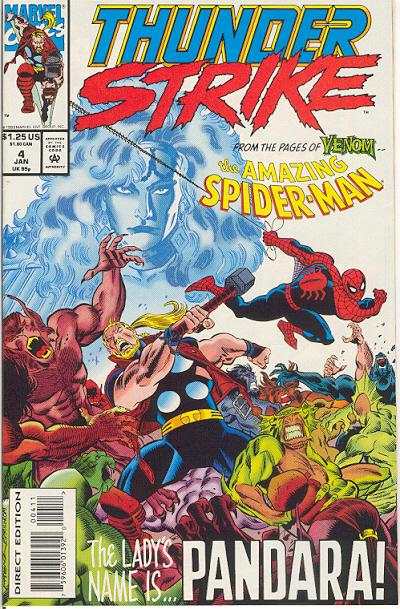
The 1990’s are said to be the decade of Image Comics and the X-Men, and rightfully so. The Avengers, however, were no slouches. Despite spending most of the decade as perceived 2nd-tier players, you could get 8 titles related to the Avengers! Of course, some of these were solo titles that were not Avengers titles, but I cannot imagine Quasar, Thunderstrike, or Wonder Man getting titles without their Avengers connection. In the opposite manner, Mighty Thor, Iron Man, and Captain America certainly could have stood on their own without any Avengers ties, but the fact that these three guys are “The Big Three” of The Avengers means that even in their own books, being an Avengers is an integral part of the character. Throw in Avengers and Avengers West Coast, and you’ve got 8 books in the year 1993 to choose from to get an Avengers fix.
7-Acts of Vengeance
This one is a bit of a cheat, as the event actually begins in 1989, but it crosses over into 1990 just enough to garner it a place on this list. If more of it had happened in the 90’s, rest assured it would have a higher spot. As it is, the idea of the greatest supervillains of the world switching partners and taking on other foes is a great one, and it led to some awesome stories everywhere from Spider-Man to Punisher, with stuff like Daredevil taking on Ultron in-between. We also got a sweet John Byrne FF#1 homage cover. As one cover blurb states, it was the “ultimate Super-Villain Team-Up”. Read that in a Vince McMahon voice, please.
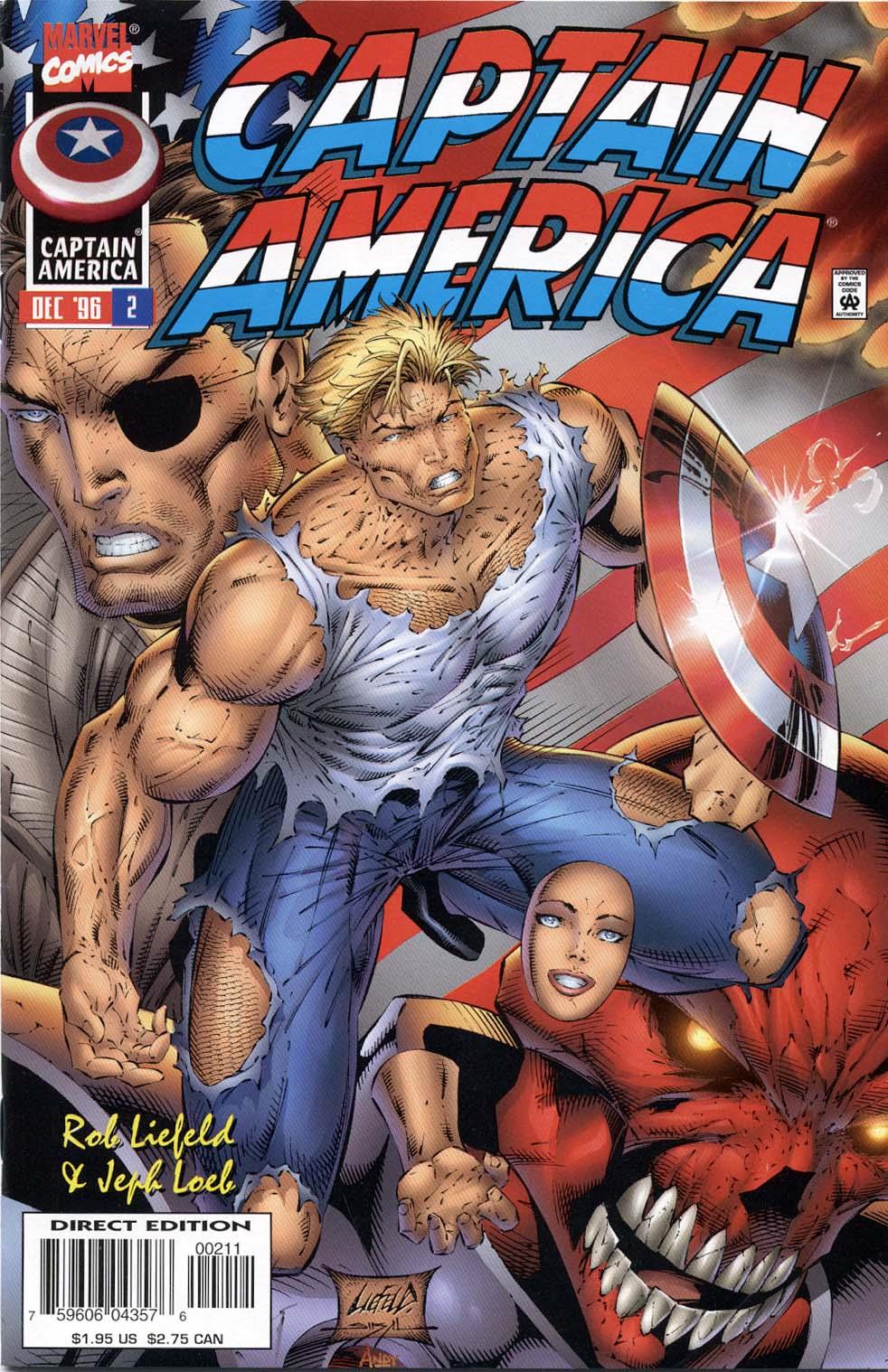
6-Heroes Reborn
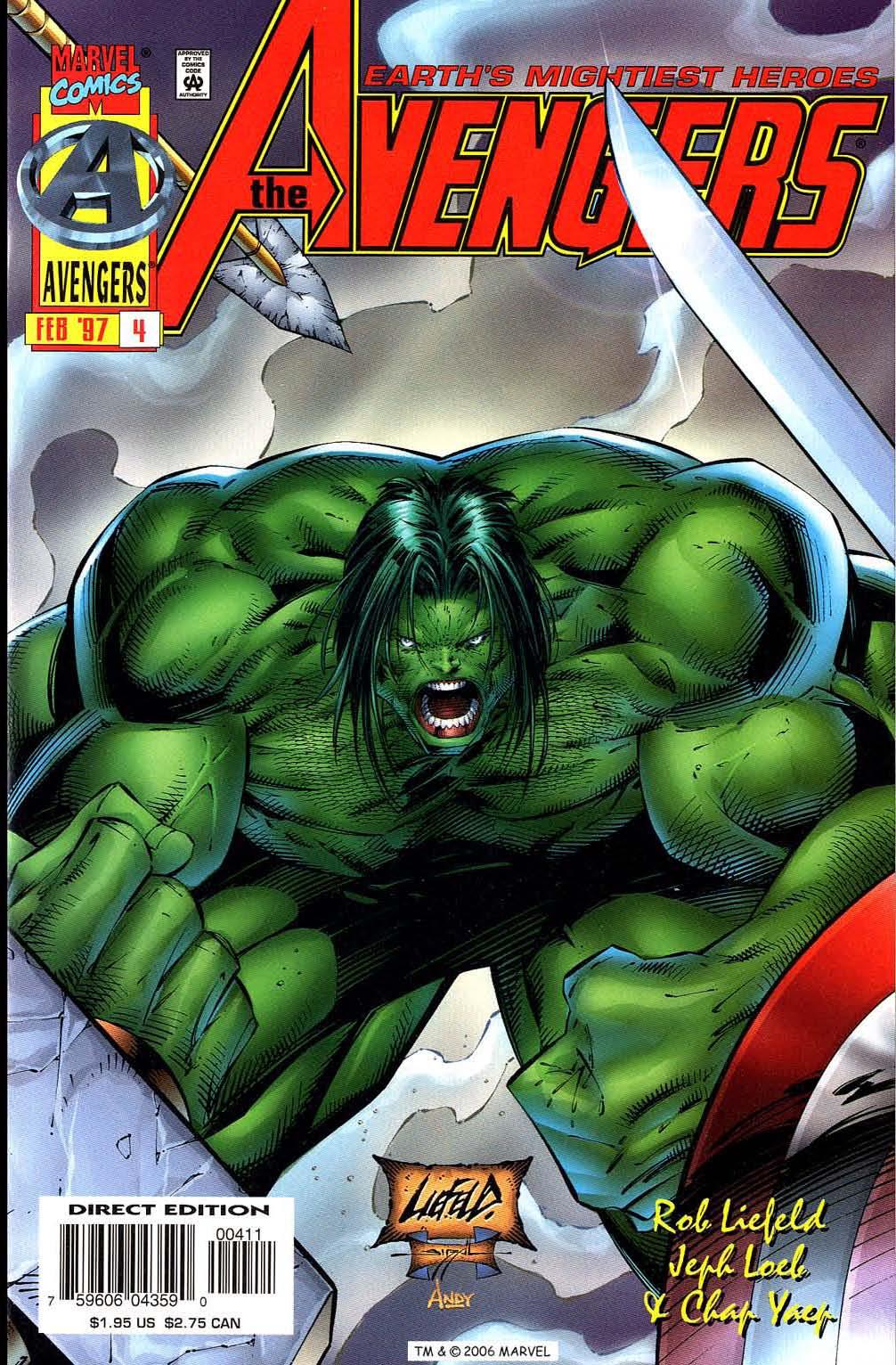
Marvel was slumping from the loss of the speculator boom, and their flagship titles, Fantastic Four, Iron Man, Captain America, and Avengers, were slumping not just in terms of sales, but in how they were seen by the audience. As stated earlier, Image Comics, X-Men, and Spider-Man (among several properties) had taken the eminent position in the marketplace. This led Marvel to throw a Hail Mary by reaching out to Rob Liefeld and Jim Lee to re-tool these properties and bring them back to the audience as cool and hot properties. Heroes Reborn resulted in great sales, including the best selling issue of Avengers of all time, but the sales were not quite what was needed to pay the salaries of Liefeld and Lee. There was harsh criticism of the books as well, especially Liefeld’s Avengers and Captain America. About midway through Heroes Reborn, Marvel asked them to take pay cuts. Lee acquiesced while Liefeld balked and walked. After a year, the deal was done, and we’d get Heroes Return, but Heroes Reborn might be the loudest Avengers moment of the 90’s, and it almost certainly generated the most revenue in Avengers comic book history; the movies, of course, are another story.
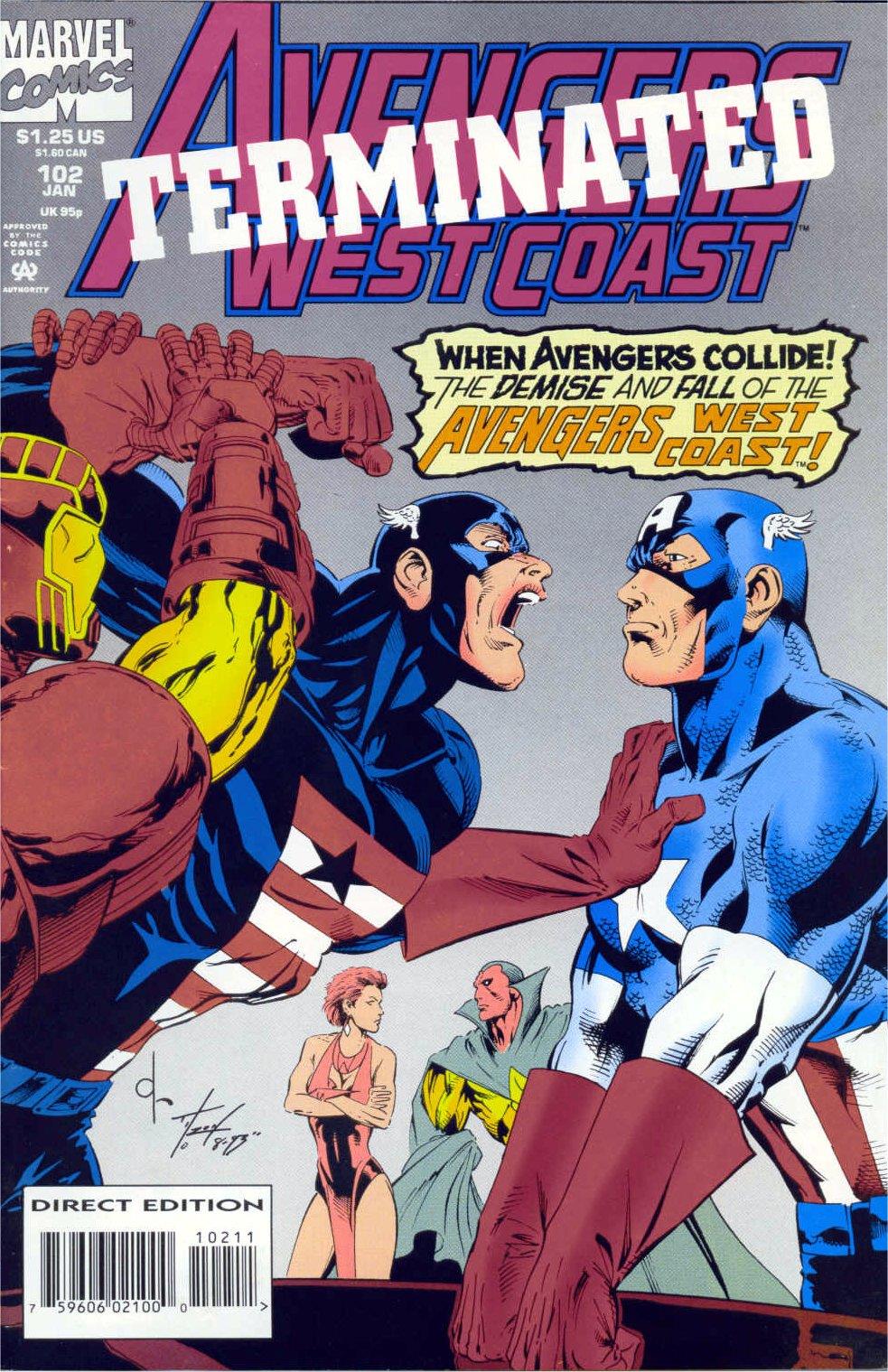
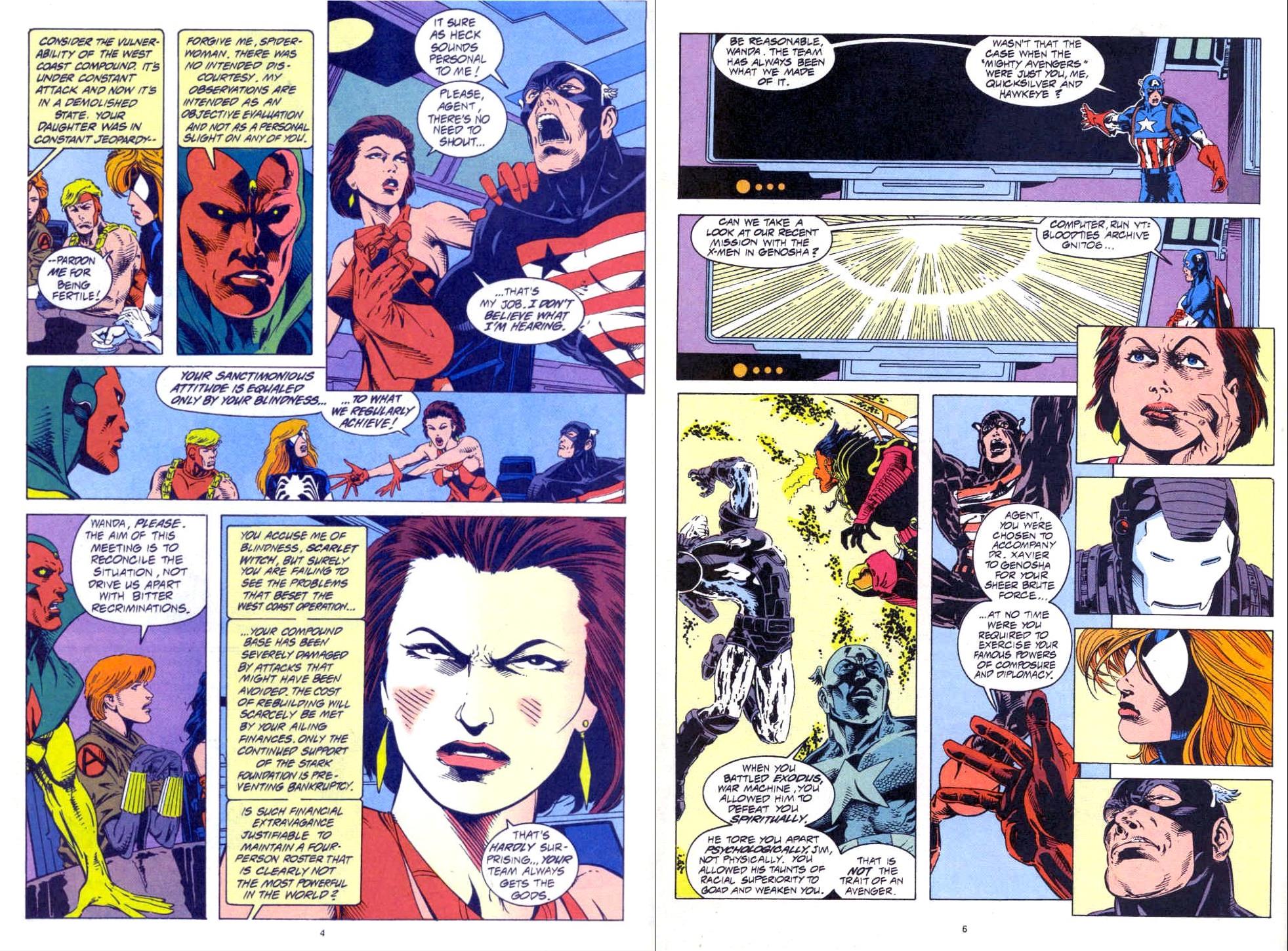
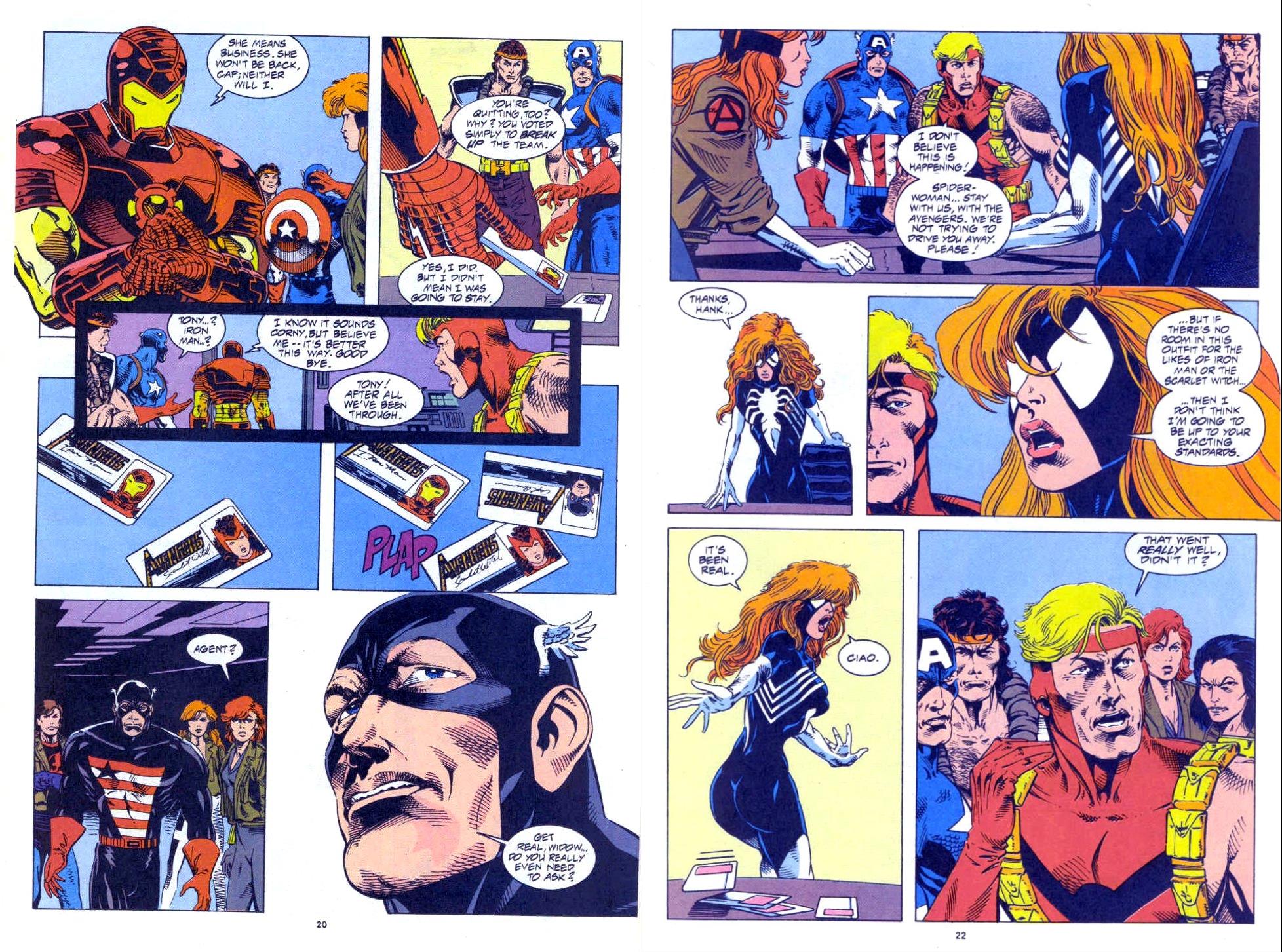
5-Avengers West Coast Disbanded
When I started reading comics regularly, there were two branches of Avengers. This made Avengers seem awesome and very important. Avengers West Coast was also consistently more entertaining than its east coast cousin when Roy and Dann Thomas were at the writing helm, while the Bob Harras Avengers title just sort of floundered. I didn’t see the end of Avengers West Coast coming. I remember being shocked when I read about it in Wizard or Hero Illustrated or some such magazine. I was upset, and I didn’t understand why they’d trash this legacy for Force Works. I liked FW all right, but it was no Avengers West Coast to me, and while much of that grandeur surrounding The Avengers has been restored, I wonder why in the last decade of umpteen badrillion Avengers books named everything from New to Secret to Pet Avengers, why we couldn’t have gotten the return of Avengers West Coast…
4-Operation: Galactic Storm
A huge part of the history of The Avengers is the role that the mega epic plays in their history. If they didn’t have any, we could not refer to them as “Earth’s Mightiest Heroes,” and they probably would not be the center of the movie world. The Avengers mega epic menagerie includes great stories like The Korvac Saga, The Thanos/Warlock/Mar-Vell Saga, The Kree-Skrull War (to which Operation: Galactic Storm was sort of a sequel), The Avengers-Defenders War, and more. Operation: Galactic Storm is one of the biggest editions to the cosmic cabinet that holds these mega epics…LITERALLY. The story goes on for 19 parts through 7 different titles, and it has epilogue stories that even include a Silver Surfer issue. While it is unwieldy at parts, and it was definitely stretched too thin, the ongoing saga has that epic feel that The Avengers really didn’t capture as often as they should have in the 90’s. There’s also a giant moral theme that permeates the story and the epilogues, and it also spawned a really crappy video game.
Get ready to play as Thunderstrike…with Thor as your backup. Who thought that was a good idea?
Emily Scott will be taking a closer look at Operation: Galactic Storm later this month, as we are celebrating The Avengers all month long! She will be crafting a 2-parter because that’s what passes for a mega epic around here.
3-Avengers Forever
I’d call Avengers Forever confusing, but that would sort of be like saying that race cars go fast. That sort of description is appallingly insufficient. Avengers Forever centers around Kang, The Destiny War, Rick Jones, Immortus, and a cast of different Avengers from throughout time as they run into other Avengers throughout time. I have read this three times, and that’s honestly the best way to put it. Actually, a better way to put it might be a love letter to Avengers continuity. It is confusing, but it is also quite a fun book, and it is beautifully done by Carlos Pacheco and Jesus Merino. Just enjoy getting to see cool stuff like the Avengers teaming with Killraven against Martians, as seen above, and Two-Gun Kid vs. Kang, and you’ll be ok. Try and make too much sense of it and you will have a headache that can only be destroyed by Ant-Man. Enjoy it as a romp, and well, you get a romp.
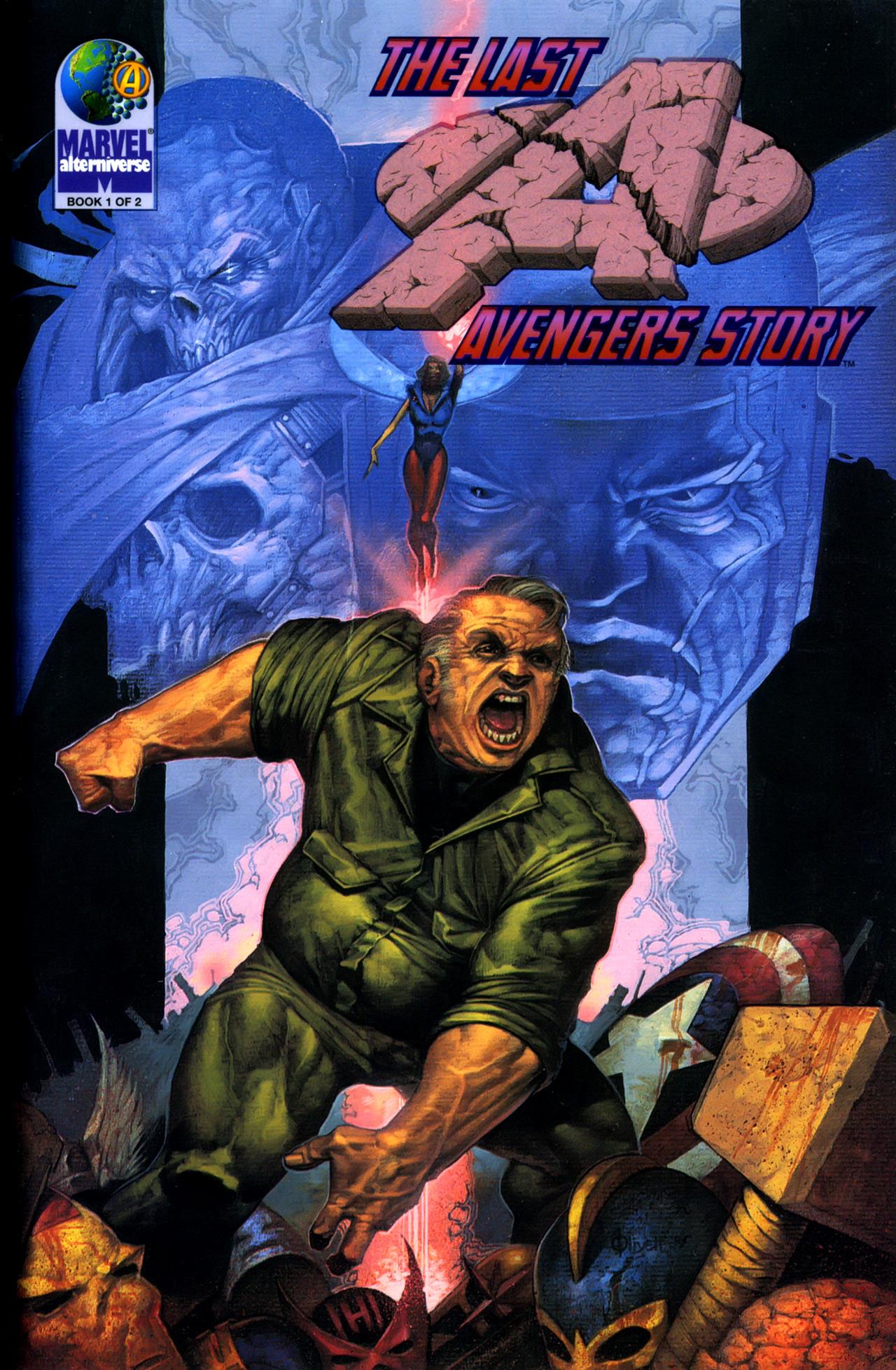
2-The Last Avengers Story
Peter David crafts a dark tale that isn’t saturated in grim and gritty nonsense that Ariel Olivetti renders in an eye-pleasing darkness that seeps into everything. The Avengers aren’t what they used to be, kids, and what they used to be was kids. David’s story highlights the inherent advantages that villains have within the superhero paradigm. He also shows us a world gone mad, heroes broken for different reasons, and the fate of the children of several of the heroes. Also, we get Cannonball in this for some reason. I guess in this timeline, he grows up to be an Avenger instead of Cable: The Sequel. In the end what passes for The Avengers gather to make their last stand against an assemblage of their greatest foes, and many of the Avengers who are left simply don’t make it, but hope remains for those who do. Darry Weight will take a closer look at this masterpiece later this month!
1-Ultron Unlimited
In my mind, this isn’t just the greatest 90’s moment in Avengers history, but this is truly the greatest moment in Avengers history, period.
That. That’s it. That panel epitomizes The Avengers. Even their heaviest hitter, Thor, is war-scarred, having battled all that Ultron has to offer. Captain America and Firestar are beaten down too. Despite the hardship, despite the war they have just gone through, and despite their fatigue and injuries, The Avengers are here to do a job, and that job is saving the world. Ultron is at his uttermost worst in this tale; in contrast, the Avengers have never been better, shone brighter, or come through against more horrendous odds. That, to me, is what The Avengers is all about. When things look bleak, they find a way. When the odds are stacked against them, they unstack them. When the worst villains show up, they get confronted by the best heroes. Those heroes are…THE AVENGERS!!!
Just want to give an honorable mention here to the Infinity Saga. I had it on the list, but it’s really more of a Marvel Universe story instead of just an Avengers one. One could make the same argument for Acts of Vengeance, but it ended in an Avengers title. and so I justified it. While the Infinity Saga did crossover into the Avengers titles, it was more or less contained within the three mini-series under the “Infinity” heading.
Thanks for enjoying our top ten! Now, Assemble with these other fine folks in the Super Blog Team Up!
Warren Worthington: Before you go any further, you need to ask yourself… is any story really worth dying for? Irene Merryweather: Depends on the story.
No theme this month at “The Unspoken Decade” so I have taken this opportunity to look back at José Ladrönn’s run on Cable that helped close out the nineties.
Irene Merryweather is a reporter, a storyteller. She acts as Cable’s chronicler and as the reader’s way to understand the man and his world. She provides a way for the plot devices and conflicting motivations of such a popular character to be examined and contextualized in a much needed way.
“Sometimes, there’s a man. And I’m talkin’ about the Askani’son here… He’s the man for his time and place. He fits right in there.”
Who is Cable? What is he? Why does he call himself that? Maybe in 1990 when the character was first introduced this was considered a suitably sci-fi term. The modern equivalent of calling a character “Plastic Man” in an era before that was a household name. Did this name say something about the character that was deep and meaningful? Was it the name of one of his weapons, maybe an artistic way of describing his method for traveling through time?
No, of course not.
Cable is what you would call yourself if you had been raised two millennia into the future. This is the same reason his arch-foe (and one of several clones) is known as “Stryfe.” These people are as separated from “today” as “today” is from the beginning of the Common Era. Cable is a character that everyone recognizes, comic fan or not, even though he has avoided the Silver Screen for seven X-Films and counting. For me there is no more interesting take on the character than his extended tour of the Marvel Universe in the artistic styling of Jack Kirby.
The energy radiates from the center, reaching out at the reader and almost into their world. The mark of the King.
The Hellfire Hunt is a story from 1997 written by James Robinson. Halfway through, after issue #50, scripting duties switch to Joe Casey. From then until issue #70, in August of 1999, Casey and artist José Ladrönn put their mark on the Man With Many Names. The run was bookended by extended crossovers with the plethora of other X-Titles, from Operation: Zero Tolerance (itself spinning out of Onslaught) to the Apocalypse centered The Twelve soon after its end. In between was an attempt to define the character of Cable in a way that made him grounded and believable, or in other words, in the Marvel way.
In addition to the extended X-Family (for the most part) there is no appearance by X-Force, the child soldiers that Cable usually drags into dangerous war zones, or Rob Liefeld, Cable’s self-appointed ‘sole creator.’ The Rob would eventually bring back the expected trappings of the franchise but in his absence Casey, and especially Ladrönn, build a supporting cast unique to Cable including re-introducing Nate’s own personal Yoda, Blaquesmith, and the aforementioned former gossip columnist Irene Merryweather, as well as the brand new love interest, and confidante, diner waitress Stacey Kramer.
Every Kirby story is a love story. He co-created the Romance Comic because he understood that having someone to fight for was the only thing that mattered.
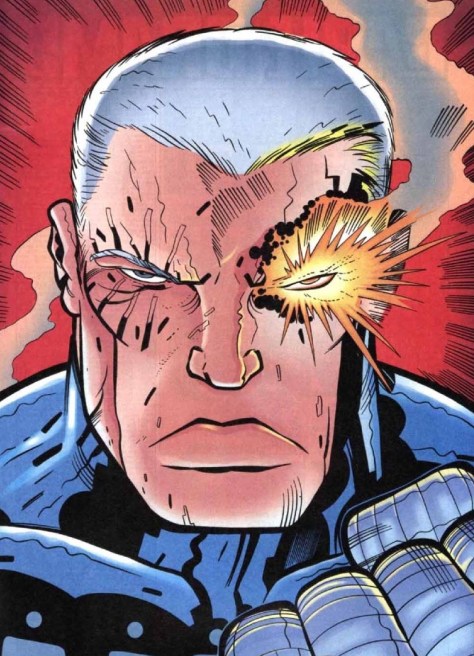
Over the course of these twenty issues Ladrönn’s depiction of Cable, and the world he inhabits, comes to resemble one drafted by Kirby. The King himself passed away in 1994 so this type of tribute would not be uncommon except that Cable, and the Modern X-Men in general, had nothing to do with what he had come to stand for. This appears to be envisioning what Cable would have been if Kirby had created him at the peak of his career.
A time-traveling, cyborg with a Messiah Complex, locked in an Eternal Struggle with a being destined to conquer the world and subjugate its people. That feels as if it could have been a pitch for a story Kirby never got around to putting down on paper in the years after he left Marvel in search of the greener pastures he never found.
For reasons none too important to the overarching plot Cable finds himself in the nation of Wakanda fighting Ulysses Klaw alongside the Black Panther. A few issues later he engaged in the defining conflict of the run in a fight against Jack Truman, Agent 18 of SHIELD. An appearance by the newly revitalized Mighty Avengers closes out the run featuring Kirby Classics such as Captain America and Thor. This resembled a comic done in the Mighty Marvel Manner at a time when nothing else the company put out really did. Even non-Kirby, but classic nonetheless, vintage characters such as Zzzax and the Tinkerer make appearances. They are not furthering the plot, but rather showing how rich and imaginative a world Cable occupies.
If you touch your chest, hear a “tek” sound, and begin spewing acid from your fingertips then you were probably not invented by someone who created “Brigade.”
A year and change after the bankruptcy that nearly buried Marvel, and comfortably before the movies would start to shape what the company would become, Cable takes a tour of an older version of the Marvel Universe, one not seen in some time. He himself gets a streamlined, shoulder-pad-less redesign that allows, as all Kirby characters must, to be in constant motion and bristling with power. The tons o’ guns are stripped away as this Heroic Quest sees Cable wield the Psimitar, a future-tech spear capable of focusing his advanced telekinetic abilities into Kirby Krackle. The static, cold images that had come to define the character up until this point are forgotten as Cable genuinely struggles with whether or not he can really save the future, a fight that seems u winnable and a task that seems unsurmountable, even though he can remember what happens if he fails.
Kidding. We all know what happens if he fails: Everyone is slowly murdered by the Mutant Robo-Pharaoh. Why has anyone ever wondered why we enjoy these comics?
I am not sure whose idea it was to go down this road but it does not happen all at once. Ladrönn had been involved with the title before Casey arrived and the latter went this route again with his later Image series Godland (I am not putting a “0” there, but you may need one if you want to research the series). Does the fact that no one else was doing overt Kirby homages on a regular basis make the issues worth seeking out, or picking-up discounted at least?
Yes and no.
This is one of the few full runs of Cable I have read but was by far the most rewarding. The aesthetic got me in the door, so to speak, but the character does not keep me there. Ladrönn clearly has a love for these particular layouts and design work. There are ways of presenting a story and moving events forward that only ever seem to appear in those older books. Figures in motion stride through scenes of intense action oblivious to “cool” poses and the constraints of the page. Not to say that the genre as a whole does not pull plays from the same book but these are specific, and in some cases too much so, references the work of a single man.
Ladrönn at one point, before the Kirby homages are overt, places a panel of only Cable’s foot in motion in the midst of an action scene. This warrants a caption box, with a message from the editors, stating that “we’re not really sure why Ladrönn put this panel here, but it was too fun & wacky to take out.” Fun. Whacky. These things have no place within our comics, clearly. This is how far the expected conventions had moved. Panels are mere recommendations to the characters and the Kirby Krackle is everywhere. This constant love and affection is also how they begin to lose their appeal.
…in the pages of “Deathlok” if I am not mistaken. “M-Tech” was an odd publishing line but at least it had a techno-organic monkey.
There is a love here, but is there an understanding? Casey’s name is attached to many beloved runs in superhero comics as well as under the radar projects that remain fan favorites. The main pitfall I have come across that prevents me from embracing his work is that he never quite seems able to keep up with his own ideas. Superhero comics can be dense. Packed full of characters, ideas, and images that combine through the act of reading to form entirely new experiences. They should not be stagnant and they cannot to waste space. Casey does not seem to spend the time giving Cable, or any of the other characters, enough to do. He is not very imaginative when it comes to creating new ideas or concepts and he certainly does not seem to maintain the primary rule of a Kirby Comic: Create!
Jack Kirby created at a rate that far outstripped his peers. Physical number of pages (at one point Kirby was personally responsible for more titles per month than the Liefeld’s Extreme Studios), concepts, characters, and plots. Not only are the Marvel Age works with Stan Lee responsible for most of what we still read today but each of Kirby’s series after showed that the act of creation was the most important aspect of the work. A book such as The Demon has new villains and foes each issue, new obstacles to surmount. For good or bad (and many are not going to be action figures or cartoons any time soon) they were there. Jack acting as midwife to world after world from some unknowable higher power.
I cannot fault someone for using a Black Bolt pose but the panel to the right features more new character in a single instance than were created over the entirety of this Cable run.
Casey’s primary contribution to the Cable Mythos is the Harbinger of Apocalypse, whose origins are actually steeped in Robinson’s final story (he was also responsible for Merryweather). The otherwise unnamed Victorian Era waif (he has a strange origin that still manages to feel unoriginal) provides the primary physical threat that hangs over the main story. No motivation, or real defining characteristics, just something for the hero to rail against. Another character, Blockade, is introduced as a MacGuffin for Cable’s Titanic Team-Up with his former beau Domino. I never got the feeling that this team could not create new characters but rather would not. I am not sure why as this was not the X-Market of today where all the good characters have their movie rights absorbed by 20th Century Fox.
There is also not a constant stream of creativity reflected with the use of classic characters. This is the SHIELD exactly as Kirby drew it back in the day. Same line work, same designs. The same goes for Klaw, Black Panther, and even the Master Man (in a Golden Age flashback story). I applaud the revisiting at a time when everyone else seemed to have no interest (had I read these at the time they would have been my first introduction to Kirby’s aesthetic) but I mourn the loss of opportunity. Who knows how much more enjoyable, and re-readable, this run on such an otherwise uninspired title would have been had the creators channeled the spirit of the man they honored instead of merely what they saw in his work?
My favorite parts of this run are the exclamations. Paramilitary guerrilla fighters from the Fiftieth Century shout “Oath!” and swear “By the Bright Lady!” more than you would think.
Part of this is shown in the use of Apocalypse. Throughout the run there are vague allusions to a time, coming soon, when “Dayspring” will have the chance to complete his mission by ending the potential future reign of terror in the here and now. Presumably this was supposed to tie-in with The Twelve but if you remember reading that story you will probably also remember not caring all that much about what happened in it. Here Apocalypse haunts the background, hinting at a Master Plan and moving pieces into position. Anywhere else this would be just one more subplot but here the regularly overt character is reimagined as a subtle dark-skinned man in a suit. He arrives, seemingly from nowhere, with the reader and heroes knowing nothing of what he has planned.
When something similar to Apocalypse’s traditional form makes an appearance it is as a flashback (to far in the future) or when a character is describing him, as a threat hiding just out-of-sight waiting to usher in an eternal darkness from whence there is no escape. This teases a character who had been around for over a decade and lays the groundwork for an actual arc. Apocalypse, though never in on the action, appears as a genuine threat that Cable, heavy-hearted, must face or else face the doom of every single person he meets as well as each and every descendant they cannot possibly be aware of. For a character with more conflicting backstories than Hawkman, and an opponent that had been more Action Figure than realized person up until this point, this presentation made me genuinely interested in what would and could have happened next.
Kirby missed out on his chance to design Apocalypse (he did not stay on the original “X-Men” title, that he co-created, long enough to work on most of what is associated with that franchise) but here we see what may have been. If nothing else this is a version of a popular villain reimagined based on how Kirby approached his work in general, with the incredible scope of an endless world. There is a sense of dread permeating the way characters discuss Apocalypse that cannot be matched by all the times he has been shown monologuing about a Middle Schooler’s conception of Darwinism. Apocalypse (a character I love no matter what I seem to be indicating here) is often drawn as this mishmash of different concepts, none of which stand on their own.
From the future? Yes. From Ancient Egypt? Yes. A mutant? Sure. Access to unlimited Celestial technology? Appears to be the case.
Here we have a rather mundane man you would not look at twice and a walking natural disaster on par with any of the Cosmic Threats of old Marvel. The sense of scope has been retained and the character never risks becoming mundane. Bruce Banner and the Hulk, Jason Blood and the Demon. The works inspires your mind to fill in the gulf between the two and therein lies the beauty of what Kirby always did: Making the reader see the world for what it could be regardless of how it actually was. Joe Casey and José Ladrönn understood that more than most and while they worked with Nathan Summers they showed us what could be.
At one point a character refers to him as “The King of All Lies.” Looking upon this visage convinces me that we may still not have seen his true form.