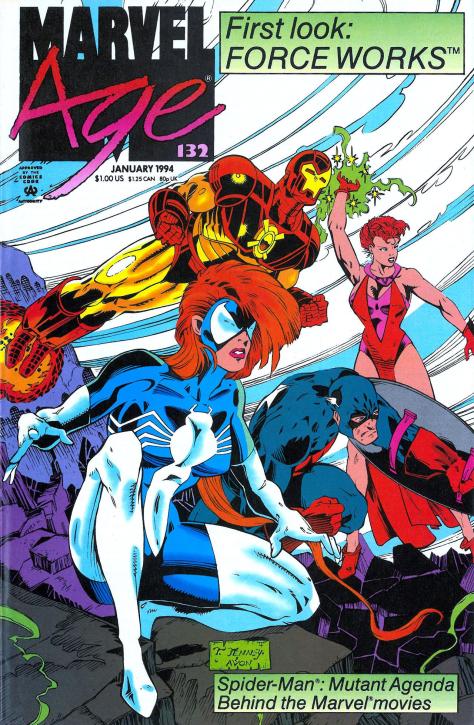
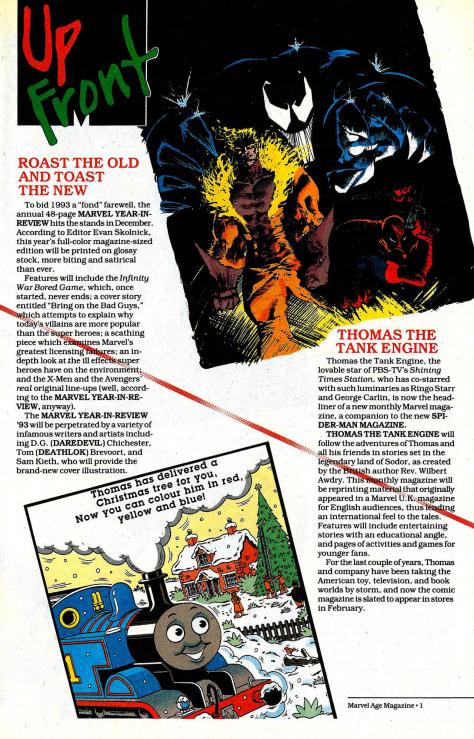
Hope you’re getting ready for the holidays in style! In the meantime, take a look at a few excerpts from Marvel Age #132 (Jan 1994)! I am sure all of you recall the Marvel hype magazine that was on seemingly every newsstand in the 90’s, but I could never find it at my local comics shop!
We’ve got news here on an NFL/X-Men team-up, new revelations for the X-Men, a Spider-Man magazine for the younger folks, and even THomas the Tank Engine!
I’m also tossing in the December checklist! Let us know what you would have been picking up in the comments!
Hello, Legions of the Unspoken! I hope that you are better than me and have enjoyed Avengers: Age of Ultron by now. We went to the Ultimate Marvel Marathon, only to find out that the big enchilada, Avengers: AoU, would be in 3D! I am not sure I have related this before to the Legions, but I have vertigo and therefore cannot handle a 3D movie! So we sucked it up and left early.
To date, I still have not seen the movie. I am sure I will, but to placate me until then, and to satisfy all of the guests taking a gander here due to the Super Blog Team Up, I am going to give you the top 1990’s moments for The Avengers. Now all of these moments won’t be highlights or the best stuff that happened to them, but they will certainly be the ones that stood out the most, had the most impact, and generate the most buzz, good or bad, to this day.
10-THE CROSSING
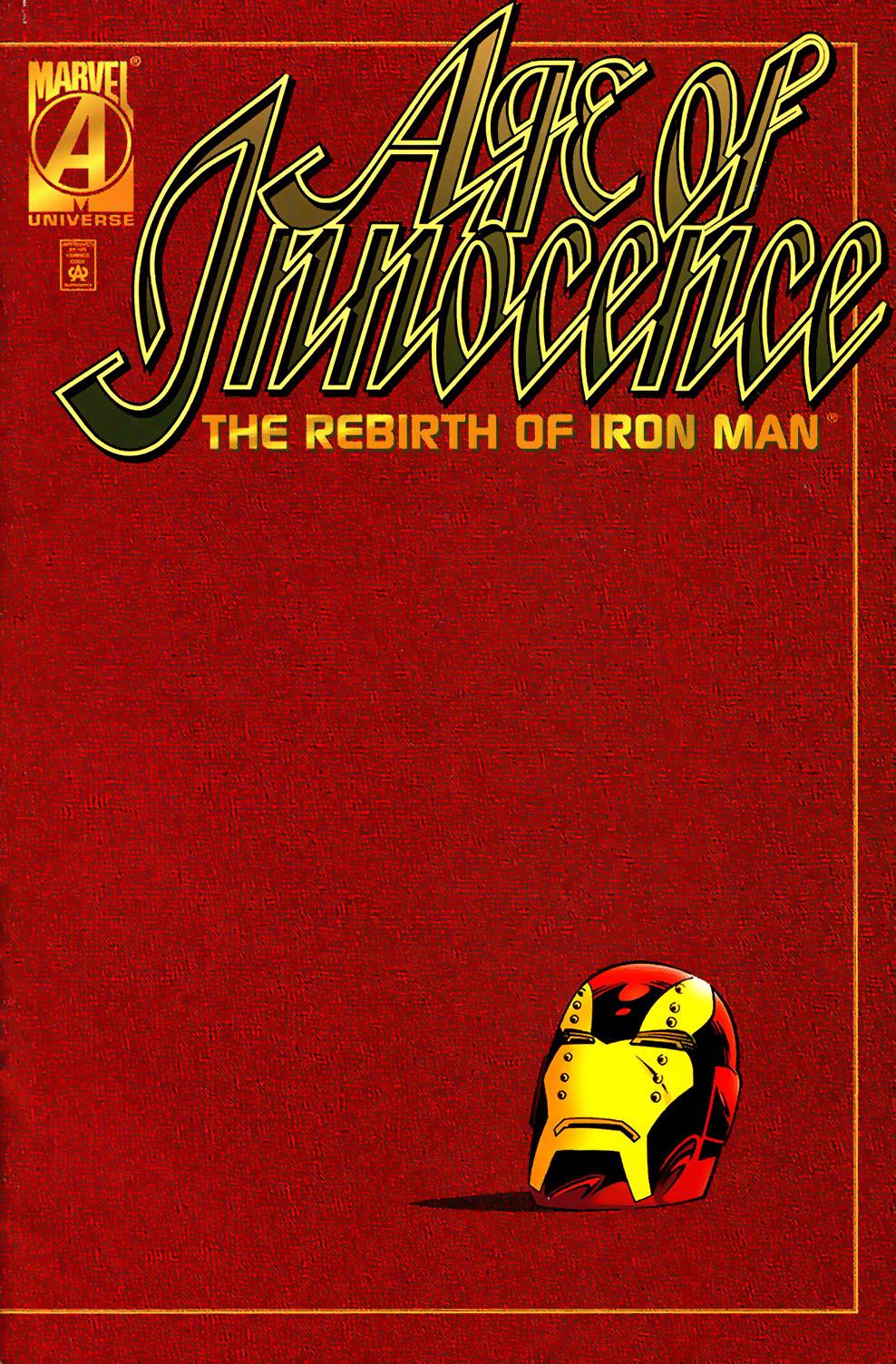
Aren’t you glad I warned you that there’d be stuff you hated on this list? Don’t you wish that either the warning had come sooner or that this had come later? This is legendarily bad. So bad that we are still talking about it not just as the worst moment of Avengers history in the 90’s, but it is probably the worst moment for the Avengers period. In this story, we learn that Tony Stark, Iron Man, has been working for Kang for years and is a traitor to the Avengers. The Avengers have issues defeating him, so they go back in time to retrieve a young Tony Stark to beat the current Tony Stark for them. That makes no sense, and after this story, it is almost NEVER MENTIONED again. After Heroes Reborn/Return (which we’ll see more of later in this article) Tony Stark is just back. Of course, that’s the worst thing that happened in this story. Other awful things happened, too, such as the Wasp looking like this:
9-Spider-Man joins The Avengers
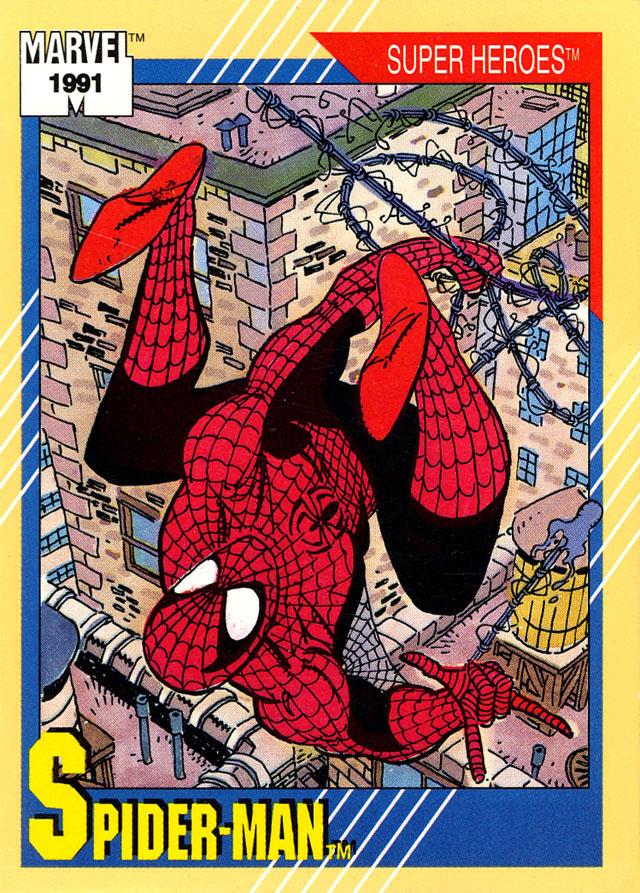
This one is controversial and creates a huge schism for superhero fans. I first learned of Spidey’s status as an Avenger by the 1991 trading card above. Should Spidey be an Avenger? There are several story arcs in the 80’s dedicated to such an idea, but it isn’t until 1991 that it finally happens! Of course, it wasn’t easy, as at one point in Avengers #316 he gets offered a spot on the team, only to have said offer be rescinded.
It would be just 13 issues later when Spidey would be brought in as a reserve Avenger, complete with one of those “WHO WILL BE IN THE AVENGERS” trademark covers the group likes to do so much. Spidey even gets to stick it to J. Jonah Jameson without webbing up the Daily Bugle Publisher’s mouth.
My two cents on Spidey being one of Earth’s Mightiest Heroes is that he should be in…but only as a Reserve Avenger. That makes sense to me, as Spidey is always fun to see team-up with folks once in awhile, and he’d be there if the situation was large enough, anyhow. Seeing him month in and month out is just no fun, though.
8-At one point, there were 8 simultaneous Avengers-related titles on the shelf at once.
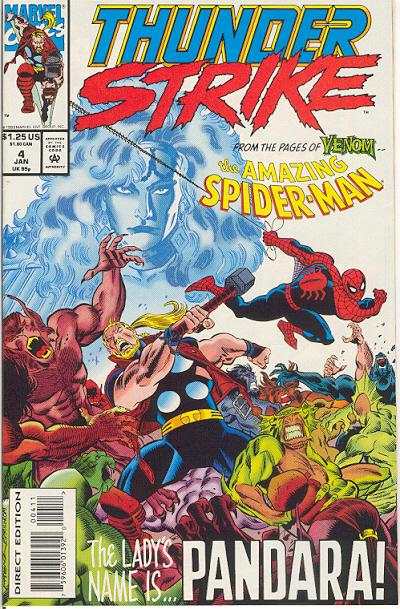
The 1990’s are said to be the decade of Image Comics and the X-Men, and rightfully so. The Avengers, however, were no slouches. Despite spending most of the decade as perceived 2nd-tier players, you could get 8 titles related to the Avengers! Of course, some of these were solo titles that were not Avengers titles, but I cannot imagine Quasar, Thunderstrike, or Wonder Man getting titles without their Avengers connection. In the opposite manner, Mighty Thor, Iron Man, and Captain America certainly could have stood on their own without any Avengers ties, but the fact that these three guys are “The Big Three” of The Avengers means that even in their own books, being an Avengers is an integral part of the character. Throw in Avengers and Avengers West Coast, and you’ve got 8 books in the year 1993 to choose from to get an Avengers fix.
7-Acts of Vengeance
This one is a bit of a cheat, as the event actually begins in 1989, but it crosses over into 1990 just enough to garner it a place on this list. If more of it had happened in the 90’s, rest assured it would have a higher spot. As it is, the idea of the greatest supervillains of the world switching partners and taking on other foes is a great one, and it led to some awesome stories everywhere from Spider-Man to Punisher, with stuff like Daredevil taking on Ultron in-between. We also got a sweet John Byrne FF#1 homage cover. As one cover blurb states, it was the “ultimate Super-Villain Team-Up”. Read that in a Vince McMahon voice, please.
6-Heroes Reborn
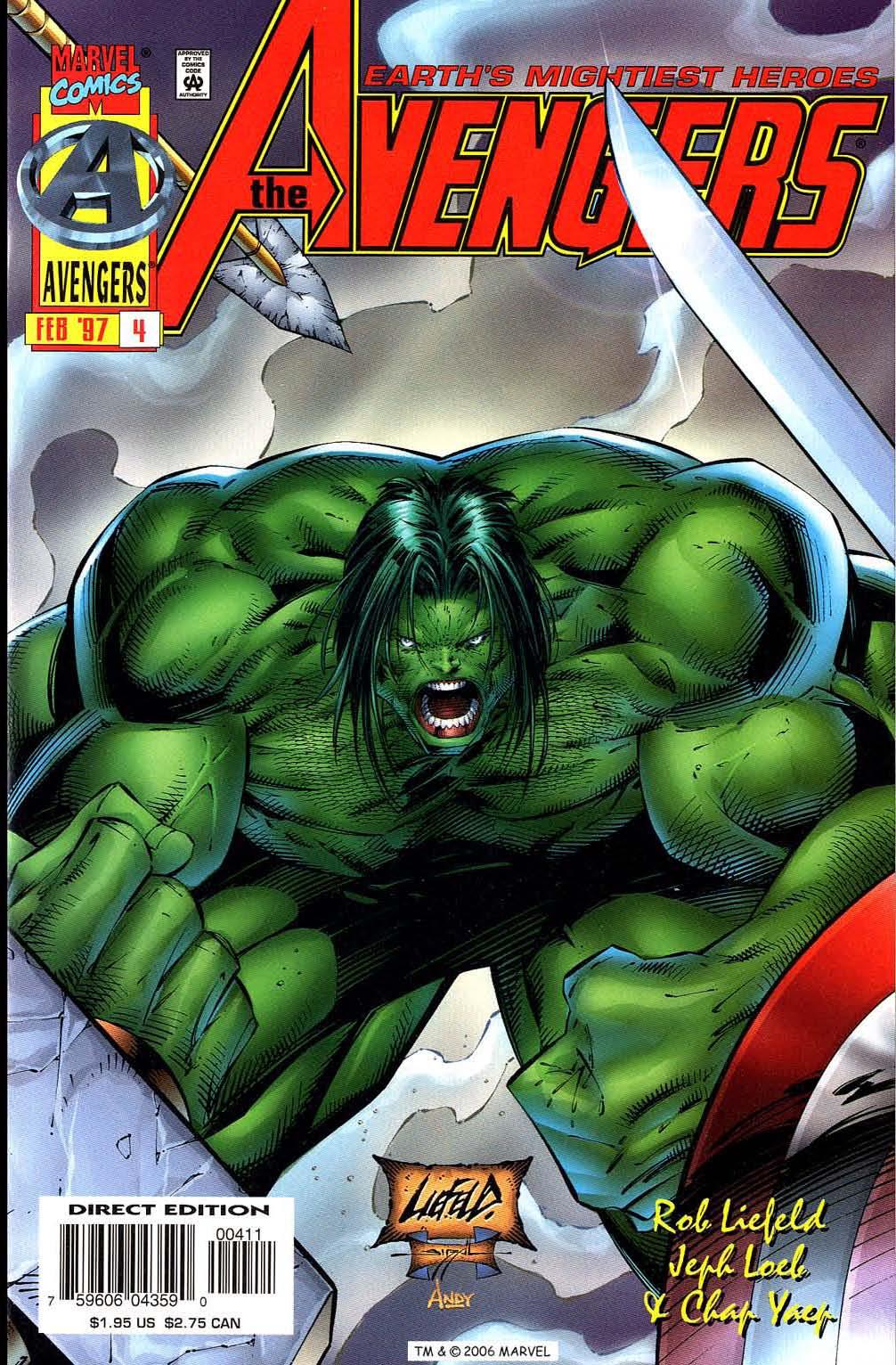
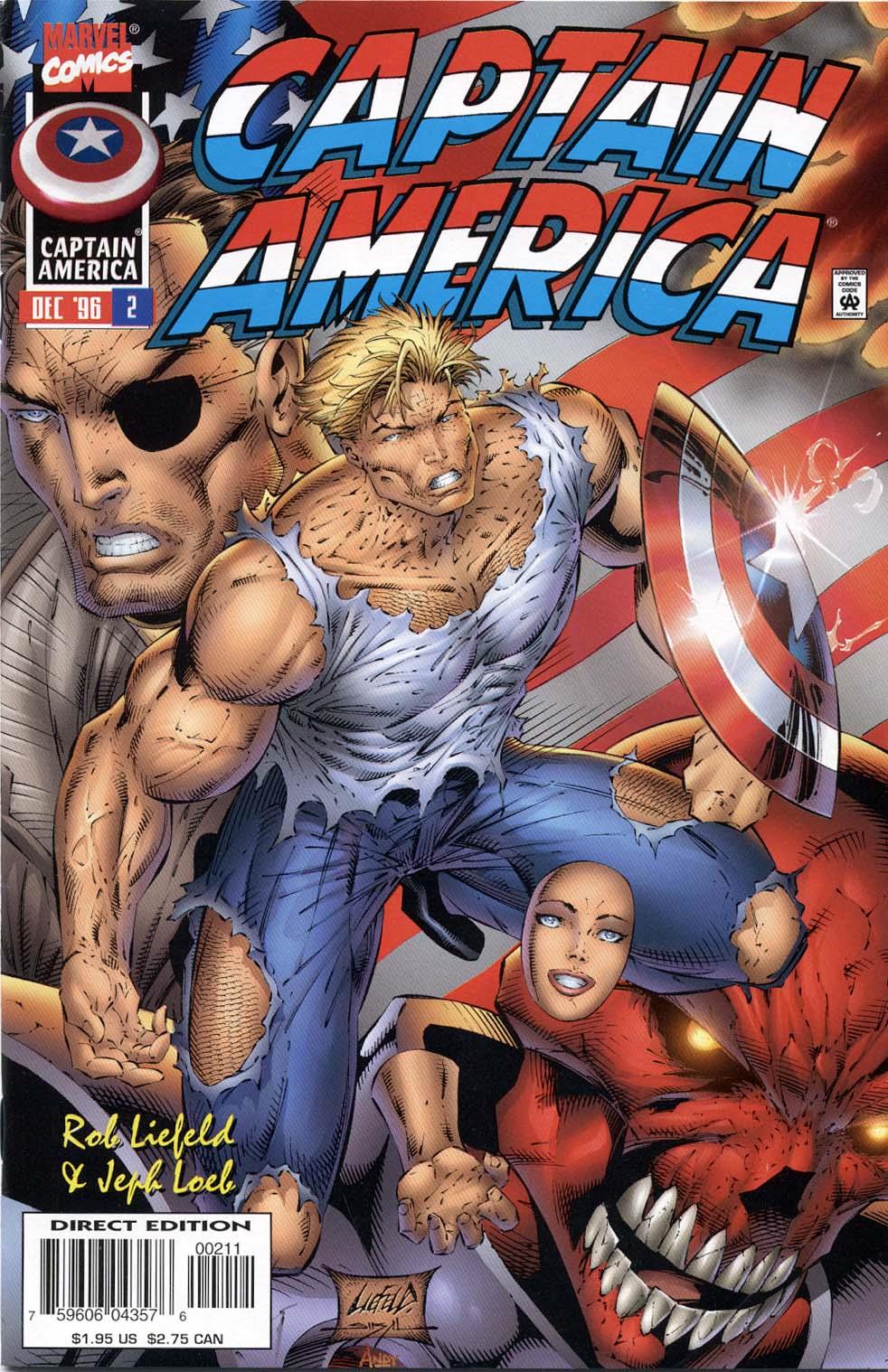
Marvel was slumping from the loss of the speculator boom, and their flagship titles, Fantastic Four, Iron Man, Captain America, and Avengers, were slumping not just in terms of sales, but in how they were seen by the audience. As stated earlier, Image Comics, X-Men, and Spider-Man (among several properties) had taken the eminent position in the marketplace. This led Marvel to throw a Hail Mary by reaching out to Rob Liefeld and Jim Lee to re-tool these properties and bring them back to the audience as cool and hot properties. Heroes Reborn resulted in great sales, including the best selling issue of Avengers of all time, but the sales were not quite what was needed to pay the salaries of Liefeld and Lee. There was harsh criticism of the books as well, especially Liefeld’s Avengers and Captain America. About midway through Heroes Reborn, Marvel asked them to take pay cuts. Lee acquiesced while Liefeld balked and walked. After a year, the deal was done, and we’d get Heroes Return, but Heroes Reborn might be the loudest Avengers moment of the 90’s, and it almost certainly generated the most revenue in Avengers comic book history; the movies, of course, are another story.
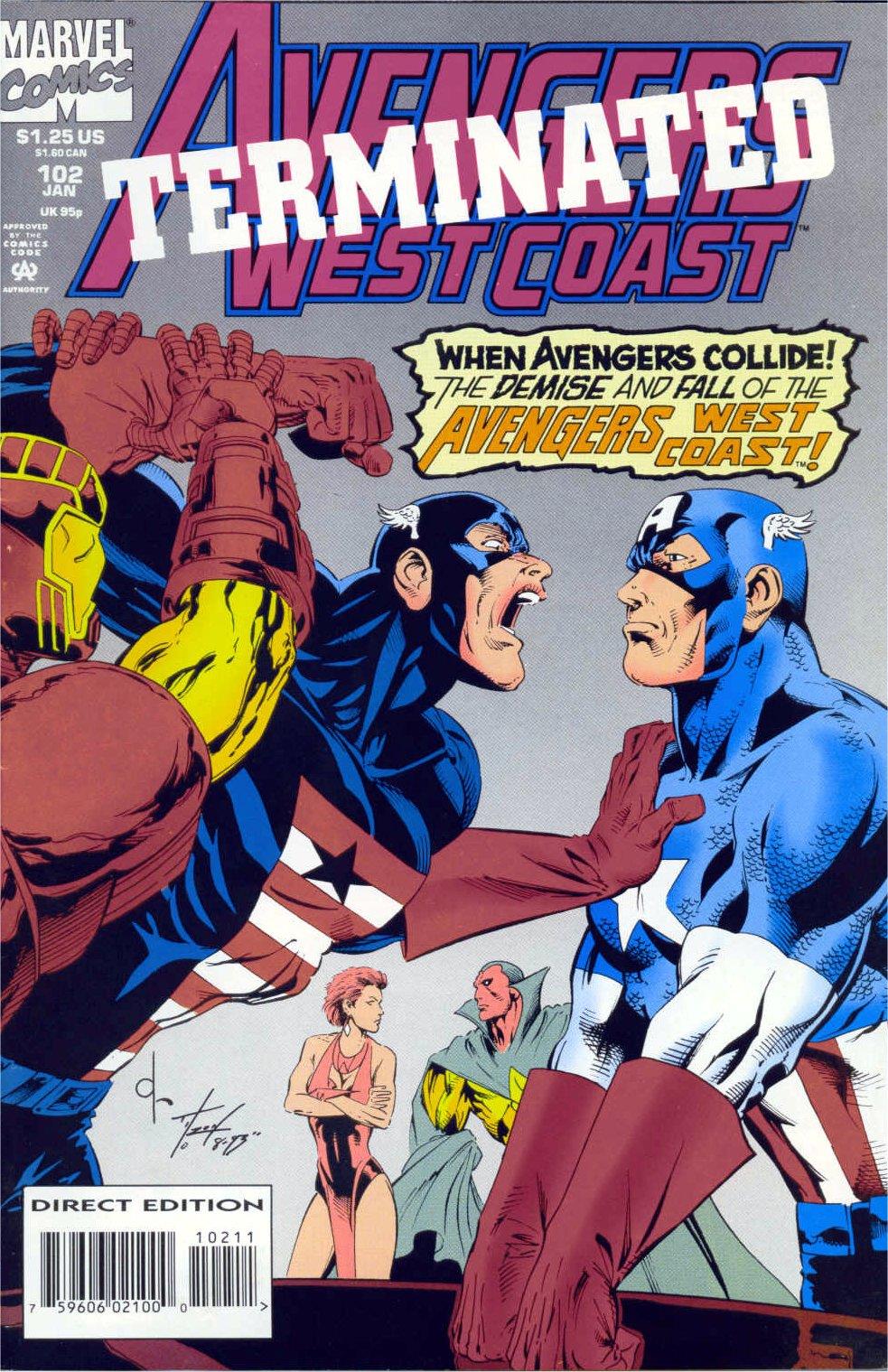
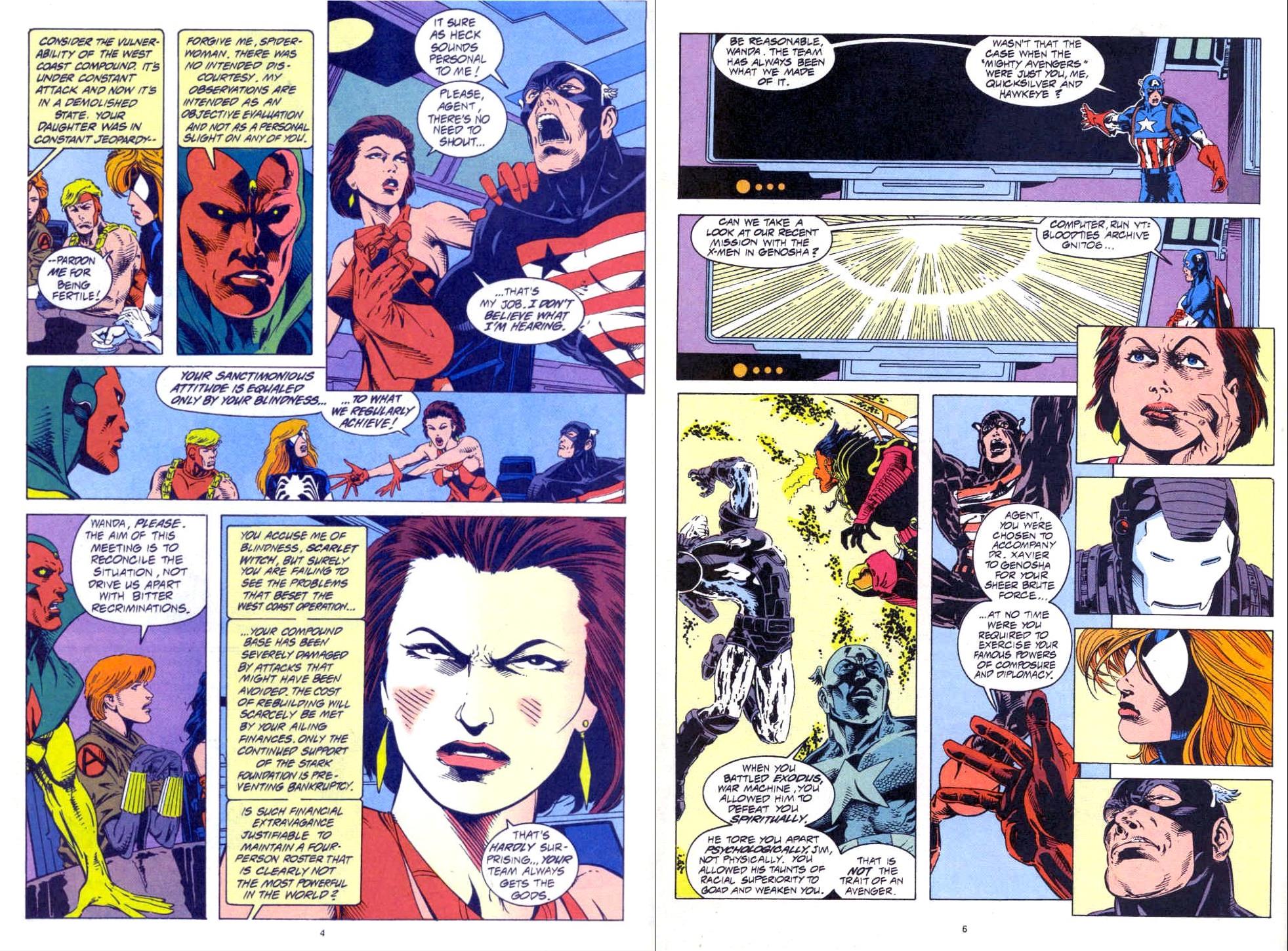
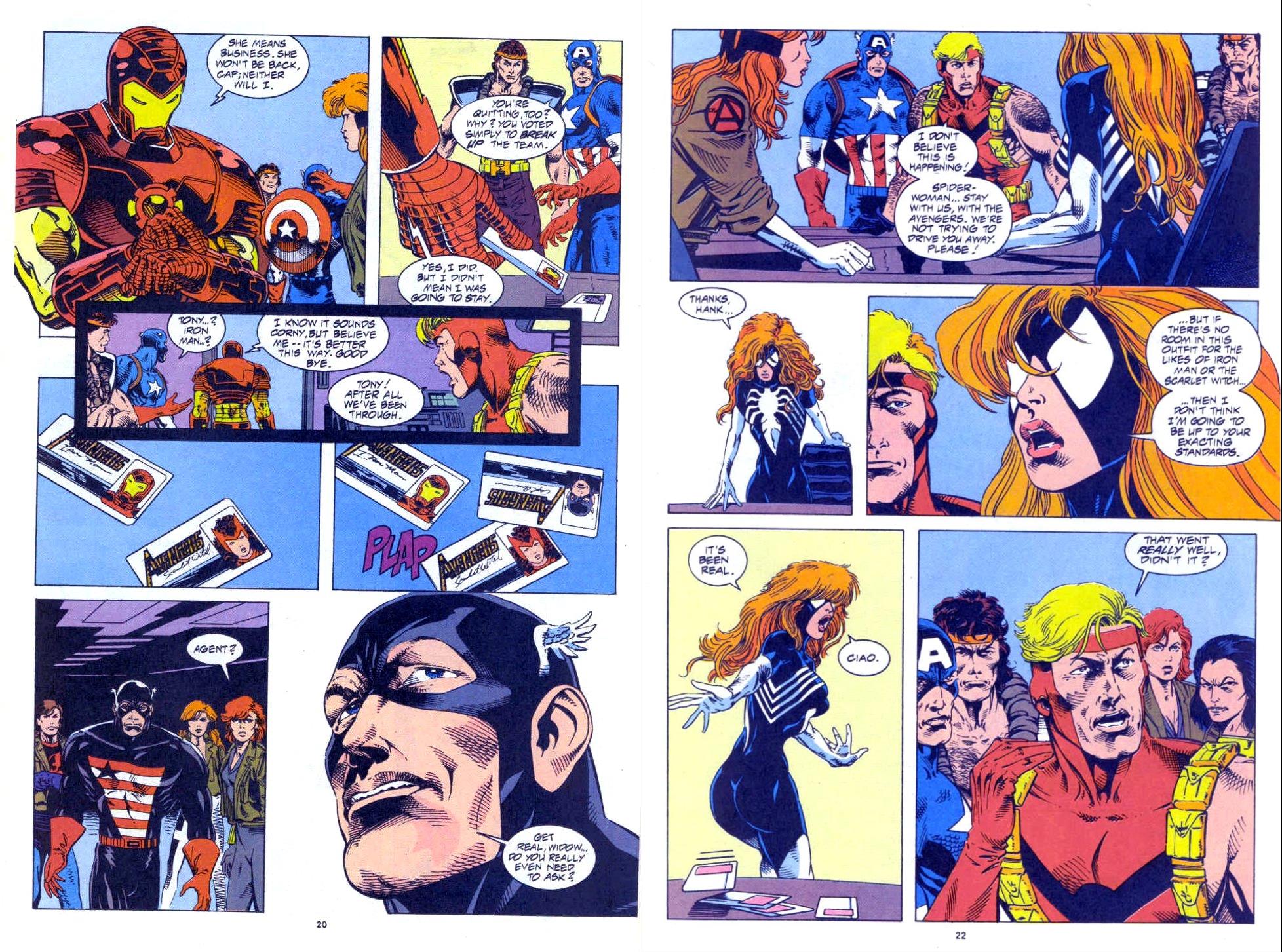
5-Avengers West Coast Disbanded
When I started reading comics regularly, there were two branches of Avengers. This made Avengers seem awesome and very important. Avengers West Coast was also consistently more entertaining than its east coast cousin when Roy and Dann Thomas were at the writing helm, while the Bob Harras Avengers title just sort of floundered. I didn’t see the end of Avengers West Coast coming. I remember being shocked when I read about it in Wizard or Hero Illustrated or some such magazine. I was upset, and I didn’t understand why they’d trash this legacy for Force Works. I liked FW all right, but it was no Avengers West Coast to me, and while much of that grandeur surrounding The Avengers has been restored, I wonder why in the last decade of umpteen badrillion Avengers books named everything from New to Secret to Pet Avengers, why we couldn’t have gotten the return of Avengers West Coast…
4-Operation: Galactic Storm
A huge part of the history of The Avengers is the role that the mega epic plays in their history. If they didn’t have any, we could not refer to them as “Earth’s Mightiest Heroes,” and they probably would not be the center of the movie world. The Avengers mega epic menagerie includes great stories like The Korvac Saga, The Thanos/Warlock/Mar-Vell Saga, The Kree-Skrull War (to which Operation: Galactic Storm was sort of a sequel), The Avengers-Defenders War, and more. Operation: Galactic Storm is one of the biggest editions to the cosmic cabinet that holds these mega epics…LITERALLY. The story goes on for 19 parts through 7 different titles, and it has epilogue stories that even include a Silver Surfer issue. While it is unwieldy at parts, and it was definitely stretched too thin, the ongoing saga has that epic feel that The Avengers really didn’t capture as often as they should have in the 90’s. There’s also a giant moral theme that permeates the story and the epilogues, and it also spawned a really crappy video game.
Get ready to play as Thunderstrike…with Thor as your backup. Who thought that was a good idea?
Emily Scott will be taking a closer look at Operation: Galactic Storm later this month, as we are celebrating The Avengers all month long! She will be crafting a 2-parter because that’s what passes for a mega epic around here.
3-Avengers Forever
I’d call Avengers Forever confusing, but that would sort of be like saying that race cars go fast. That sort of description is appallingly insufficient. Avengers Forever centers around Kang, The Destiny War, Rick Jones, Immortus, and a cast of different Avengers from throughout time as they run into other Avengers throughout time. I have read this three times, and that’s honestly the best way to put it. Actually, a better way to put it might be a love letter to Avengers continuity. It is confusing, but it is also quite a fun book, and it is beautifully done by Carlos Pacheco and Jesus Merino. Just enjoy getting to see cool stuff like the Avengers teaming with Killraven against Martians, as seen above, and Two-Gun Kid vs. Kang, and you’ll be ok. Try and make too much sense of it and you will have a headache that can only be destroyed by Ant-Man. Enjoy it as a romp, and well, you get a romp.
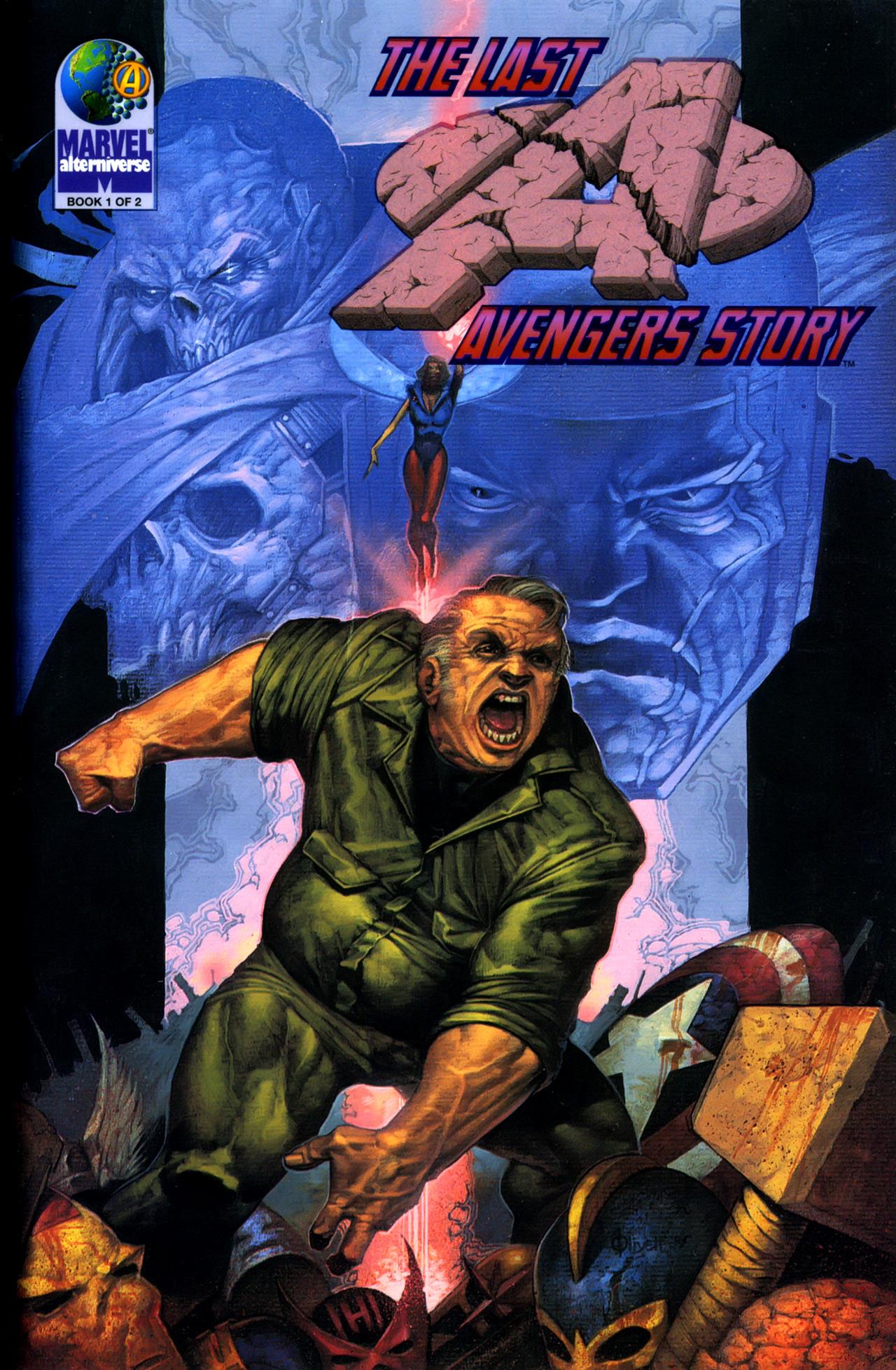
2-The Last Avengers Story
Peter David crafts a dark tale that isn’t saturated in grim and gritty nonsense that Ariel Olivetti renders in an eye-pleasing darkness that seeps into everything. The Avengers aren’t what they used to be, kids, and what they used to be was kids. David’s story highlights the inherent advantages that villains have within the superhero paradigm. He also shows us a world gone mad, heroes broken for different reasons, and the fate of the children of several of the heroes. Also, we get Cannonball in this for some reason. I guess in this timeline, he grows up to be an Avenger instead of Cable: The Sequel. In the end what passes for The Avengers gather to make their last stand against an assemblage of their greatest foes, and many of the Avengers who are left simply don’t make it, but hope remains for those who do. Darry Weight will take a closer look at this masterpiece later this month!
1-Ultron Unlimited
In my mind, this isn’t just the greatest 90’s moment in Avengers history, but this is truly the greatest moment in Avengers history, period.
That. That’s it. That panel epitomizes The Avengers. Even their heaviest hitter, Thor, is war-scarred, having battled all that Ultron has to offer. Captain America and Firestar are beaten down too. Despite the hardship, despite the war they have just gone through, and despite their fatigue and injuries, The Avengers are here to do a job, and that job is saving the world. Ultron is at his uttermost worst in this tale; in contrast, the Avengers have never been better, shone brighter, or come through against more horrendous odds. That, to me, is what The Avengers is all about. When things look bleak, they find a way. When the odds are stacked against them, they unstack them. When the worst villains show up, they get confronted by the best heroes. Those heroes are…THE AVENGERS!!!
Just want to give an honorable mention here to the Infinity Saga. I had it on the list, but it’s really more of a Marvel Universe story instead of just an Avengers one. One could make the same argument for Acts of Vengeance, but it ended in an Avengers title. and so I justified it. While the Infinity Saga did crossover into the Avengers titles, it was more or less contained within the three mini-series under the “Infinity” heading.
Thanks for enjoying our top ten! Now, Assemble with these other fine folks in the Super Blog Team Up!
“To get the facts, you need strong fingers on metal keys, paper white with honesty – and then you have to cut hard and deep to make the truth bleed ink.”
Eddie Brock, alien symbiote host who really loves his typewriter, from 1997’s Venom Minus 1.
Venom, perennial Gimmick Era favorite, had a tie-in to that month’s Flashback event because he was the star of a series of mini-series going back to Lethal Protector (my personal favorite). He was the hero of his own story and the main character in whatever temporary title the Spider-Office decided deserved an embossed cover that month.
In celebration of Madness Month, let us turn our attention to 1993’s Venom: The Madness, wherein we see that Tall, Dark, and Toothy did not merely adopt the dark, but was born in it, molded by it, and (I am fairly certain) has yet to see the light.
I would prefer reading Eddie Brock’s Twitter account to almost anything already announced for Convergence.
Eddie is an unreliable narrator. What else would you expect from a man who began his professional career as a journalist? He knows how to edit and what to present as fact. He is his own favorite storyteller. The quote above is from a scene that explains why he still used a typewriter. It tells you what it is he wants from the world. That purity, that honesty. For everything to be what it actually is and nothing else. This is a man who cannot help thinking violently, even about ink on a page. A man who does not want to become better because he believes it is the world that is at fault. What is there for an alien skinsuit not to love? Eddie was never going to be friends with Peter Parker. The Black Suit was merely the excuse. Together he and it are Venom, as in spider-venom (took me longer than I care to admit to piece that together).
Ann Nocenti scripted these three issues, though she was far from the only creator attempting to give Venom a voice in the early nineties. Between the complicated behind-the-scenes origin of the Black Suit itself and the overly complex way that Venom was so good at being a villain that he became a hero, this is a character who never had a stable life. Is it any wonder he would end up mad?
Even though Venom is a primarily toyetic property, I have a personal connection with him. My first comic was Amazing Spider-Man #346 by David Michelinie & Erik Larsen. My earliest memory of Spider-Man, who I have come to collect more than read (the only character I can say that about), is in the reflection of those otherwise blank, alien eyes. I thought of Venom as a hero for a new age. Spider-Man belonged to a previous era. A whiny throwback, similar to those guys at DC with the capes. Not Venom. Not Eddie! Then I read The Madness and watched him murder an elderly woman, who the author goes to lengths to show just how innocent she is.
The teeth constantly grow, phasing in and out from higher-dimensional space, the person they belong to merely forming around them.
Venom’s component parts felt slighted by Spider-Man, the mask, and Parker, the man. Everything that went wrong was conveniently the fault of that man, and so it must have made sense to hightail it across the country where no superheroes could bother you. What he finds is “The World Below” San Francisco, relic of the great earthquake from nearly a century before and haven for the disenfranchised. I assume that this originally meant the homeless and those wanting to live off the grid, but the fact that community activists and other sensible people feel welcomed among the crumbling ruins of a turn of the last century metropolis has me imagining it more as Portland of 2015 than the Morlock tunnels.
Our hero is coming to terms with himself and has even managed to have a love interest, as he becomes embroiled in a stock plot of corporate espionage and environmentally unfriendly shenanigans. This results in him contracting what is essentially super mercury poising and hearing a new voice. Referred to as “The Creep,” it is responsible for that wonky, multiple head thing you probably imagine when thinking Venom: The Madness. Never choosing between a singular or plural identity, the Creep takes Eddie’s mind out for a spin and finds that not only is it already a bit crowded but that he/they may not be the drunkest one at this particular party.
Some eras are best represented by cave painting, fresco, or relief. We have Flair ’94 Collectible Trading Cards.
Venom has the added bonus of being thrust into the literal Realm of Madness, presented as both the type of dark dimension that Marvel is lousy with, as well as merely a construct within his own mind. Is he actually fighting Dusk (unfortunately not the one from Slingers), a manic, supernatural entity or just his own “inner demons” as rendered by Kelley Jones’ claustrophobic, barely discernible art? Neither the character nor the reader is ever sure, but the former does not seem to care. Other superpeople make excuses for the things done under the influence of a foreign entity; Venom embraces it and never acts in a way other than how he chooses. Is this the will of the Creep, the Black Suit, or just Eddie Brock finding another way to justify getting what he wants? Does he even know what that is anymore?
It is an interesting reversal of the classic Black Suit story, present in comics and other media. Parker, iconic nebbish from Queens, gets tired of the world pushing him around (which it does mostly because he lies to everyone he cares about and is unable to meet any of his many commitments) and attracts the attention of some predatory alien entity. His anger gets the best of him, and he says and does a few regrettable things (that hair in Spider-Man 3) before throwing the entity back into the abyss. The wounded extraterrestrial animal finds solace in soon-to-be-mulleted ace reporter, Eddie Brock, who comes to love it and offer it a home within himself. He is empowered by that freedom and never turns back, unlike Spider-Man, who never referred to himself as “we.”
Inside the mind of Venom is a far more dangerous place than the cold, lonely world of several miles below early 90’s California.
Particularly surreal in the otherwise barren, underground cavern of the World Below are the trees. In the background of most panels are trees, leafless but seemingly alive, as evidenced by their size. Are they specially bred to live and thrive in a world without natural light and all but the deepest of underground wells? Is there a master botanist somewhere on the fringes of this society making sure everyone has air to breath? Someone is keeping this place running, though we are never shown who. The entire place has an odd mystery to it that promised to be far more interesting than whoever Venom was going to fight that issue. This could have been a new locale for the greater Marvel Universe. Maybe one of Confederates of the Curious retired here back in the day after helping with the earthquake.
Venom is at home in this Tim Burton-type of wonderland (lowercase “w”) with its beautiful old buildings, gnarly, unobstructed trees, and whimsical folk who, though homeless and destitute, are unfazed about asking a supervillain to help them out. These people have no hero, no champion. Why not Venom? They have already rejected the world they were born into; why not accept a similarly disenfranchised man to defend them, to be one of them? Taking the original, skewed narrative at face value, Eddie should welcome a release from Parker’s totalitarian impact in his life. Someone, somewhere, at some level of existence bought his sob story and gave him a genuine do-over. What does he do with it? This was 1993, what do you think he did with it?
He fought the Juggernaut.
There is no image of Cain Marko in this comic that anyone would be proud of so here is Jones’ contribution to “The Multiversity.”
You might remember the genre defining Roger Stern & John Romita, Jr. story where Spider-Man could not, under any circumstances, stop Juggy from doing whatever it was he wanted. The one that appears on all the Top Ten lists and, in two issues, tells the reader, new or old, all they need to know about Aunt May’s favorite nephew. Whatever it is that makes him unstoppable cannot hold up against having your name on the cover, and so Venom wipes the floor with him. This little X-Over may have been intended to cross-pollinate a few of the bigger books, and give Big Vee something to punch, but Nocenti still finds Juggernaut’s voice. This is him and here, among the mad, he apparently can be stopped.
Venom does not seem to mind the Creep, regardless of the fact that another character refers to it explicitly as a cancer, and in the end he just lets it go. If anyone we meet in this story is truly mad, there is no convincing Eddie it is him. Triumphant, the hero returns to his city, confident in the bedrock of his own mind despite all of the continually mounting evidence to the contrary.
Appearing as a shadow, interrupted only by the constantly shifting, endless row of teeth, Venom must be a comforting presence to the dwellers of this cavern home. The type of protector the disenfranchised expect because those that protect the World Above probably have little time for them. In this way, Venom has chosen to surround himself with those who have as unreliable a perspective as he does, those who assume and prescribe to their own views more than what actually occurs. Venom is at home with what someone not living underground would call madness. To Venom that is all there ever is.
“We accept [him]… one of us!”Does the Black Suit feel the same way? Not to disparage the origins of the entity as already established, but I believe that it does not matter what happened to the Suit before it found its way into the Beyonder’s machine. For canon versus non-canon, I normally begin with this: what has survived through retelling? The Suit feeds on what a wearer feels. The stronger the impulses, the stronger the suit becomes. It learns, adapts, and is empathetic to its wearer. Venom does not trigger a Spider-Sense, is far more powerful that the Wallcrawler, and yet his only source of superpower is the Suit. What kind of state was it in when it met Eddie Brock in the first place?
The 80’s were a weird time. I do not remember much, but everything seems as if it was awful. Spider-Man wore the Black Suit (be it an alien symbiote or regular cloth costume) during some incredibly turbulent times in the character’s existence. I have always seen it as a mourning suit, the black shroud draped over a man who cannot help but lose people. It may have appeared too late to be a result of what happened with Gwen Stacy, but it still feels as if wearing it should tell the reader something other than that the artist cannot be bothered with Ditko’s Lines.
Spider-Man wore the Black Suit for Peter David’s first professional work, The Death of Jean DeWolff. This featured the Sin-Eater, a character whose reign of terror and subsequent capture were retconned into the origin of Eddie Brock. Less explicit to Venom is exactly what Peter Parker lost during that story. He was not yet married to Mary Jane. He watched as a good friend (who may have become something more), one of the few in law enforcement, is brutally murdered while the party responsible brings the whole episode to an even darker place. (The reveal is inconsequential if you have not read it, but if this would have been a spoiler then please go read it.)
If you have ever read “The Invisibles,” you may recognize Barbelith in the background.
Another notable episode is Jim Owsley’s Spider-Man vs. Wolverine. This a story filled with Cold War intrigue, piles of bodies, and the type of moral ambiguity that I do not know if Parker the character or Spider-Man the franchise was yet able to handle. Though the majority of that issue is spent in a knockoff version of the Red & Blues, it is the Black Suit that he wears at the beginning, and, if the climax is anything to go off of, what he returns to in the end.
These stories are the first instances of Parker’s identity being revealed to Daredevil and Wolverine respectively, setting the stage for the casual meet-ups of the 90s through today. Later on, when Spider-Man rids himself of the Suit, he could be attempting to free himself of all of this grief, anger, and misplaced trust. What if all of that pooled at the bottom of the proverbial basin, similar to blood, or, say, ink?
Eddie may be a sinkhole of desperation, but Spidey could learn a thing or two about moving on.
The black ink that defines Venom. Those heavy shadows, those uncompromising depictions that have him ill-defined and almost part of the background. Venom is not only the arch-foe that Spider-Man needed in an era where Norman Osborn was dead and Doctor Octopus was not considered “bad ass” enough, but he is a literal reminder of what Spider-Man was put through. If the 80’s put the character into places where he had to confront the real world, then Venom is what happens when you want to tell those stories but need the conflict to be symbolic.
The Madness is not a story of personal growth. The time of the Black Suit had pain and readjustment that the Spider-Man franchise had to process. Venom is the result. Eddie’s madness is what happens when a fictional character tries to make sense of the real world. The moral ambiguities and unforgivable nonsense that people, not governed by seasoned creators, inflict on one another. Add to that the constant, market-driven demand to be the Next Big Thing, no matter what, and you have a concoction unlike any other.Forcing all of that into its own little box warps into the mess of drool, fangs, and heavy inks that I revered as a child.

















!["We accept [him]... one of us!"](https://theunspokendecade.com/wp-content/uploads/2015/03/venom04.jpg?w=474&h=726)


 The Unspoken Decade: 90's Comic Book Blog Extraordinaire