Onslaught – A Look Back at the Mutant Menace

“I will kill every hero this universe has ever known.”

This is the pledge of Onslaught during his return appearance in Onslaught Reborn. When I read this recently it struck me because I am a child of 1990 Superhero Comics and I remember when the heroes died.

Onslaught01
Please excuse all of the Liefeld. “It’s coarse and rough and irritating and it gets everywhere.”

Onslaught, at least a reasonable facsimile, is making another, more recent, return in the pages of Axis. I am not reading that book because I am allergic to Rick Remender (for me it was the ending of The End League put prognoses vary). I am still surprised to see that Big Purple Head back in the limelight. Superhero comics are not and should not be BuzzFeed. Empty nostalgia should not serve as both primary creative output and extent of artistic capability. Why is it so important that it is Onslaught who once again bedevils our heroes?

Because he kills superheroes.

I was in Middle School when Onslaught: Marvel Universe came out. I was the “Golden Age” of all speculative fiction: 12. This was it. True progress! Ben Reilly had replaced that sad-sack Peter Parker over in the Spider-Titles (which were effectively shipping weekly not long after Dan Slott completed his true magnum opus Ren & Stimpy) and now these older, “boring” characters were being cleared out of the way. The sprawling, unending X-Men Saga that had raged from time immemorial had reached its climax and the entire world would feel the effects.

How could anyone not understand the significance?

Looking back the first thing I remember is what awful versions of the Avengers and the Fantastic Four died that day. As is if every “true” Marvel, the Stan & Jack ones, had suffered long bouts with irrelevance and were finally being put out of their misery. Shirtless, post-Warren Ellis, Thor. Teen Tony in some mockery of an armor that Robert Downey, Jr. will never wear. Fantastic Force. All went charging into the great unknown basking in Kubert-ian glory. So now, after all these years, why should a new generation of heroes and readers care that Big ‘n Purple is back?

The End of the Age of Marvels and Scott Summers just looks constipated.
The End of the Age of Marvels and Scott Summers can only manage to look constipated.

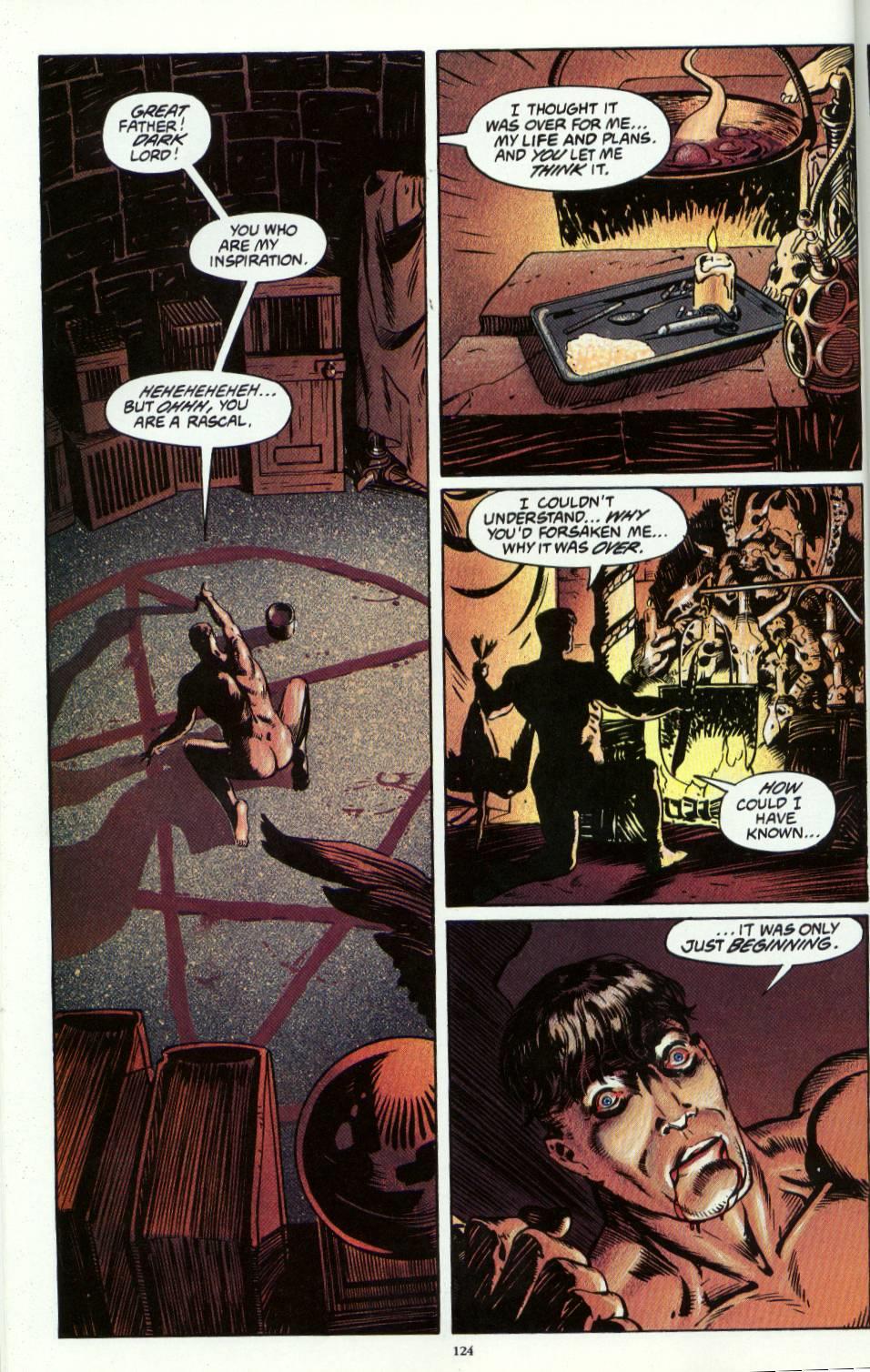
What is Onslaught? Walking plot device? Scion of the Beyonder? “The Hole in Things”? Yes (I think), but a bit more than that as well. Have you seen The Shining? Seen, not “read”. Stephen ‘Maximum Overdrive’ King’s all well and good but we are a Kubrick-fearing household. The film has a short, frank, discussion about what the people occupying a place do to that place. How the negative energies from the awfulness and petty, bitter lives led can affect the world. This turned a building into a monster that preyed on people using others to do so. What happens when this concept is applied to stories?

We all understand that the X-Men protect a world that hates and fears them. It is the franchise mantra in the same way that great power and great responsibility somehow merit going out there every day in a colorful unitard. Hate and fear are powerful emotions. Red and yellow ones, in fact! What if all that negative energy had a vessel, Ghostbusters style? What if the mob that first chased Kurt Wagner down a European alley and every bigot occupying a seat in Madison Square Garden during God Loves, Man Kills were unknowingly fueling a malicious entity from across spacetime? A bomb shaped like a man. What if it were not just these non-playable characters but the readers and creators as well?

Onslaught03
Art from this period is to “Akira” what unrecognizable tastes are to chicken.

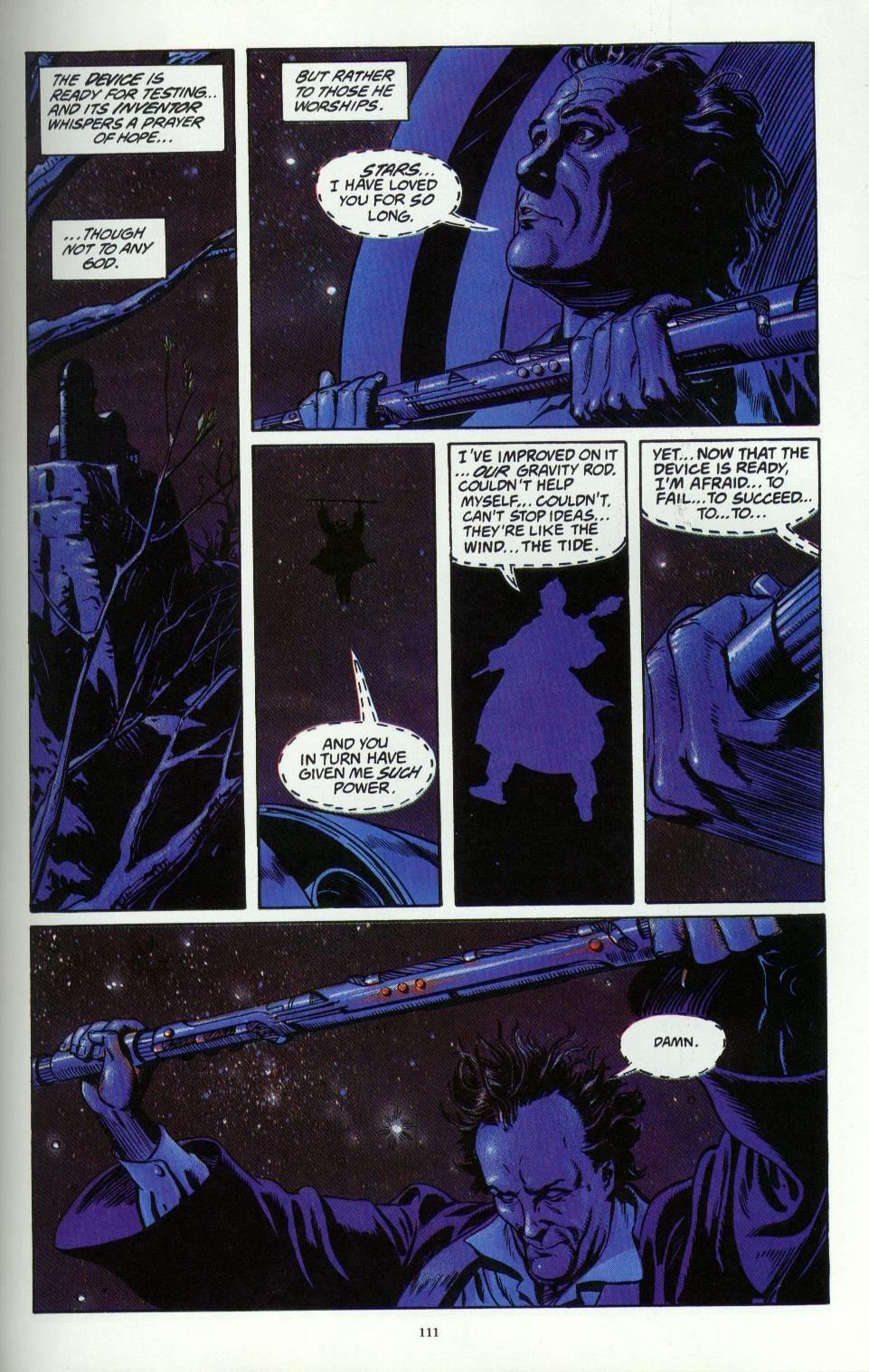
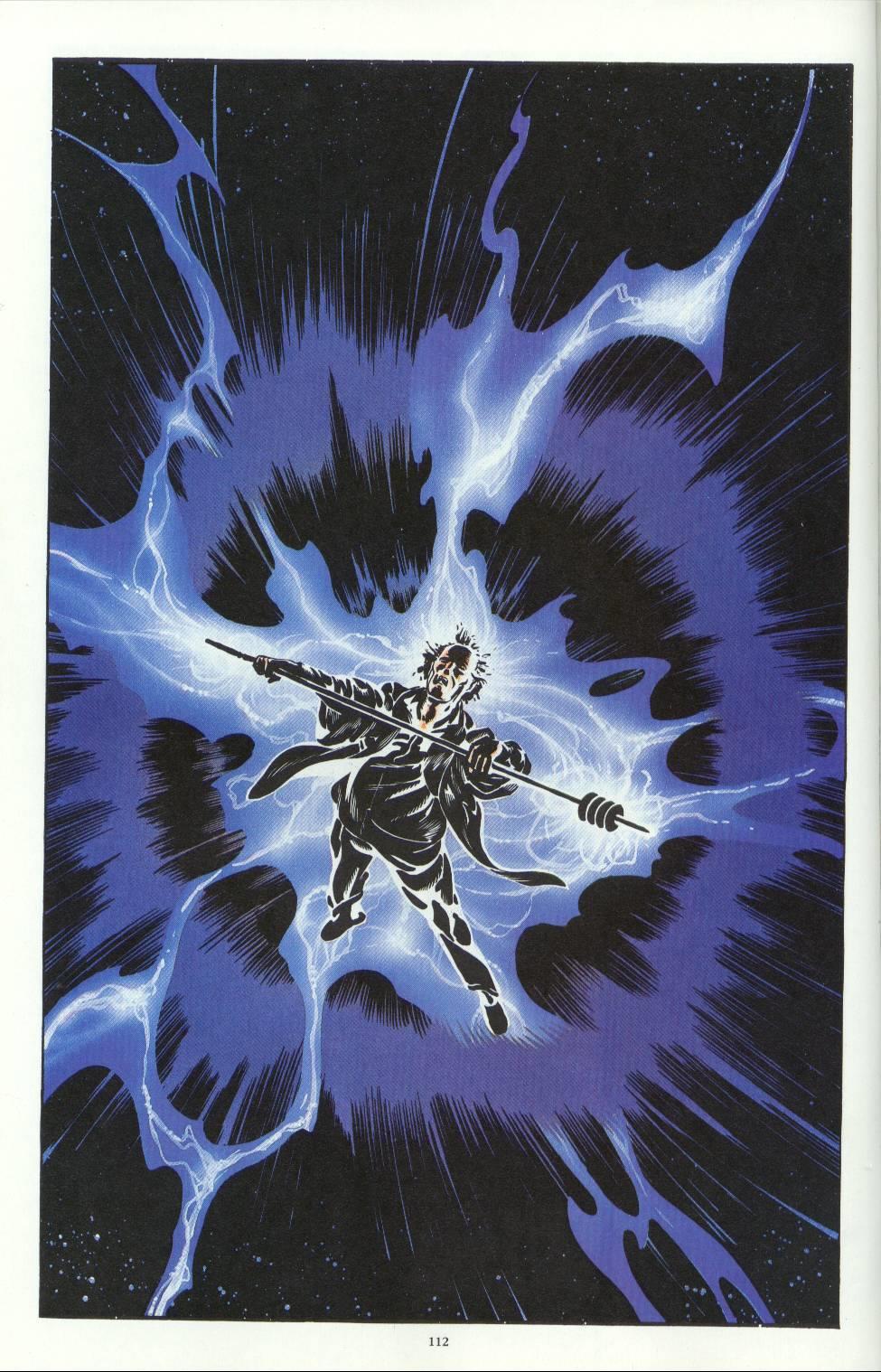
The red and purple always kills me. I do not admit lightly that my favorite superhero is Magneto. Supervillain? Maybe to you, Flatscan, but I know where I would stand if the Revolution came. Seeing his visage warped and exaggerated and draped around nothing more than a pair of menacing eyes and inflated claws is hilarious. Onslaught’s look is the nightmare people in the Marvel Universe would have about Magneto. As the original story progressed there were more spikes, larger claws. He seemed to warp space and gravity around him as his look devolved (the art did not help dispel this). He even dragged Wolverine down with him! At the same time he reflected what had been happening elsewhere in these comics. Years before The Sentry showed us that you cannot have a Marvel version of Superman without the Void coming along to ruin everything, Onslaught seemed to reveal what was really happening behind the scenes.

Poor Logan. Anyone else want to see a "Joseph" solo film starring Michael Fassbender? Just look at that hair!
Anyone else want to see a “Joseph” solo film starring Michael Fassbender? Just look at that hair!

As the armor grew more ungainly and the vaguely human face and limbs became distended it became apparent that Onslaught was not merely the product of Charles Xavier and his arch-enemy’s Fatal Attraction. He was whatever we wanted him to be. Whatever the readers and characters needed him to be. The swirling mass shown briefly beneath the armor is his true form. The obviously padded stories featuring his early appearances provided him time to grow and reinforce the chrysalis. This was the era of “the X” so of course the destroyer would take its form.

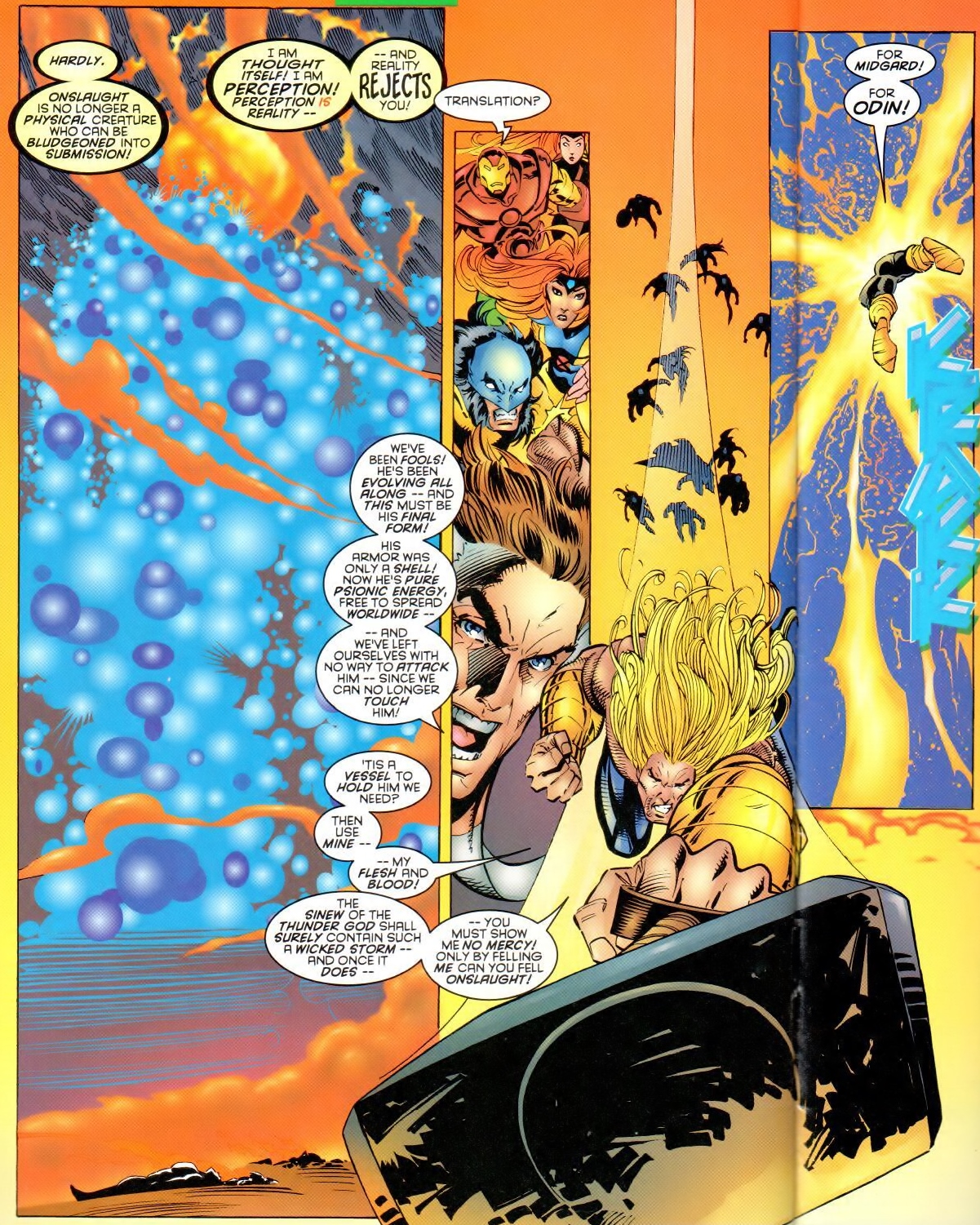
At the close of the story we are shown that he is a being made of pure energy. We are told that this is somehow “psychic” in nature. As with most comics of that period the heroes and villains tended to wield generic, poorly contextualized, coloring effects as offensive weapons. Here we see that that is literally all Onslaught is. The dark, brooding outside that proved to be less than ideally toyetic (full disclosure: I own all four figures from the first wave and each is more disappointing than the next) was merely a shell that allowed the gooey center to gestate. Coming to fruition was the formless void of misshapen energies capable of accomplishing exactly nothing. The heroes “died” to stop him by running at the Big Twinkie and dispersing what ‘was’ using what they ‘had’: themselves. Take this a step further and we have the characters themselves, shoddy and exhausted after so many pitiful attempts at relevancy (The Avengers should not wear leather jackets. Ever.) declaring that they need this. They need to go away, take some time off and maybe, just maybe, come back on their own terms.

That's a big Twinkie.
“That’s a big Twinkie.”

The less said about Heroes Reborn the better but it fit with my worldview. The Old Characters were off in their own little place. The Fantastic Four became, basically, a new X-Team and the Avengers continued to descend into unrecognizability. That this gave way to, among other things, the Kurt Busiek/George Pérez run is a discussion for another day (as I do not think even that provided the audience connectivity that would ultimately be seen with Mark Millar’s take on the characters across two publishing lines).  At home the people the remaining characters had to protect knew that a Mutant Menace, just the type they had always feared, had killed the Real Heroes. Onslaught also left a vacuum that allowed New Heroes to arise. The Thunderbolts was the first title I bought each and every month without fail. Even my beloved Clone Saga had not made me realize different comics came out every month. They just always seemed to be there.

What of “the beast” itself? What was Onslaught to the wider world? His arch-enemy, it would seem, was Franklin Richards. The First Son of the Superheroes. The Konami Code of the Marvel Universe. The kid that no creator could consistently characterize and whose birth was the last time Marvel, universe and company, appeared to move forward. It is easy to convince a child that things are important, they have to take you at your word. The fact that you may have had no idea what was going on is incidental, and can prove to be unimportant. We know Franklin’s important, we were told that. What if he is important because he represents the future? The future of the world, of these characters, and of the stories yet untold. Then Onslaught would have to control him.

I mentioned the Beyonder before. I think of him as the first, true Marvel Crossover Villain. He was the generic-ex-machina that allowed Jim Shooter and Mattel to cobble together Secret Wars. The first, but not the last, crossover. Focus-group tested to death before the first issue arrived on the stands and still unreadable today (it is no Infinity Gauntlet). Think of the scope! He Who is From Beyond! The great, unknowable wrath of the Old Testament. The Hand That Plays with the Toys! Compared to a man who could form Battleworld from occupied scraps of other places what chance did a Mega-Mutant such as Onslaught have at impressing readers? Not a fair comparison, I concede, but an example of how high the threat-bar had been set. What about the greatest, grandest threat that the Marvel Universe has ever faced? Thanos? Galactus? No, no. I’m talking about true, unbridled power: Dark Phoenix.

Thankfully she has that head-sock to make up for the lack of any actual characterization.

Long before Bryan Singer decided that Jean Grey was a physician (though “The Doctor” would make a great supername for her in the films now that Matt Smith has firmly embedded himself in the public consciousness), and long after her disastrous resurrection, she fought alongside her peers in the battle against Onslaught. Not even worthy of a moniker, she trudged her way through, making comments and looking suitably Madureirian. She had to have had a good laugh, remembering the time she ate a star because she was peckish, as she headed to Central Park to stop some Big Armored Bro. How easily we forget how grand our battles have been.

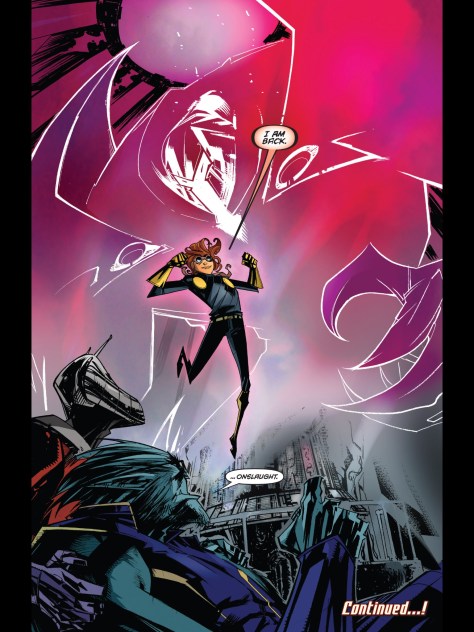
Is Onslaught, as Loeb (via Rikki Barnes) claims in Onslaught Reborn the Biggest Threat the Avengers, FF, and assorted Original Marvels ever faced? No, of course not, but if anyone ever believed that he had been then maybe it was because the story needed that to be true. Because the characters needed him to be that. Because being told something one too many times means that someone, somewhere may start to believe what is said. Not to fault Loeb. I loved the original Onslaught story. It felt important to me and looking back on it now I am happy to have had the experience of reading it when I did.

There have been two different stories about Rikki Barnes fighting Onslaught during the last decade but still no sequel to NextWave.

Does Onslaught’s return matter or are we merely playing with our old toys? Something dark and sinister lurks within that visage. He is not a man but a cipher for hate and fear. Something inhuman that an un-nuanced nut-ball like the Red Skull cannot hope to comprehend. Onslaught kills heroes. He does so with abandon. He is the darkest, basest ambition of every jaded fan and every harrowed creator. Onslaught is the god of the Senseless Spectacle. Maybe he can be controlled and made to serve the needs of a story but mostly he just seems to destroy.

The Golden Age #3-Of Martyrs, Men, & Matrimony


Hello Legions of the Unspoken!  Welcome back to the only place to get that 90’s fix that I know you all crave beyond belief!  Everyone’s favorite podcast host and 90’s comics fan, Dean Compton here, and I am ever so excited to continue our foray into the most unjustly forgotten masterpiece of the 1990’s, The Golden Age!

Things are getting rougher and rougher for our cherished Justice Society of America & their compatriots.  But there’s an old saying that it is always darkest before the dawn, and maybe, just maybe, if they keep their heads up and their spirits strong, the heroes of The Golden Age will make it out of this somehow.  If they are going to though, they’ll need a miracle…or at least…a Manhunter…

The Golden Age #3 - Page 1

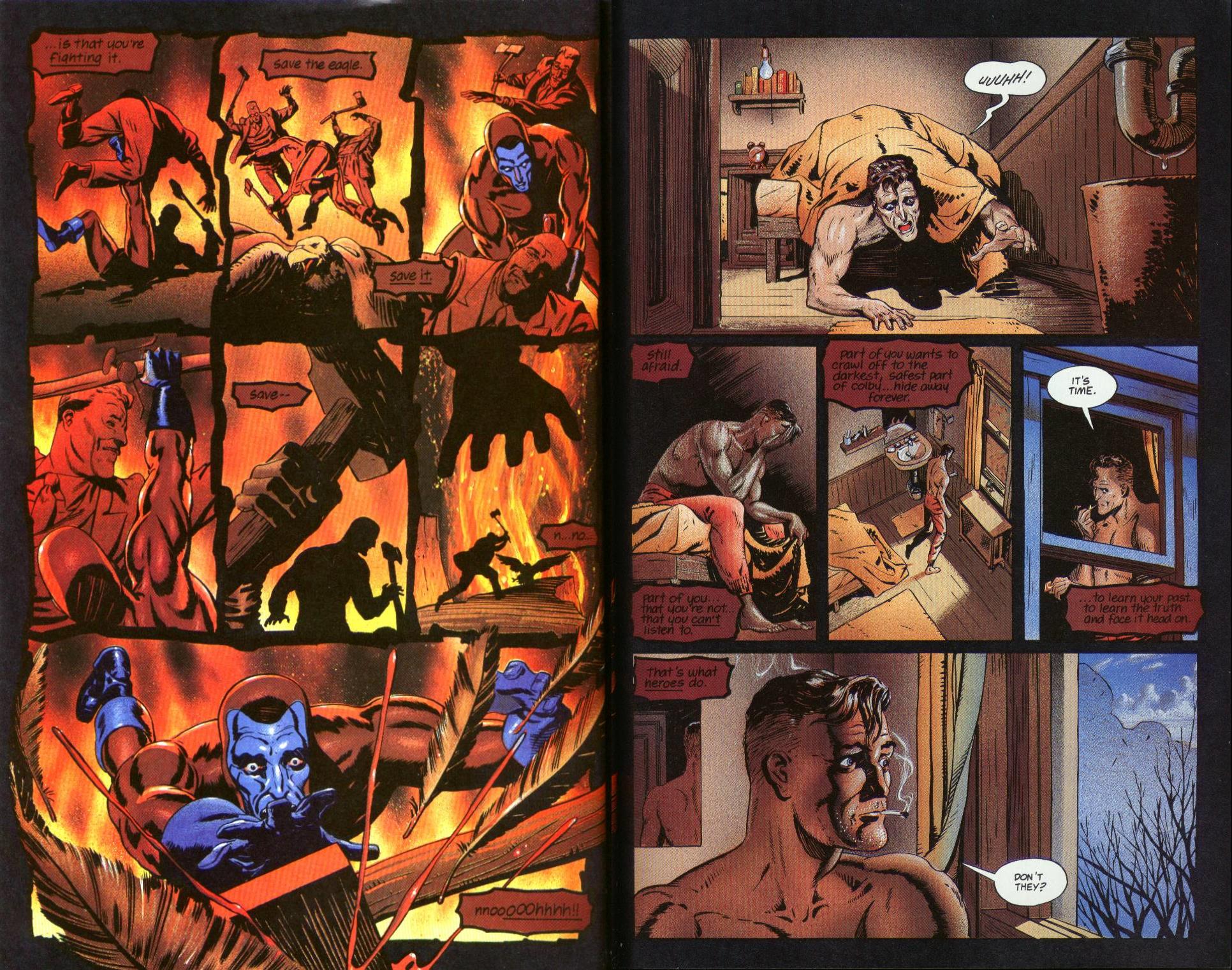
I cannot say enough about the impact of Paul Kirk (Manhunter)’s dreams on me when I read this as a young man.  The dreams are vivid, horrendous, bloody, violent, surreal, and utterly captivating.  The dreams mean something, though, and we will find out this very issue exactly what it is that they mean…and what they mean for Manhunter.

This issue is also the issue where the JSA and their pals find their spirit and their mettle despite the major setbacks they have recently had.   But before they can overcome any of them, they have to find out the nature of the setbacks…and they have to overcome a few more.  It’s 1949, folks, and the game is certainly not over for our heroes…in fact, it is just getting heated up.  Just ask Tex Thompson or Daniel Dunbar.  Just ask Libby Lawrence, the former Liberty Belle, who is getting back into another game just in time before her beau, Jonathan Law (Tarantula) completely destructs right before her eyes…

The Golden Age #3 - Page 4 The Golden Age #3 - Page 5

The Golden Age #3 - Page 6

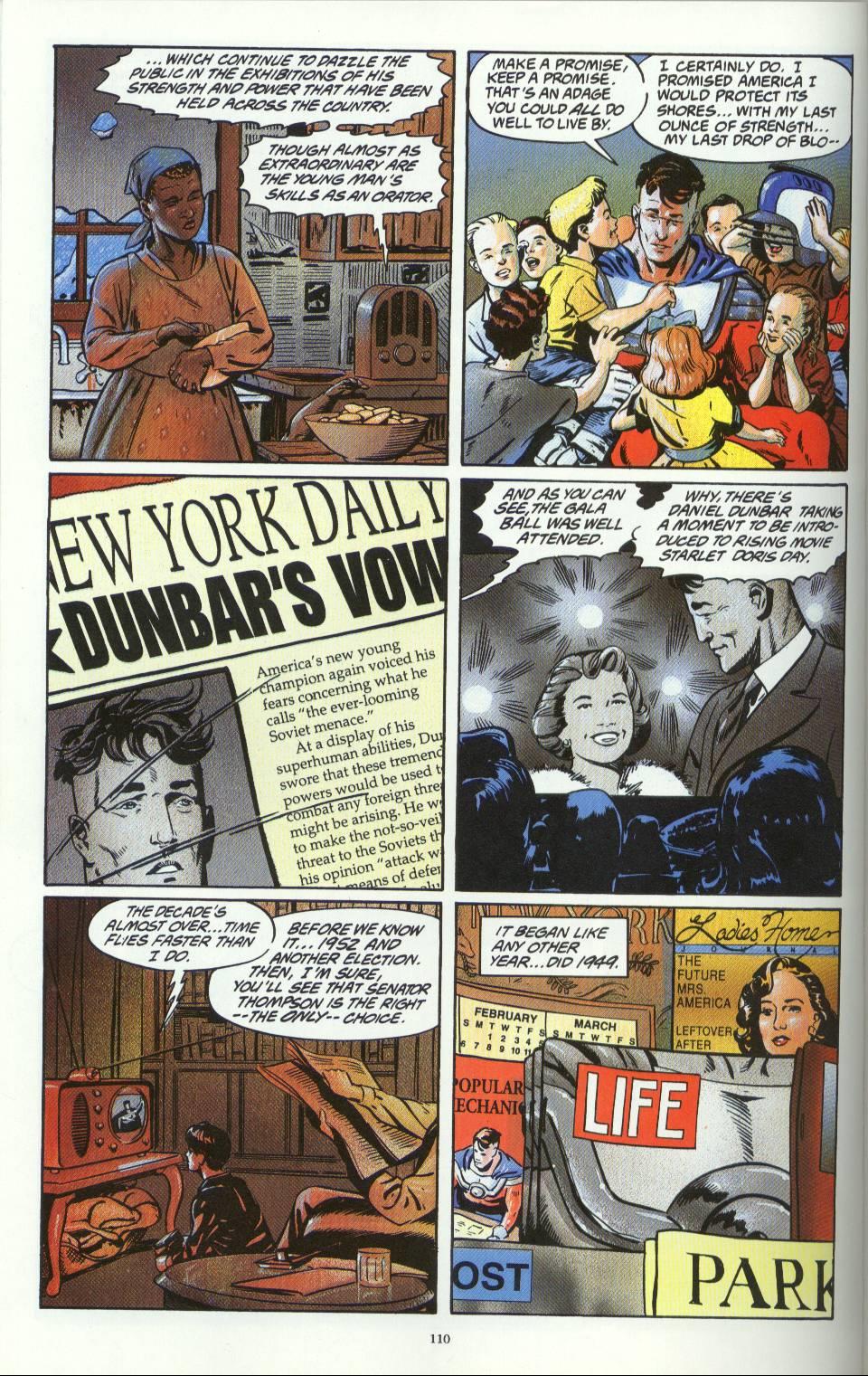
Daniel Dunbar and Tex Thompson are both more and less than they seem.  Dunbar’s constant hype for the election and of Thompson’s virtues are making the mystery men uncomfortable by now, not to mention the readers, as we have seen the seedy side of Dunbar.

I do have to wonder what it must be like for a super powered being to take drugs.  Does Dunbar have to smoke 6237823 times as much crack as a normal person would to get high?  Is that powder he snorts and injects the world’s most powerful speedball?  What level of medical marijuana would he have to smoke to get even the semi-munchies?  I am fascinated by this; that’s probably why Hourman’s mission to perfect his Miraclo also fascinates me.  After all, Hourman runs the risk of being an addict himself as his Miraclo tolerance grows.  Of course, Rex Tyler, Hourman, always manages to find the time he needs to be perfect…

The Golden Age #3 - Page 22

His fall was broken by the ceiling of an American family who will be reimbursed, but what of the fall of an American who is protecting, well, America?  What of the fall of a man who was sticking up for the mystery men and their “lack of service” during the Second World War?

And why does our society punish those who are different, even after great service?  Why do folks like Donald Trump or the Rockefellers get lauded while heroes like Tesla and Eugene Debs are ignored and discarded to the dissident historical tomes?  Why does our country take and take what it needs from me like Thomas Paine, only to abandon them and their ideals as soon as possible?  Why does it seem that the only times that the petty men in power will take up for these dissidents, the ones who actually make our society move forward, are when and if it helps them somehow?

I suppose these questions may never have answers, but at least someone did what they could while also striking at Tex Thompson, who has demanded that all the Mystery Men come forward and unmask, and I am sure everyone is aware by now, Tex is not all he seems…

The Golden Age #3 - Page 16

Even the man sticking up for the Mystery Men is doing so for his own reasons, and on some level, “ain’t that America?”, as John Cougar Mellencamp told us in the 1980’s?  Our nation has such an individualist streak, particularly when it comes to those petty men and women we allow to rule us.  Even when doing the right thing by taking up for the superheroes (who, as we know from issue #1 of The Golden Age, were barred from entering the Second World War because of Parsifal), it has to be done from a purely self-pragmatist point of view.  When folks try to tell you of the good old days when people cared for each other, try and recall that many of our social paradigms have been the same for some time.  Try and recall that when you are told otherwise.  And also, if you cling to your convictions not to fall…or get pushed.

The Golden Age #3 - Page 21

Or maybe your convictions are less than stellar, and perhaps you are mad with power, drugs, and the belief in strange Gods and stranger orders.  Maybe you are drunk on power and high on drugs.  Maybe you are Daniel Dunbar.

The Golden Age #3 - Page 20

Whatever was left of Daniel Dunbar is gone, given over to madness, power, drugs, and something else…

Of course, even our heroes still have their personal problems, some of them deeply entrenched within the mind.  Of course, without his problems, would Starman ever have brought the world the greatness he has?  Would this world of The Golden Age be even worse off?  Or is Starman right and he has unleashed something abhorrent upon everyone?  Is his madness a form a of conviction?

The Golden Age #3 - Page 7 The Golden Age #3 - Page 8 The Golden Age #3 - Page 9

Ted Knight’s descent into madness and ascent out of it is a story for the stars themselves to tell, as he will be needed before this is all said and done.  Ted reminds me so painfully of myself, vacillating between the peaks of mania and the depths of depression.  Maybe he reminds us all a little of ourselves.

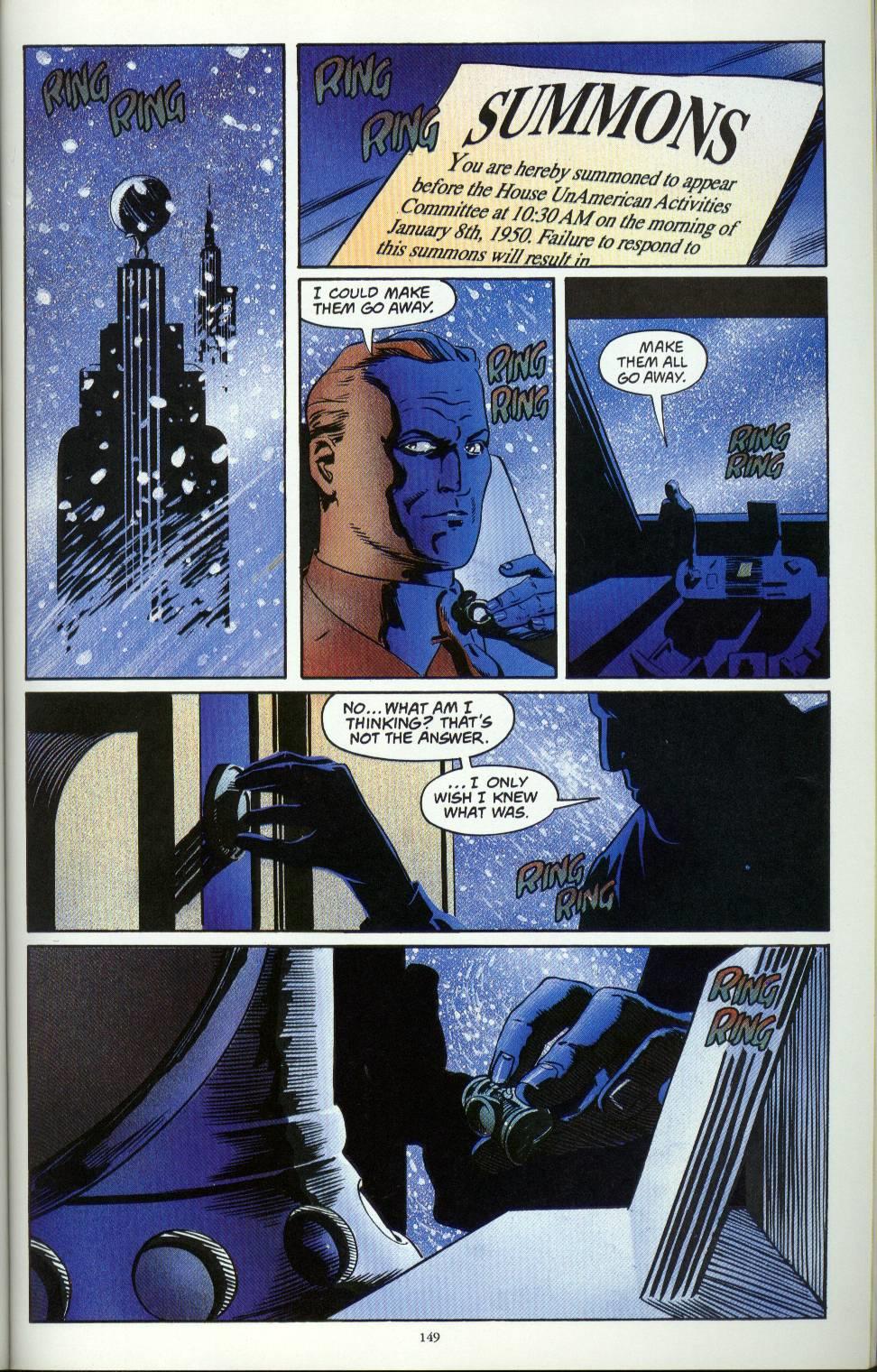
I wish Alan Scott, Golden Age Green Lantern, reminded me more of myself.  I fancy myself a loyal man, but his loyalty in the face of one of the most vile anti-freedom machines produced by our government is truly inspiring.  Many people would crumble against such an onslaught.  Of course, many do not have his willpower…

Yet despite the assault of the House on Un-American Activities, despite the crumbling of his broadcasting empire, and despite the pressure of all of this, Alan Scott stands tall and noble.  I mean, not so noble he won’t get angry or tell someone exactly how he feels.  That combination, to me, is the defining characteristic of most of the Justice Society of America, but maybe especially Alan Scott.  Nobility paired with honesty…

The Golden Age #3 - Page 15

Ah, even the most noble of heroes can long for the past, when times were “simpler.”  The truth, folks, is that the times when we were young were not simpler; we were.

Some of our heroes are not struggling with the nobility we see in Alan Scott, or even the courage of Ted Knight in the face of his mental disease.  Some of them, like Jonathan Law, have completely given into to vice…and violence.

Of course, for every action, there is a reaction, and Liberty Belle isn’t a pushover for anyone, even one who used to be her lover…

The Golden Age #3 - Page 24

While this foray into domestic violence could have gone seriously wrong, James Robinson gets it right.  What I especially like is how Libby needed no one to save her.  Johnny Quick did not come running in from Paris in 5.3 seconds to rescue her from this vile assault; she saved herself.  Conversely, though, not NEEDING Johnny Quick did not prevent her from MISSING Johnny Quick.

Many folks never admit how much they need one another, and one of them, Paula Blake, is just getting ready to find out how much she needs Captain Triumph, and also, how much she is needed.  Captain Triumph, however, desires anything but to be Captain Triumph.  He’d trade all his powers and wealth for just a moment of peace.

The Golden Age #3 - Page 18

On the other hand, Paul Kirk has realized how much he needs people.  He has leaned more and more on Bob Daley, and Bob has helped him.  The difficulties Manhunter has faced continue, and while he is beyond where he was when our tale started, he is still facing the surreal horrorscape that can, on occasion, be our dreams.  That horrorscape is all he dreams…

The Golden Age #3 - Page 28 The Golden Age #3 - Page 29

Manhunter, despite his fears, despite his obstacles (both real and in his head), and despite the danger, is answering the call to be a hero.  He refuses to allow his fear to get the better of him, and as Gandhi told us, the real enemy is fear.

That’s sort of the message I get from this issue; despite all the reasons that things could go wrong, we must continue to face our enemies.  We can and must never allow ourselves to defeat ourselves prior to the battle.  If we are to be worthy as human beings…not even superhuman beings, we have to answer the call.

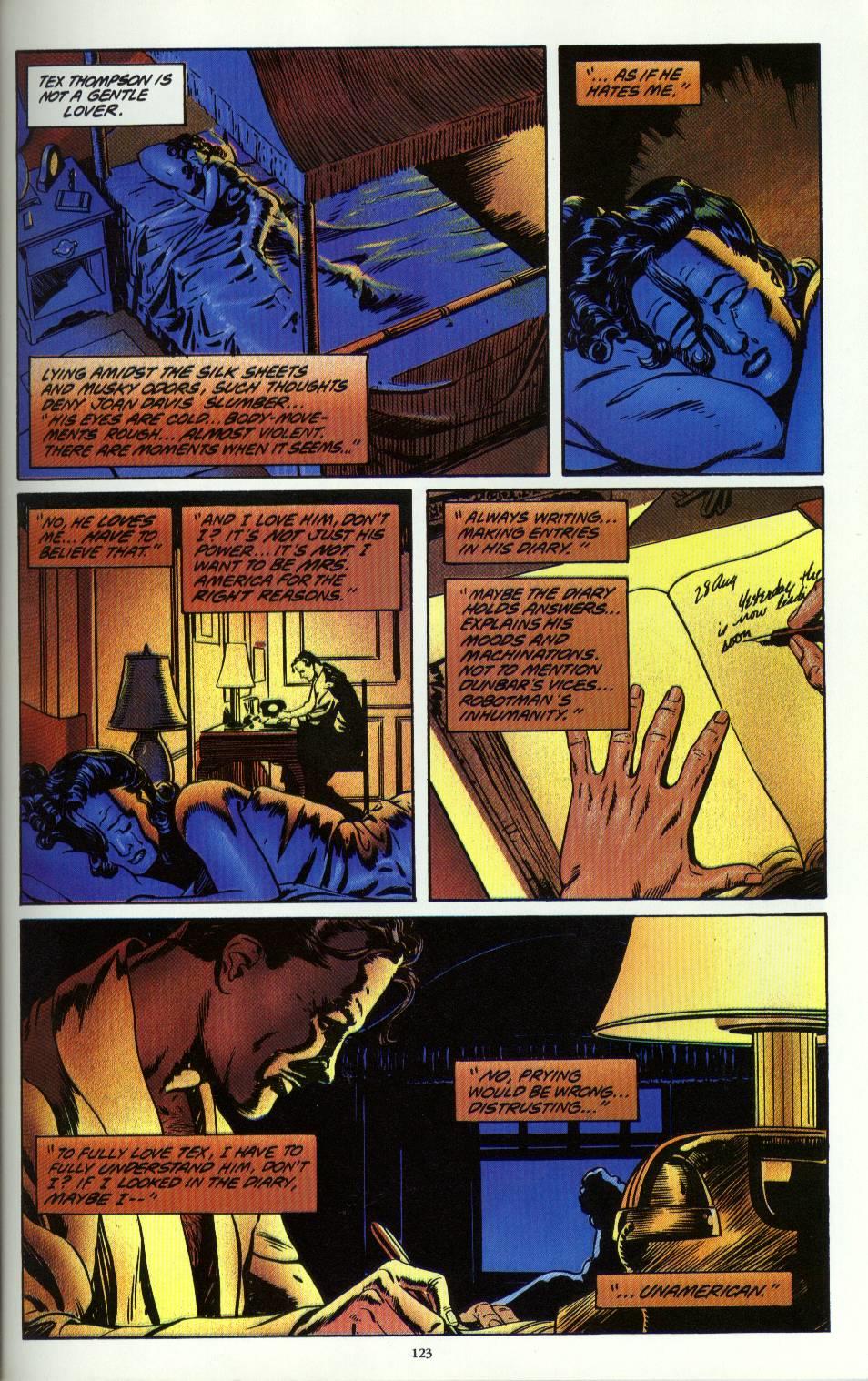
Joan Dale, though, isn’t sure if there is a call to answer, as things are getting hard on her.  I would imagine being Tex Thompson’s girlfriend in and of itself would be awful, but her description makes it seem downright harrowing.  Even Joan, though, had nary an idea just how harrowing her experience was.

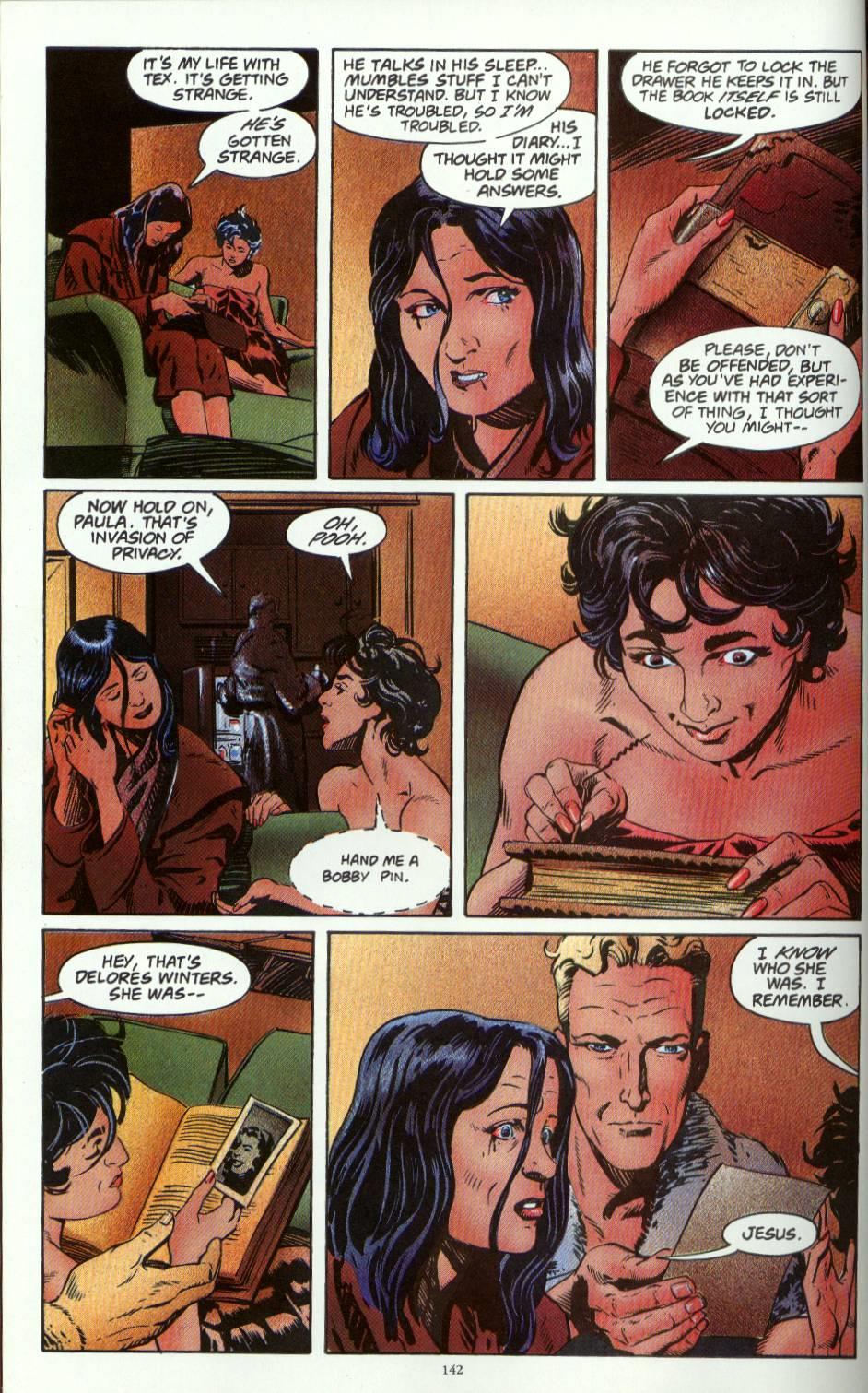
The Golden Age #3 - Page 19 The Golden Age #3 - Page 37 The Golden Age #3 - Page 38 The Golden Age #3 - Page 39 The Golden Age #3 - Page 40

Sleeping with the enemy has never been as disturbing as the notion that Joan Dale, Miss America, for Christ’s sake…has been having sex with the Ultra-Humanite.  And what could this mean for America?  How did this happen?  What does he have in mind as far as his ascent in the world of American politics?

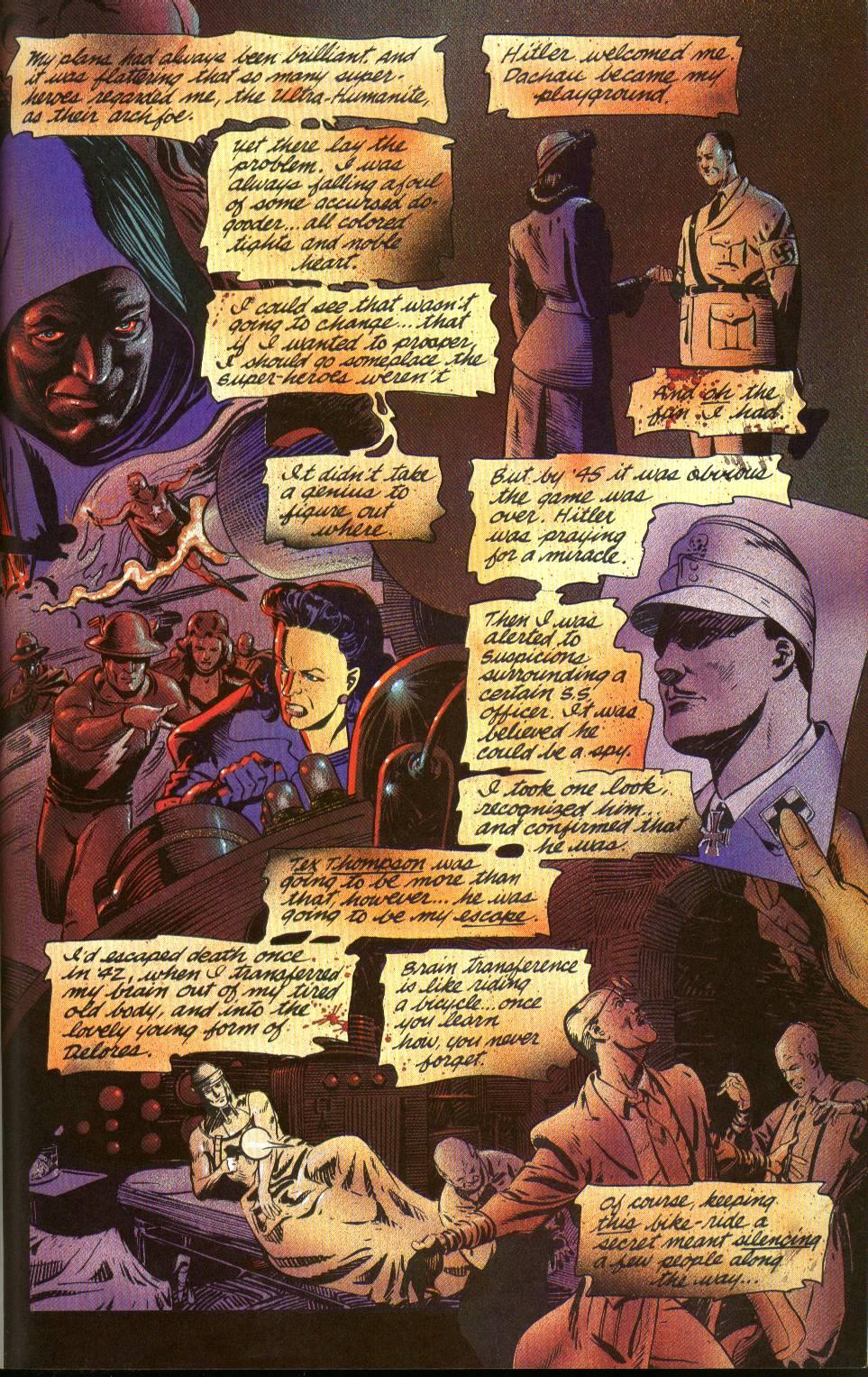
Some of those answers will have to wait, but for now, we can tell you how the Ultra-Humanite accomplished the brain swap, thanks to Paul Kirk, Manhunter, and the most-well known chairman of the Justice Society of America…Hawkman!

The Golden Age #3 - Page 31

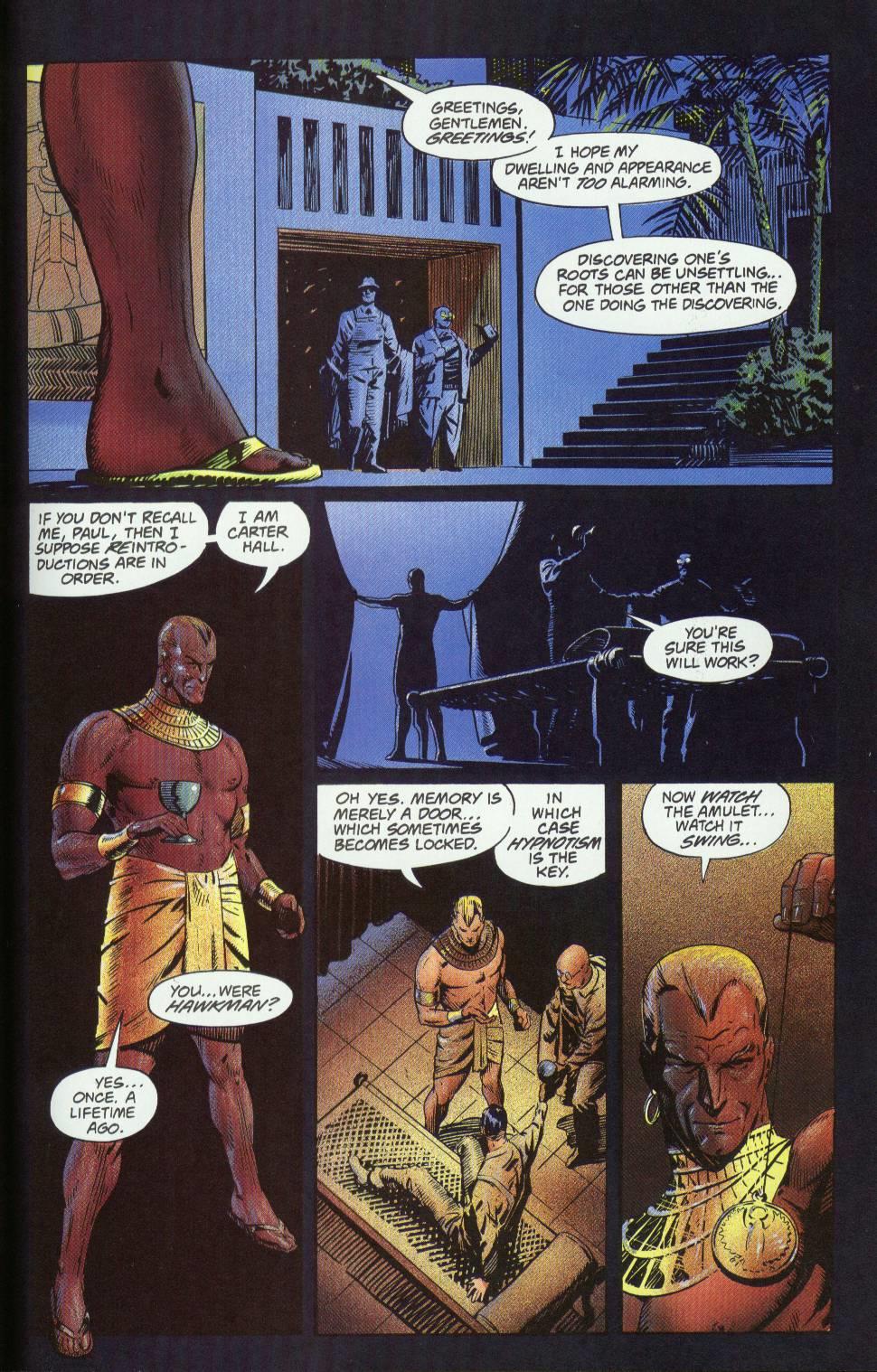
Before I move on with the revelations of Manhunter, I have to comment just how cool Paul Smith has made Carter Hall look here.  I have always loved the connection between ancient Egypt and Hawkman.  There’s something inherently magical about it to me, and also, it somehow just makes sense.  I wish they had not messed up Hawkman’s continuity so badly at DC, but that’s a story for another column.  In the meantime, gaze at the Winged Pharaoh for a bit, then see what Manhunter has been running from..and why…

The Golden Age #3 - Page 41 The Golden Age #3 - Page 42 The Golden Age #3 - Page 43

The Ultra-Humanite has a lot of flaws, to say the very least, among them being a sociopathic murderer, but at least he subscribes to the notion that “if there’s no body, the guy ain’t dead”.  I have seen so many super-villains do so many idiotic things, even villains supposedly super geniuses like the Ultra-Humanite, that I am sort of proud of him for getting it right.

But our heroes are in deep now, Legions of the Unspoken.  The Ultra-Humanite’s plan is almost complete, and it somehow involves that drug addict superman, Daniel Dunbar.  Hawkman asks the most valid question, which is what’s next, and the only proper answer is what we learned from the Blues Brothers; they have to get the band back together.  Someone must answer the call.  When you get the call, will you pick up?

The Golden Age #3 - Page 44 The Golden Age #3 - Page 45

Business is about to pick up, folks…

Hex for the Holidays by Emily Scott

Hello, Unspoken, and happy holidays! Many of you are probably reading this as you look forward to a relaxing few days of food and fun with your families….haha, yeah right. It’s far more likely you are scoping this out as you curse whatever airline has delayed your travels or are hiding from some drunk, overbearing relative, so I hope this article provides a welcome respite from whatever familial hell you find yourself in. Grab some pumpkin pie, liberally douse in Cool Whip, try not to fall into a food coma, and enjoy Hex for the Holidays!

Even though I am still relatively new to actually reading comic books, I have acquired a lot of peripheral knowledge about a myriad of characters over the years from friends, but before reading the subject of this article, I knew only two things about Jonah Hex:

1. He is a Western character.

2. They made a movie about him starring Megan Fox, and everyone hated it.

That’s it. Trying to get a better sense of what I was about to read based on the cover didn’t help much either. I ended up assuming he must be some sort of demon or undead creature in the vein of Ghost Rider.

I also could have gone with Ol' Timey Terminator based on the glowing red eye and skull imagery.
I also could have gone with Ol’ Timey Terminator based on the glowing red eye and skull imagery.

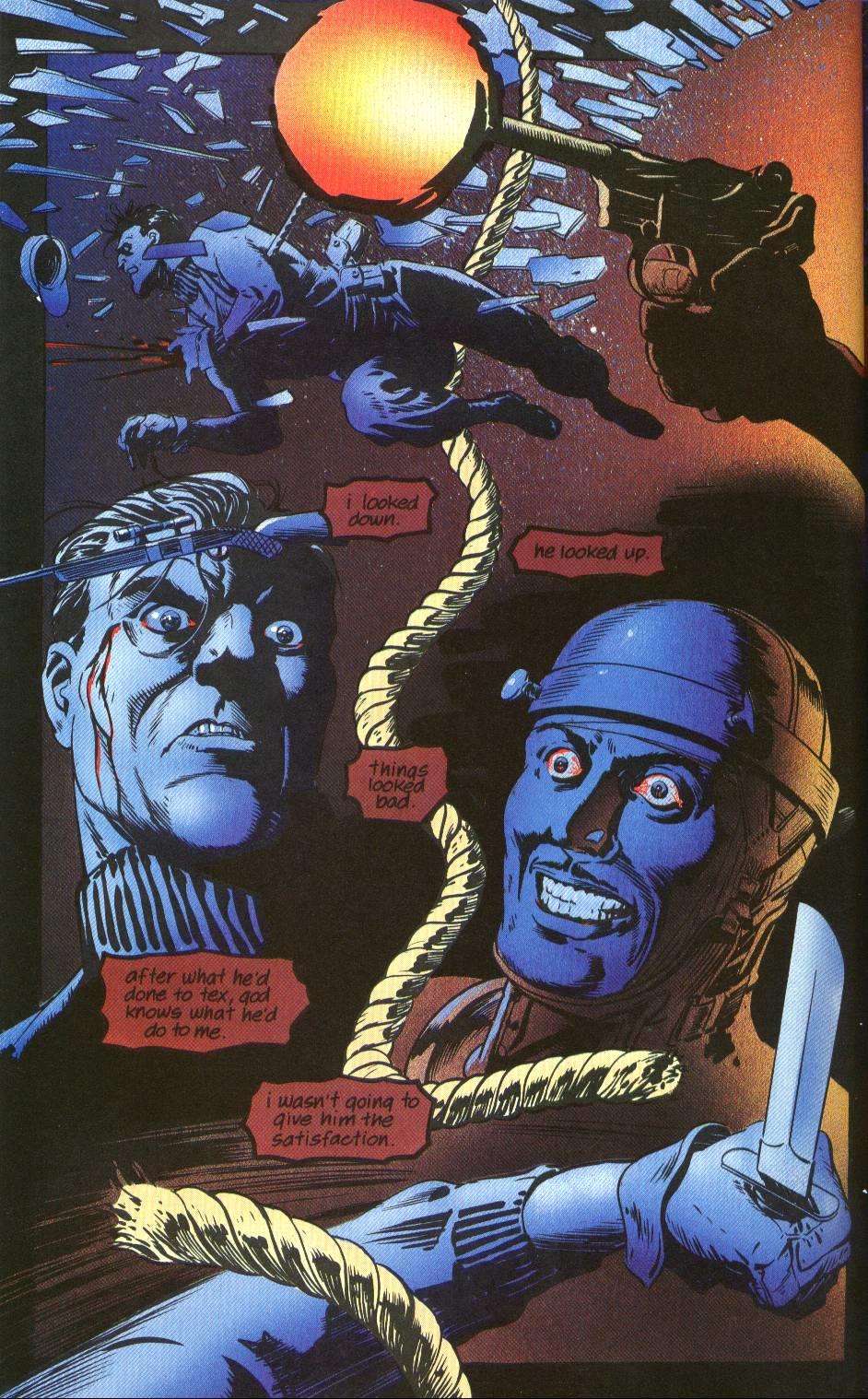
Imagine my disappointment, then, when I started the comic, 1993’s Jonah Hex: Two-Gun Mojo, and realized that Jonah Hex was just a guy without any sort of powers, demonic or otherwise. The Western is far from my favorite genre, so when I was introduced to Hex while he is in the middle of being strung up by outlaws and no lasers came out of his glowing eye, I settled in for what I imagined would be pretty rote five issues of saloon shootouts, horses being hitched, and people saying things are “mighty fine.” (Of course, anyone who knows anything about Jonah Hex would find this to be a silly and unnecessary thing to be disappointed by, but we’ll get to that.)

Hex, of course, gets rescued because it would be a very short story if he didn’t. His savior is a fellow bounty hunter by the name of Slow Go Smith, who was tracking the gang attempting to make my read a quick one. Slow Go could have very easily devolved into an insanely cliched Old West character, but as soon as he cuts the heads off the gang to collect his bounty rather than transport the bodies, I was won over. (What can I say, I’m a girl of simple tastes.)

That might be the most beautifully rendered decapitation of a corpse I've ever seen.
That might be the most beautifully rendered decapitation of a corpse ever.

Even when I was unfairly convinced this would just be a tale of a grizzled ol’ timey lone gun, I took solace in the fact that it was a gorgeously drawn tale of a grizzled ol’ timey lone gun. Every panel, no matter how gruesome the content, is beautiful to look at and seems rendered with the utmost care. The colors are simultaneously rich and slightly faded, like they’ve been left out in the hot desert sun. All credit where it’s due to the artists (pencils by Timothy Truman, ink by Sam Glanzman, and colors by Sam Parsons) for depicting events that you’d have a hard time looking at in real life with images you can’t look away from.

Hex and Slow Go make their way to town to drop off the heads and learn that the bounty has already been mistakenly split amongst the townsfolk, who apparently decided one dead gang was as good as any. While they wait for the bureaucracy to sort itself out (some things are universal), they head to the nearest saloon, where they teach these trigger happy townies a thing or two about race relations by defending the Indian saloon girl from their harassment. Fairly standard fare for a Western, sure, but Slow Go gets in one of my favorite all-time moves:

I like this so much it could happen once every gunfight and I wouldn't complain.
I like this so much it could happen once every gunfight and I wouldn’t complain.

Despite him saving his life multiple times in the, like, hour they’ve known each other, Hex kicks Slow Go out of their room later that night because he can’t deal with snoring, forcing his new friend to shack up in the barn with some horses and dead guys (the men mistakenly shot by the residents of this happy little hamlet.) This is the part in the story where my interest noticeably piques:

Yay, zombies! I know a lot of people are like, "Hur de dur, I'm tired of zombies," but whatever. Zombies make everything better.
Yay, zombies! I know a lot of people are like, “Hur de dur, I’m tired of zombies,” but whatever. Zombies make everything better.

The downside of this addition to the story means no more Slow Go, who can’t fend off a whole troop of what appear to be corpse stealing zombie sideshow folk. The upside is that I get to see him throw his gun at someone again.

Seriously, the comic could be nothing but this wisecrackin' ol' coot throw his gun at people, and I would be happy.
Seriously, the comic could be nothing but this wisecrackin’ ol’ coot throwing his gun at people, and I would be happy.

Hex shows up just in time to get a grazing by a bullet and the blame for Slow Go’s death, even though the sheriff has no plausible explanation for how Hex could have shot himself and hid the gaggle of missing bodies, let alone a real motive why he would have killed his snoring companion. The town prepares for Hex’s hanging like it’s Christmas, the Super Bowl, and the second coming of Christ all rolled into one.

While observing the preparations for the festivities, Hex is once again rescued, this time by the Indian girl from the saloon he defended the previous day. The girl uses one of the oldest tricks in the book, the seduce-and-shoot. (Real talk for a second here: all the time in fiction ladies use their feminine wiles to distract a guard long enough for them or someone else to get the drop on said guard. Would it really be so easy? I like it as a trope, but if some lady really just sauntered in and disrobed, how many dudes would not find that insanely suspicious?)

With the sheriff handled like a cheap piece of luggage, Hex and his new friend escape the jail and make a getaway that involves him shooting half the town in more incredibly artistic violence. The townsfolk who are left unscathed are more than a little upset that their entertainment has skedaddled and set off in pursuit. Most notable among them is the greatest old lady of all time:

Hex Picnic
Just as I wouldn’t mind a gun being thrown in every fight, I would be more than happy if this old lady appeared in everything I ever watched or read, demanding some fried chicken and an execution.

Hex shoots enough of the pursuing bloodthirsty bastards (including my new favorite character ever, unfortunately) to drive them back to their waiting chicken, but the escape is not without cost, as his new favorite lady succumbs to a case of being shot in the back. This seems to be a pattern with Hex, him making a new friend and them biting the dust within a 24-hour period. I assumed he would be a lone wolf like, say, the Punisher, who doesn’t want companionship, but Hex actually seems pretty adept at forming new connections with others, which makes it all the sadder when they keep dropping like flies.

It adds a layer of emotional complexity to the character that I was not expecting to find, but it also makes me imagine unintentionally funny scenarios where Hex introduces himself to a series of people and while he is extending his hand to shake, someone else comes along and cuts their head off with a sword or throws a stick of dynamite at them. Hex then mutters a, “Not again,” and rides off forlornly.

Hex next picks up the trail of the weirdo undead sideshow that murdered his buddy, finding them peddling a miracle elixir that will not just cure what ails you but also give you unnatural strength and agility. And when I say weirdo, I am not just whistlin’ Dixie:

If you had nothing but comics and cartoons to go by, you'd think fat people never did anything but eat whole chickens.
If you had nothing but comics and cartoons to go by, you’d think fat people never did anything but eat whole chickens.

Hex sneaks up on their camp and sees the undead guy who shot Slow Go pulled out of a barrel and fed a strange elixir, just not the same miracle tonic Doc Williams was peddling. Hex seeks out the good doctor in his tent and learns that his buddy’s assailant is none other than the legendary Wild Bill Hickok, who has once again come back to life and is now in position to get the drop on Hex.

Doc Williams does some of the most bizarre black magic I’ve ever seen, including using bits of the thieved corpses to make this elixir, and informs Hex that he plans to turn him into a walking undead puppet, just as he has done to Hickok. In images that will faintly haunt my soul for a little while, Doc Williams starts the pickling process on Hex, who has kept his wits about his enough to vomit the stuff back up.

As a Yankee dating a Southerner, I know his remark in the last panel, well, them's fighting words.
As a Yankee dating a Southerner, I know that his remark in the last panel, well, them’s fightin’ words.

While Hex ferments, Williams tells us the story of turning Hickok into a zombie. I often wonder how Hickok would feel about becoming one of America’s best remembered badasses, when, at the same time, the facet of his life we remember best is that he was shot in the back in the middle of a poker game.

Hex takes his chance to escape and ends up rolling out of his barrel and down a cliff. He is rescued once again by a nice farmer and his son, who nurse him back to health, lend him a horse, and send him on his way. We don’t see them meet a grisly death, but I kept expecting to see them get mowed down in the background as Hex leisurely rides away. How little they know about how close they came to an untimely fate.

That's not your dad's hand on your shoulder, son; it's the cold, impersonal hand of the Grim Reaper.
That’s not your dad’s hand on your shoulder, son; it’s the cold, impersonal hand of the Grim Reaper.

Hex meets back up with Doc Williams’ sideshow, with the added complication that they briefly have to fight on the same side, as they both, along with the soldiers escorting the circus troupe, are being attacked by some Indians.  Hex manages to get away and make another new pal in the process, but we all know where this is headed, right? Yep, his new buddy, a sergeant, gets tagged in the back and apparently got the memo that the farmer and his son did not break the Hex friendship curse. He finishes himself off so Hex will not feel obligated to drag his dying body with him in his escape.

Hex Jersey
I like the idea that making fun of New Jersey is universal, regardless of the era.

Finding the very obvious trail left by Doc Williams’ dead associates and the smoke from his cooking one of them up, Hex must now face down the myth himself, Wild Bill Hickok. Hex cops to being nervous to face down an undead legend, especially one who can no longer die, but he displays more sense than most characters facing zombies and aims for the head. Now, you see a lot of brains splattering out the back of a head in this comic, but this time might be my favorite.

Hex Braaaaaains
The gore so nice, you see it thrice.

Bereft of any more undead bodyguards, Doc Williams is left defenseless against Jonah Hex, who does not give him the courtesy of a quick death. Instead he leaves him for the Apaches, shooting out both his knees so he can’t escape and letting him know just how vicious his death will be when he is found. Slow Go’s death now avenged, Hex is free to ride off into the sunset and make some unsuspecting new friends.

I thoroughly enjoyed this comic, even if Westerns aren’t my particular glass of sippin’ whiskey, and not just because of all the undead action. I’ve raved quite a bit about the beautiful art, but I would be remiss if I didn’t tip my hat to Joe R. Lansdale’s clever script, which takes some tropes that are about as worn as an old boot and breathes new life into them like they took a swaller of Doc Williams’ juice. (Look, I resisted the urge to use Old West cliches this entire article, so the way I figure it, I’ve earned the right to use them all now.)

It’s just about time for this article to hit the ol’ dusty trail, so I hope you’ve enjoyed sittin’ with me for a spell! If you’re still hiding out from your family, there are certainly worse ways you could spend that time than checking out this comic. Be sure to come ’round these parts again next week, when this blog’s exemplary proprietor Dean Compton returns to the Golden Age!

The Gimmick Era Has Never Been Covered So Well.